


Evidence of exposure to chemicals and heavy metals during pregnancy in Japanese women
- PMID: 29259487
- PMCID: PMC5715897
- DOI: 10.1002/rmb2.12049
Evidence of exposure to chemicals and heavy metals during pregnancy in Japanese women
Abstract
Purpose: Prenatal exposure to environmental chemicals is a growing concern, because such exposures have been shown to be associated with various diseases. The levels of chemicals and heavy metals in maternal blood, cord blood, maternal urine and amniotic fluid in Japanese pregnant women were investigated.
Methods: A total of 145 women, including 14 fetal growth restriction cases, were included in the present study. The levels of phthalates (di[2-ethylhexyl]phthalate and mono[2-ethylhexyl]phthalate), perfluorinated compounds (perfluorooctane sulfonate, perfluorohexanoic acid, perfluorooctanoic acid, and perfluorononanoic acid), pesticides (dimethylphosphate, dimethylthiophosphate, diethylphosphate, diethylthiophosphate, 3-phenoxybenzoic acid, and octachlorodipropyl ether), bisphenol A, nicotine (nicotine, nornicotine, cotinine, norcotinine, and trans-3'-hydroxycotinine), polybrominated diphenyl ethers, and heavy metals were measured. The relationship between fetal growth and the levels of chemicals and heavy metals were investigated.
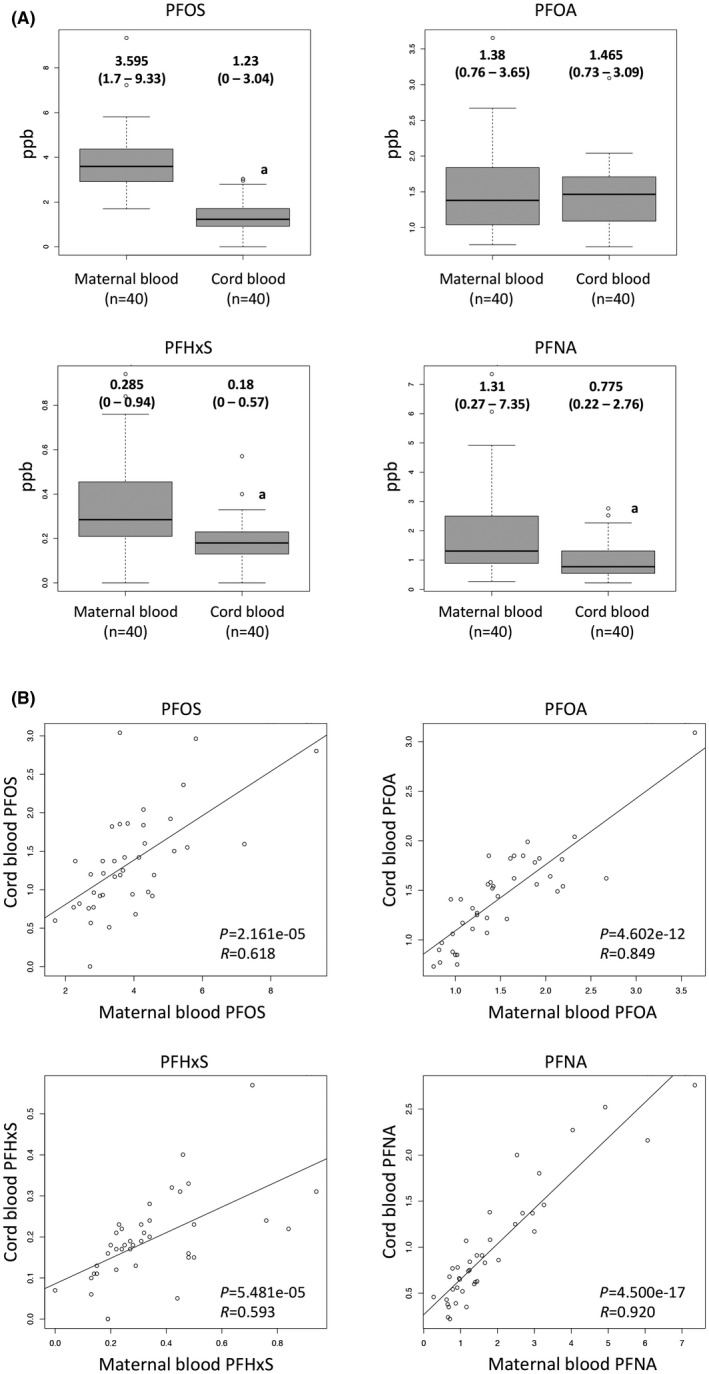
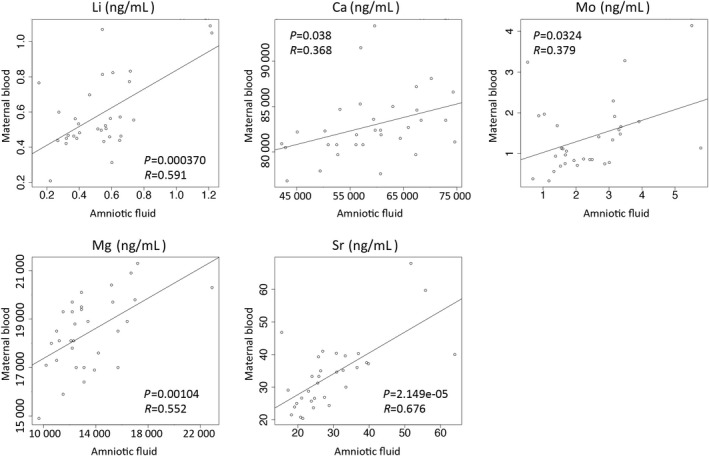
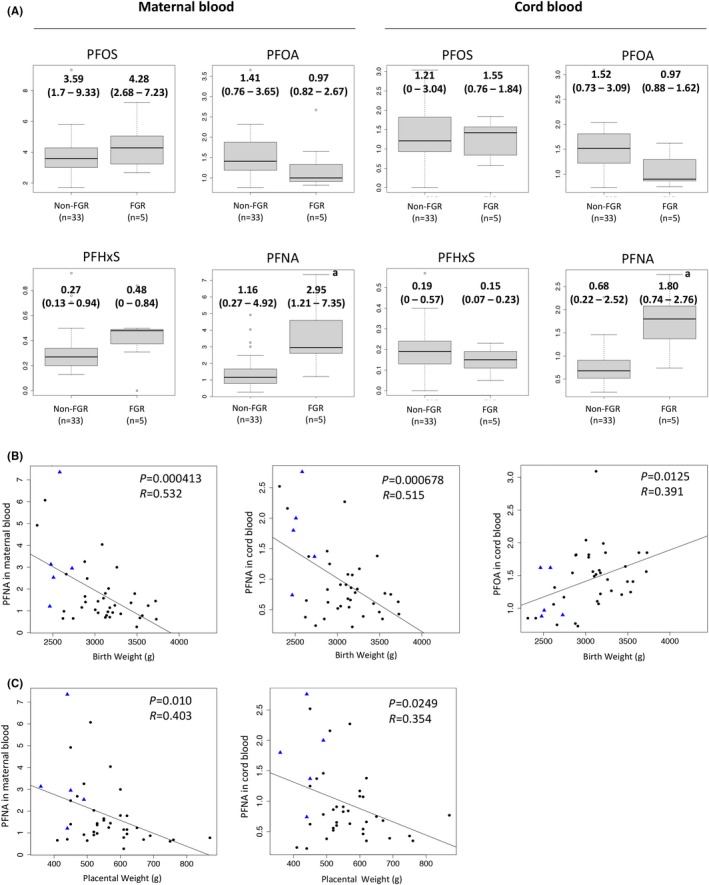
Results: Phthalates, perfluorinated compounds, pesticides, polybrominated diphenyl ethers, and heavy metals were detected in high frequency, whereas nicotine and bisphenol A were almost negative. Phthalates, perfluorinated compounds, and several heavy metals were transferred to the fetus. High perfluorononanoic acid levels in the maternal blood and cord blood, and low perfluorooctanoic acid level in the cord blood were significantly and negatively associated with fetal growth.
Conclusions: The present study showed that pregnant women in Japan and their fetuses are exposed to a variety of chemicals and heavy metals.
Keywords: chemical exposure; endocrine disrupting chemicals; fetal growth; heavy metals; pregnant women.
Figures
References
-
- Arai Y, Ohgane J, Yagi S, et al. Epigenetic assessment of environmental chemicals detected in maternal peripheral and cord blood samples. J Reprod Dev. 2011;57:507‐517. - PubMed
-
- Caserta D, Graziano A, Lo Monte G, Bordi G, Moscarini M. Heavy metals and placental fetal‐maternal barrier: a mini‐review on the major concerns. Eur Rev Med Pharmacol Sci. 2013;17:2198‐2206. - PubMed
LinkOut - more resources
Full Text Sources
Other Literature Sources
Molecular Biology Databases