


Comparative study of impaction and sedimentation in an aerosol chamber using defined fungal spore and bacterial concentrations
- PMID: 29261663
- PMCID: PMC5736173
- DOI: 10.1371/journal.pone.0187039
Comparative study of impaction and sedimentation in an aerosol chamber using defined fungal spore and bacterial concentrations
Erratum in
-
Correction: Comparative study of impaction and sedimentation in an aerosol chamber using defined fungal spore and bacterial concentrations.PLoS One. 2018 May 3;13(5):e0197018. doi: 10.1371/journal.pone.0197018. eCollection 2018. PLoS One. 2018. PMID: 29723309 Free PMC article.
Abstract
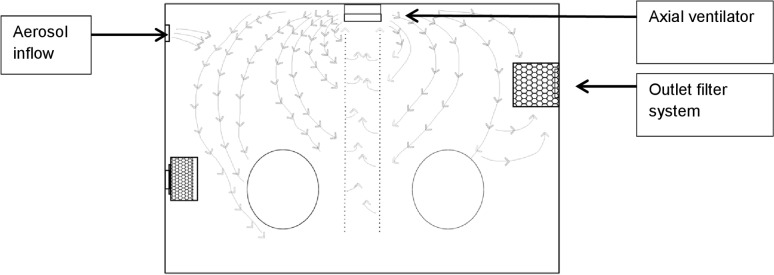
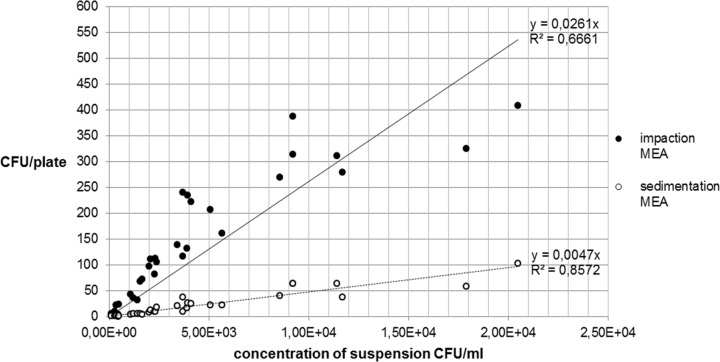
Biocontamination control is a very significant part of the manufacturing process of sterile drugs. Sterility is frequently monitored by active or passive air sampling measurements, but there are no specific rules as to how this is to be done. This study tested air sampling methods of active impaction and passive sedimentation under standardized conditions. Aspergillus niger (A. niger) and Staphylococcus aureus (S. aureus) were selected in this experiment to examine parallels, correlations and differences between the two methods. The results show that the number of colony forming units per plate (CFU/plate) was higher for A. niger in the active method, whereas for S. aureus it was higher in the sedimentation method. A high correlation coefficient was found between the impaction and sedimentation methods for A. niger. For S. aureus, depending on the culture media used and the time for passive air sampling, a larger number of CFU/plate was found than in active air sampling. This study concludes that active and passive air sampling can be used for monitoring the air in clean rooms. For fungal spore detection, the impaction is more efficient, as it is possible to sample a higher volume of air in a shorter period of time, whereas the optimal measurement methods for S. aureus depend on a number of factors.
Conflict of interest statement
Figures





References
-
- Sandle T, Satyada R. Assessment of the disinfection of impaction air sampler heads using 70% IPA, as part of cleanroom environmental monitoring. European Journal of parenteral & Pharmaceutical Sciences 2015;20 (3): 94–99.
-
- Pasquarella C, Pitzurra O, Savino A. The index of microbial air contamination. Journal of Hospital Infection 2000;46: 241–256. doi: 10.1053/jhin.2000.0820 - DOI - PubMed
-
- Haas D, Habib J, Galler H, Buzina W, Schlacher R, Marth E, et al. Assessment of indoor air in Austrian apartments with and without visible mold growth. Atmospheric Environment 2007;41: 5192–5201.
-
- Lee J H & Jo W K. Characteristics of indoor and outdoor bioaerosols at Korean high-rise apartment buildings. Environmental Research 2006;101: 11–17. doi: 10.1016/j.envres.2005.08.009 - DOI - PubMed
-
- Wüst G, Friedl H, Haas D, Köck M, Pichler-Semmelrock F, Reinthaler FF, et al. A comparison between Andersen (ACFM) and Reuter Centrifugal Sampler (RCS-plus) for indoor sampling of airborne molds. Aerobiologia 2003;19: 125–128.
Publication types
MeSH terms
Substances
LinkOut - more resources
Full Text Sources
Other Literature Sources
Molecular Biology Databases
