RAF/MEK/extracellular signal-related kinase pathway suppresses dendritic cell migration and traps dendritic cells in Langerhans cell histiocytosis lesions
- PMID: 29263218
- PMCID: PMC5748846
- DOI: 10.1084/jem.20161881
RAF/MEK/extracellular signal-related kinase pathway suppresses dendritic cell migration and traps dendritic cells in Langerhans cell histiocytosis lesions
Abstract
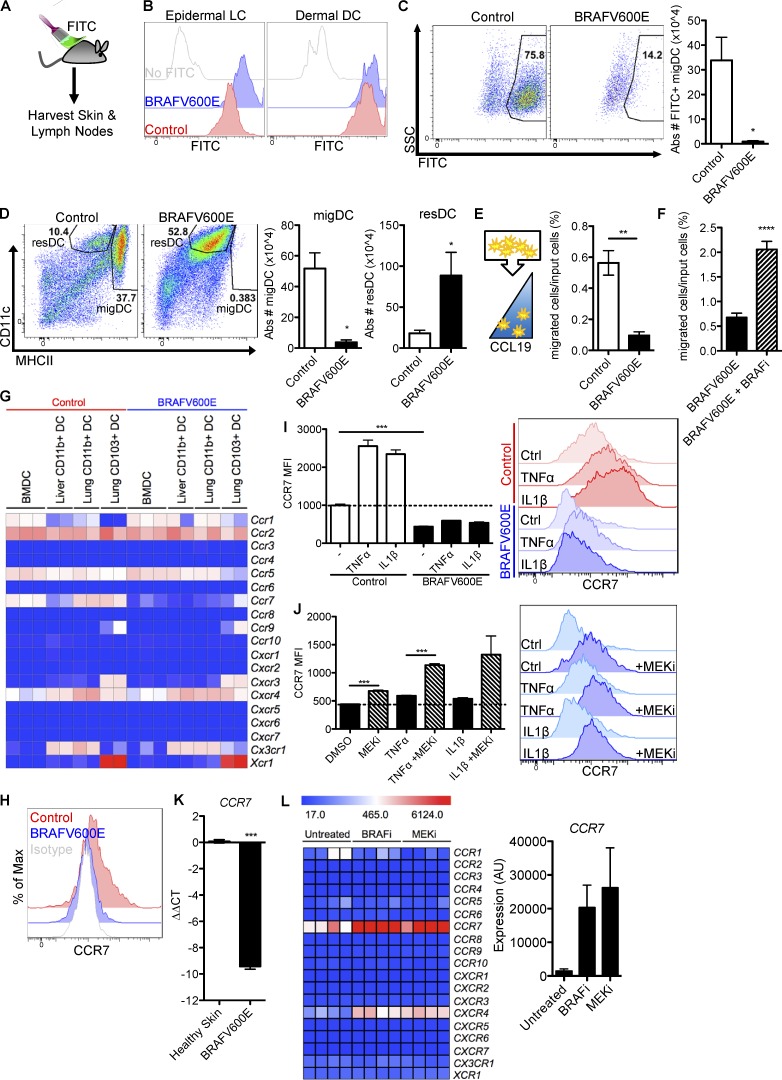
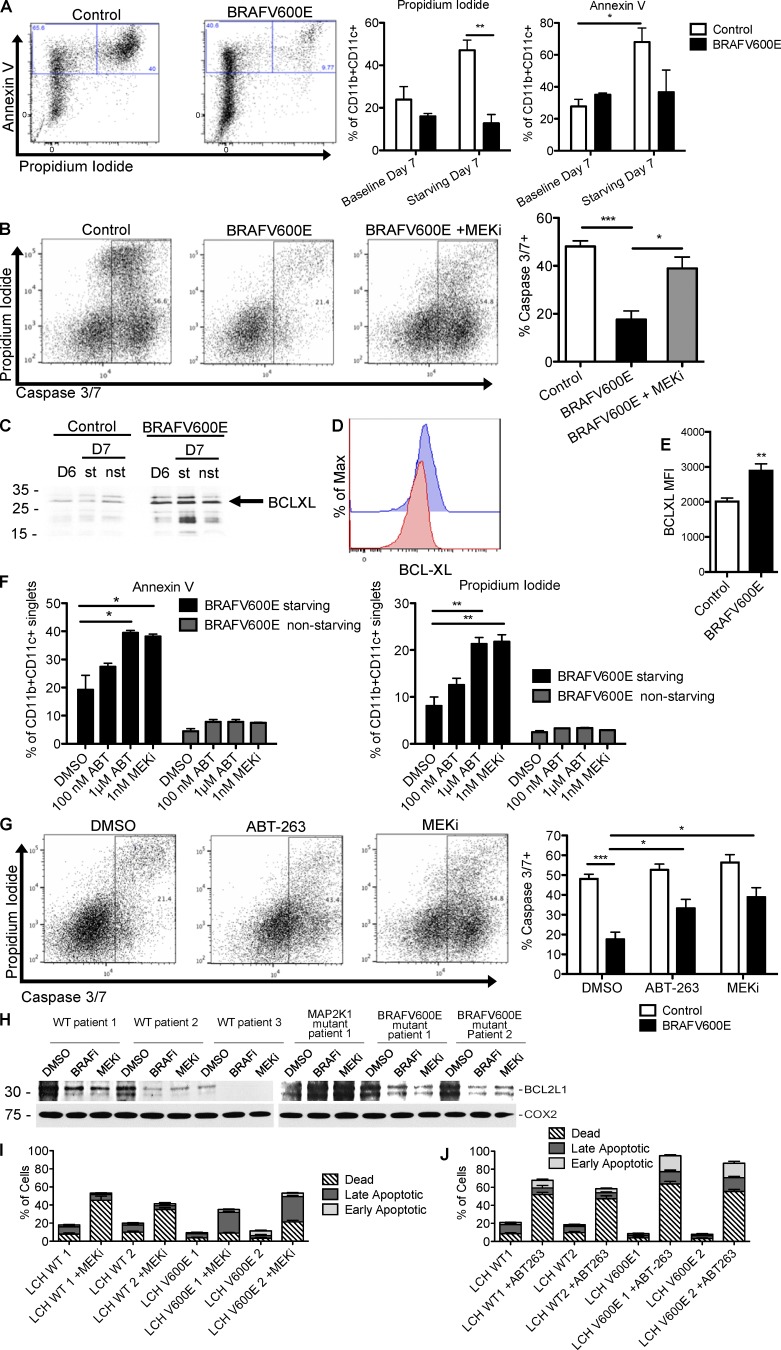
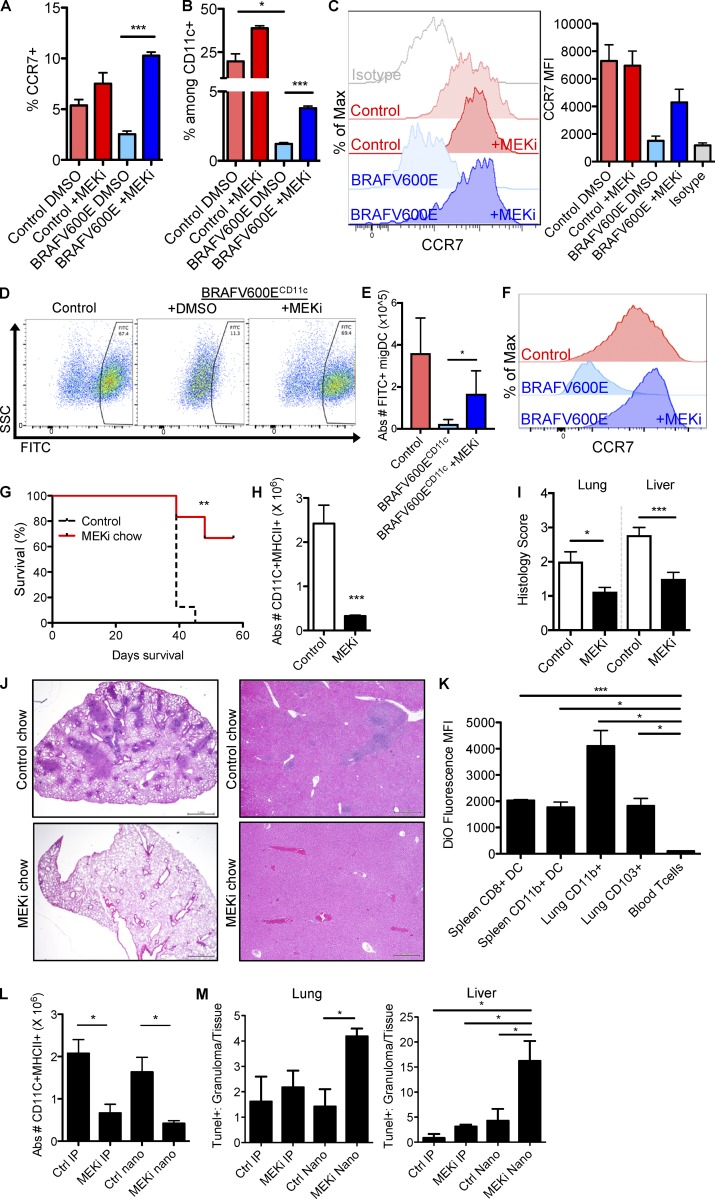
Langerhans cell histiocytosis (LCH) is an inflammatory myeloid neoplasia characterized by granulomatous lesions containing pathological CD207+ dendritic cells (DCs) with constitutively activated mitogen-activated protein kinase (MAPK) pathway signaling. Approximately 60% of LCH patients harbor somatic BRAFV600E mutations localizing to CD207+ DCs within lesions. However, the mechanisms driving BRAFV600E+ LCH cell accumulation in lesions remain unknown. Here we show that sustained extracellular signal-related kinase activity induced by BRAFV600E inhibits C-C motif chemokine receptor 7 (CCR7)-mediated DC migration, trapping DCs in tissue lesions. Additionally, BRAFV600E increases expression of BCL2-like protein 1 (BCL2L1) in DCs, resulting in resistance to apoptosis. Pharmacological MAPK inhibition restores migration and apoptosis potential in a mouse LCH model, as well as in primary human LCH cells. We also demonstrate that MEK inhibitor-loaded nanoparticles have the capacity to concentrate drug delivery to phagocytic cells, significantly reducing off-target toxicity. Collectively, our results indicate that MAPK tightly suppresses DC migration and augments DC survival, rendering DCs in LCH lesions trapped and resistant to cell death.
© 2018 Hogstad et al.
Figures
References
-
- Aguilera-Montilla N., Chamorro S., Nieto C., Sánchez-Cabo F., Dopazo A., Fernández-Salguero P.M., Rodríguez-Fernández J.L., Pello O.M., Andrés V., Cuenda A., et al. 2013. Aryl hydrocarbon receptor contributes to the MEK/ERK-dependent maintenance of the immature state of human dendritic cells. Blood. 121:e108–e117. 10.1182/blood-2012-07-445106 - DOI - PubMed
-
- Allen C.E., Li L., Peters T.L., Leung H.C., Yu A., Man T.K., Gurusiddappa S., Phillips M.T., Hicks M.J., Gaikwad A., et al. 2010. Cell-specific gene expression in Langerhans cell histiocytosis lesions reveals a distinct profile compared with epidermal Langerhans cells. J. Immunol. 184:4557–4567. 10.4049/jimmunol.0902336 - DOI - PMC - PubMed
Publication types
MeSH terms
Substances
Grants and funding
- R01 CA154489/CA/NCI NIH HHS/United States
- R01 CA154947/CA/NCI NIH HHS/United States
- R01 CA190400/CA/NCI NIH HHS/United States
- HHMI/Howard Hughes Medical Institute/United States
- S10 OD018522/OD/NIH HHS/United States
- P30 CA008748/CA/NCI NIH HHS/United States
- P50 CA126752/CA/NCI NIH HHS/United States
- P30 CA125123/CA/NCI NIH HHS/United States
- P30 DK020541/DK/NIDDK NIH HHS/United States
- R01 CA204314/CA/NCI NIH HHS/United States
- R01 CA206005/CA/NCI NIH HHS/United States
- T32 DK060445/DK/NIDDK NIH HHS/United States
- U24 AI118644/AI/NIAID NIH HHS/United States
- U19 AI089987/AI/NIAID NIH HHS/United States
- F31 HL126484/HL/NHLBI NIH HHS/United States
- P30 CA196521/CA/NCI NIH HHS/United States
LinkOut - more resources
Full Text Sources
Other Literature Sources
Medical
Molecular Biology Databases
Research Materials
Miscellaneous