


Facial Acanthosis Nigricans: A Morphological Marker of Metabolic Syndrome
- PMID: 29263532
- PMCID: PMC5724306
- DOI: 10.4103/ijd.IJD_545_17
Facial Acanthosis Nigricans: A Morphological Marker of Metabolic Syndrome
Abstract
Introduction: Acanthosis nigricans (AN) is a frequently encountered entity. Facial AN (FAN) is a subset of AN which is being increasingly recognized. Recently, reports hypothesizing the association of FAN with features of metabolic syndrome have been published.
Aims and objectives: The aim of this study was to study the clinicodemographic profile of patients with FAN, and to assess the correlation of hypertension, increased waist-hip ratio (WHR), increased body mass index (BMI), type 2 diabetes mellitus, deranged lipid profile, serum insulin, and impaired oral glucose tolerance test (OGTT) (parameters of metabolic syndrome) in these patients, as well as to determine the most significant predictor (highest relative risk) of development of FAN.
Methods: A multicentric case-control study was conducted (123 cases in each group) over a period of 2 years. Data were obtained on the basis of history, examination, and relevant laboratory investigations. Statistical analysis was done using Statistica version 6 (StatSoft Inc., 2001, Tulsa, Oklahoma, USA), SPSS statistics version 17 (SPSS Inc., 2008, Illinois, Chicago, USA), and GraphPad Prism version 5 (GraphPad Software Inc., 2007, San Diego, California, USA).
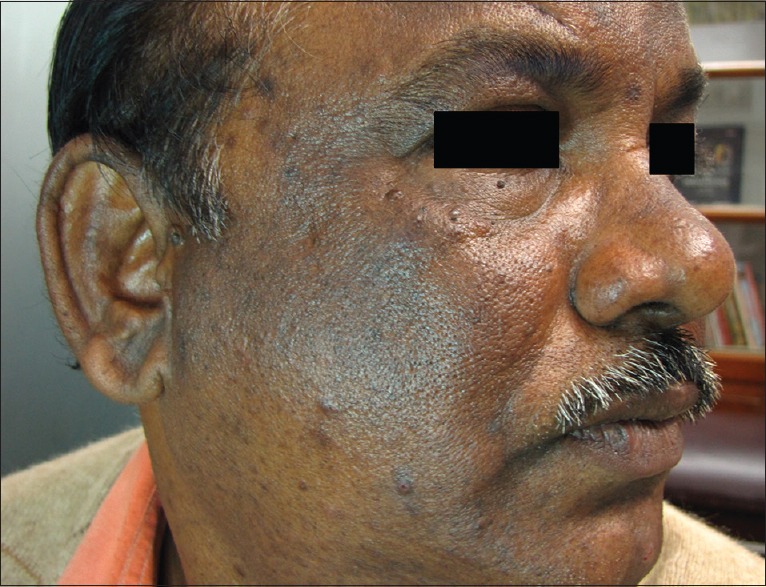
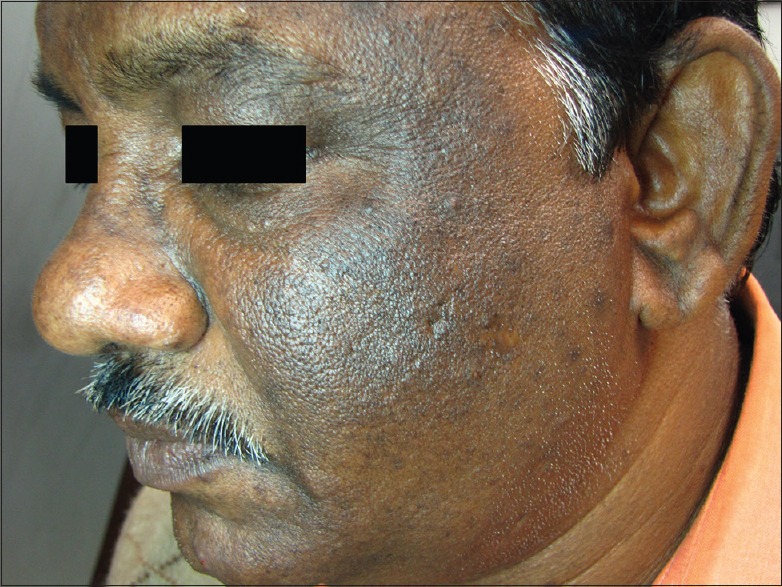
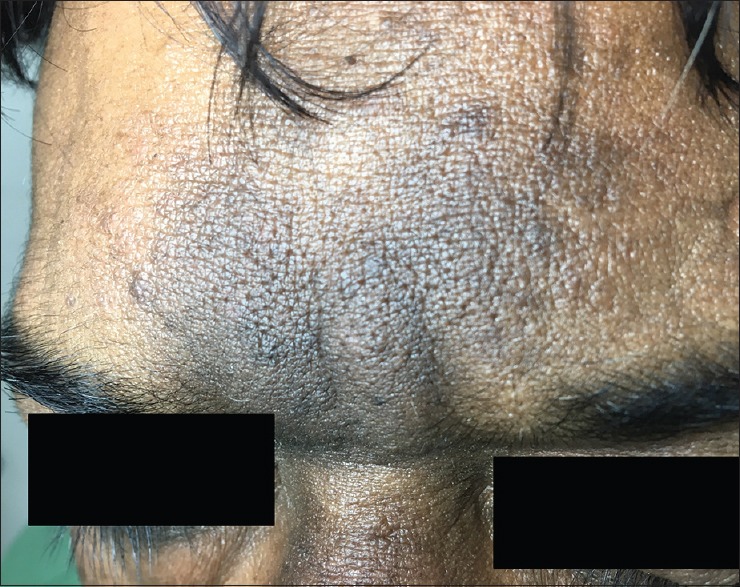
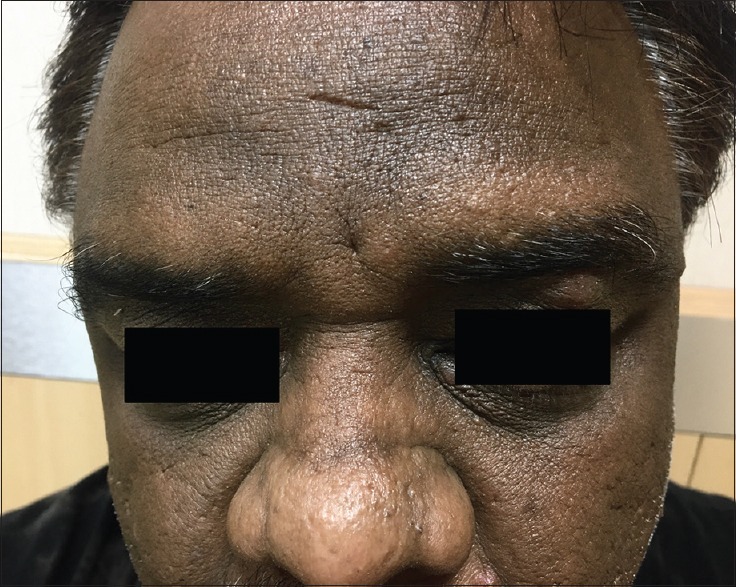
Results: Mean age of the patients with FAN was 38.83 ± 8.62 years. Mean age of onset of the disease was 30.93 ± 8.18 years. The most common site of face involved was the forehead and temporal region. The most common pigmentation was brown-black. Male sex, positive OGTT, increased WHR, and increased BMI were most significantly related to FAN. Smoking was found to have a protective effect against the development of FAN.
Conclusion: Here, we document a significant association between male patients with positive OGTT, increased WHR, and BMI and FAN. Thus, we propose that FAN could be considered a morphological marker of metabolic syndrome.
Keywords: Case-control study; facial acanthosis nigricans; metabolic syndrome.
Conflict of interest statement
There are no conflicts of interest. What is new? Facial acanthosis nigricans is a new entity. Male patients, those with elevated HOMA2-IR level, positive oral glucose tolerance test, increased waist hip ratio, and increased body mass index have a significantly higher probability of developing FAN. As per our study, smoking has been found to have a protective role against the development of facial acanthosis nigricans.
Figures

References
-
- Hisler BM, Savoy LB. Acanthosis nigricans of the forehead and fingers associated with hyperinsulinemia. Arch Dermatol. 1987;123:1441–2. - PubMed
-
- Veysey E, Ratnavel R. Facial acanthosis nigricans associated with obesity. Clin Exp Dermatol. 2005;30:437–9. - PubMed
-
- Misra A, Chowbey P, Makkar BM, Vikram NK, Wasir JS, Chadha D, et al. Consensus statement for diagnosis of obesity, abdominal obesity and the metabolic syndrome for Asian Indians and recommendations for physical activity, medical and surgical management. J Assoc Physicians India. 2009;57:163–70. - PubMed
-
- Schwartz B, Jacobs DR, Jr, Moran A, Steinberger J, Hong CP, Sinaiko AR, et al. Measurement of insulin sensitivity in children: Comparison between the euglycemic-hyperinsulinemic clamp and surrogate measures. Diabetes Care. 2008;31:783–8. - PubMed
LinkOut - more resources
Full Text Sources
Other Literature Sources