


Topical Corticosteroids Abuse: A Clinical Study of Cutaneous Adverse Effects
- PMID: 29263550
- PMCID: PMC5724325
- DOI: 10.4103/ijd.IJD_110_17
Topical Corticosteroids Abuse: A Clinical Study of Cutaneous Adverse Effects
Abstract
Background: Topical corticosteroids (TC) are one of the most widely used agents in dermatology practice. Misuse of these agents may lead to a wide range of adverse effects.
Aim: This study was conducted to assess the magnitude of abuse of topical corticosteroids (TC) and clinical patterns of cutaneous adverse effects amongst patients attending dermatology department of a teaching hospital at South Rajasthan.
Materials and methods: All patients who reported with adverse effects of topical steroids during one year from September 2015 to August 2016 were evaluated. Patients fulfilling the study criteria were registered for further workup.
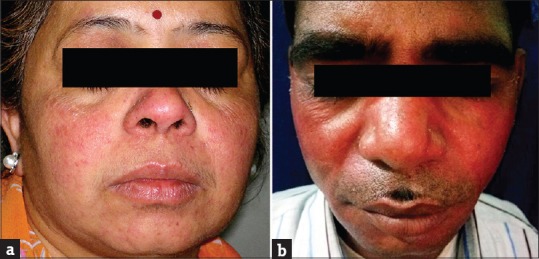
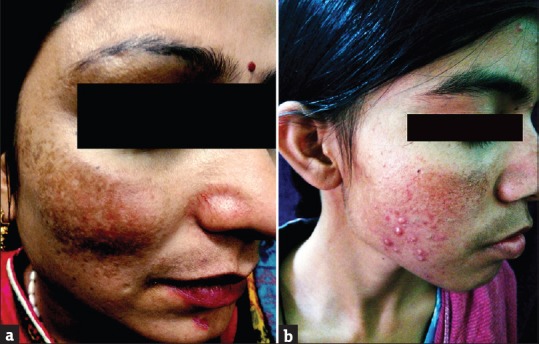
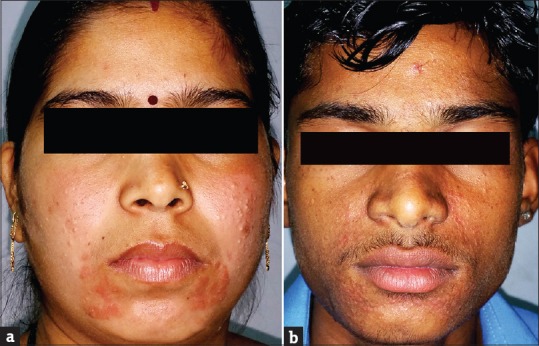
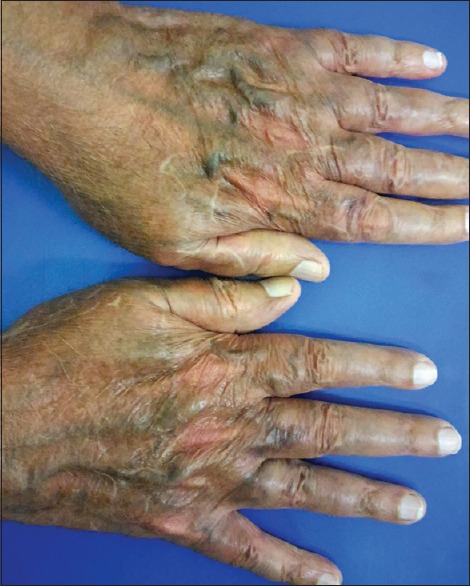
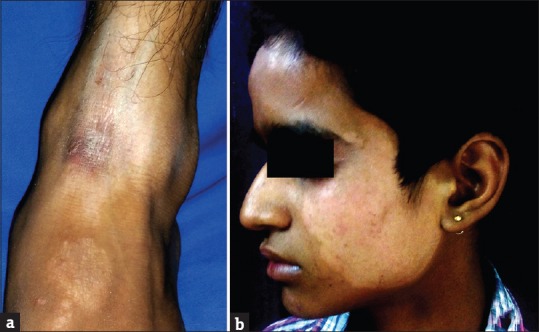
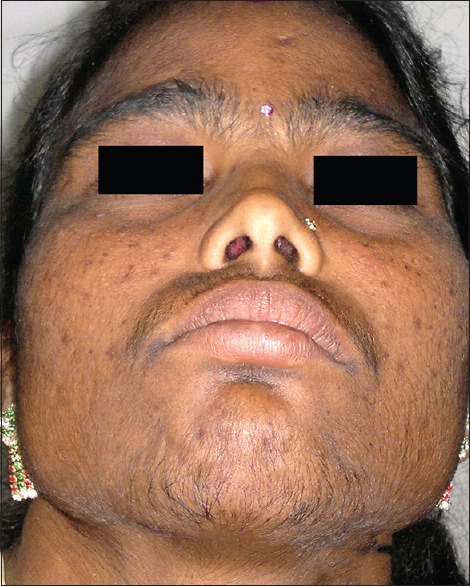
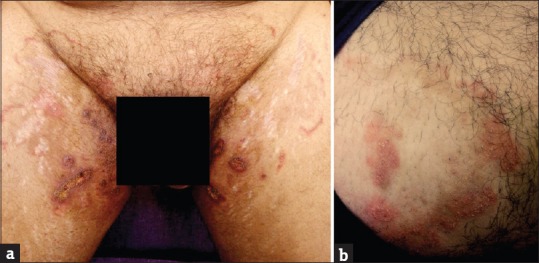
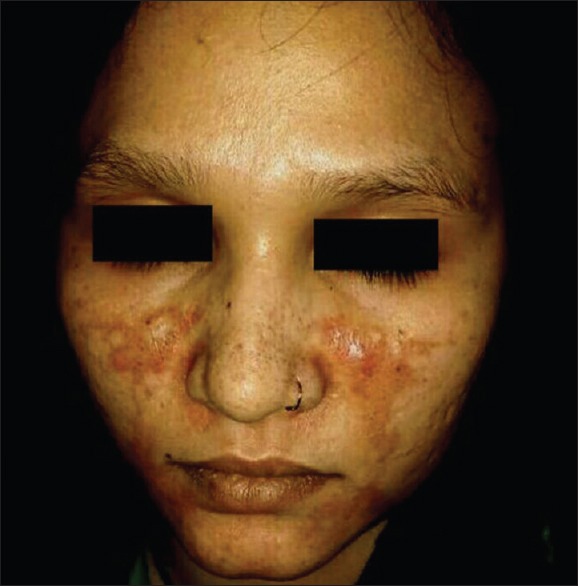
Results: Out of the 85280 new patients, 370 (0.43%) presented with adverse effects of TC. Males (232/370;62.70%) outnumbered females (138/370;37.30). Age group 11-30 years was most commonly (74.05%) affected. The main reason for using TC was fungal infection (52.43%). Tinea incognito (49.46%) and acne (30.27%) were the most common adverse effects recorded.
Conclusions: Abuse of TC, particularly the superpotent and potent is rampant amongst general population. Topical corticosteroids are frequently used for indications where they should be avoided.
Keywords: Corticosteroid abuse; tinea incognito; topical corticosteroids; topical steroid-dependent facies.
Conflict of interest statement
There are no conflicts of interest. What is new? The TC abuse is not uncommon even in males and literate masses. The tendency to use TC in dermatophytic infection is rampant leading to modification in clinical picture and therefore posing difficulty in its successful treatment. Enhanced and concerted efforts on the part of patients, prescribers, and regulatory health agencies are needed to overcome the challenge of steroid abuse.
Figures
References
-
- Sulzberger MB, Witten VH. The effect of topically applied compound F in selected dermatoses. J Invest Dermatol. 1952;19:101–2. - PubMed
-
- 69th ed. London: Pharmaceutical Pr; March 2015-September; 2015. British Medical Association, Pharmaceutical Press, Joint Formulary Committee, BMJ Group. British National Formulary.
-
- Jacob SE, Steele T. Corticosteroid classes: A quick reference guide including patch test substance and crossreactivity. J Am Acad Dermatol. 2006;54:723–7. - PubMed
-
- Hughes J, Rustin M. Corticosteroids. Clin Dermatol. 1997;15:715–21. - PubMed
-
- Valencia IC, Kerdel FA. Topical glucocorticoids. In: Fitzpatrick T, editor. Dermatology in General Medicine. 5th ed. New York: McGraw-Hill; 1999. pp. 2713–7.
LinkOut - more resources
Full Text Sources
Other Literature Sources