


Oxidative stress in bone remodeling: role of antioxidants
- PMID: 29263736
- PMCID: PMC5726212
- DOI: 10.11138/ccmbm/2017.14.1.209
Oxidative stress in bone remodeling: role of antioxidants
Abstract
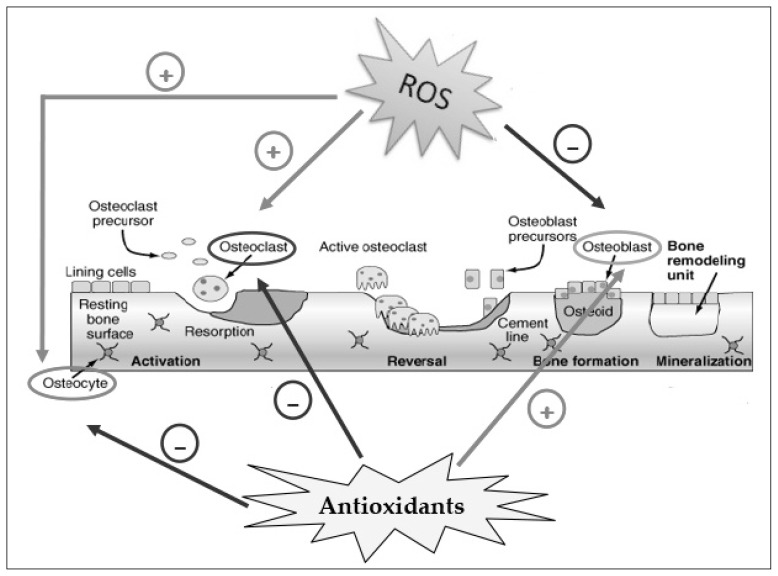
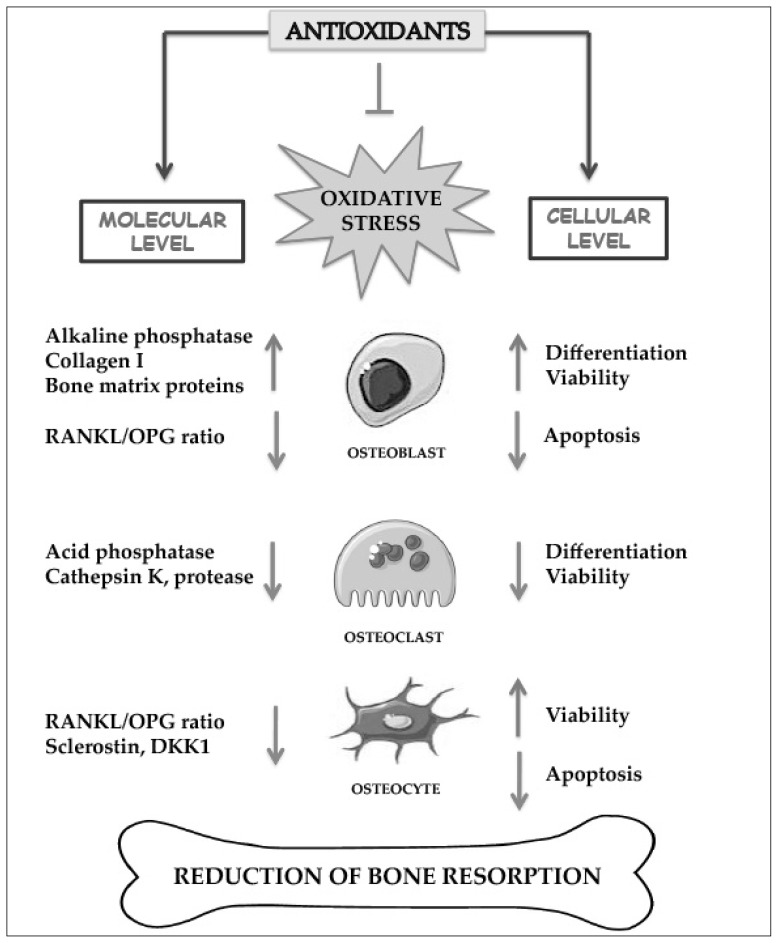
ROS are highly reactive molecules which consist of a number of diverse chemical species, including radical and non-radical oxygen species. Oxidative stress occurs as a result of an overproduction of ROS not balanced by an adequate level of antioxidants. The natural antioxidants are: thiol compounds among which GSH is the most representative, and non-thiol compounds such as polyphenols, vitamins and also various enzymes. Many diseases have been linked to oxidative stress including bone diseases among which one of the most important is the osteoporosis. The redox state changes are also related to the bone remodeling process which allows the continuous bone regeneration through the coordinated action of bone cells: osteoclasts, osteoblasts and osteocytes. Changes in ROS and/or antioxidant systems seem to be involved in the pathogenesis of bone loss. ROS induce the apoptosis of osteoblasts and osteocytes, and this favours osteoclastogenesis and inhibits the mineralization and osteogenesis. Excessive osteocyte apoptosis correlates with oxidative stress causing an imbalance in favor of osteoclastogenesis which leads to increased turnover of bone remodeling and bone loss. Antioxidants either directly or by counteracting the action of oxidants contribute to activate the differentiation of osteoblasts, mineralization process and the reduction of osteoclast activity. In fact, a marked decrease in plasma antioxidants was found in aged or osteoporotic women. Some evidence shows a link among nutrients, antioxidant intake and bone health. Recent data demonstrate the antioxidant properties of various nutrients and their influence on bone metabolism. Polyphenols and anthocyanins are the most abundant antioxidants in the diet, and nutritional approaches to antioxidant strategies, in animals or selected groups of patients with osteoporosis or inflammatory bone diseases, suggest the antioxidant use in anti-resorptive therapies for the treatment and prevention of bone loss.
Keywords: antioxidant nutrient treatment; antioxidants; bone remodeling; osteoporosis; oxidative stress.
Conflict of interest statement
Disclosure All Authors declare that they have no conflicts of interest.
Figures
References
-
- Valko M, Rhodes CJ, Moncol J, Izakovic M, Mazur M. Free radicals, metals and antioxidants in oxidative stress-induced cancer. Chem Biol Interact. 2006;160:1–40. - PubMed
-
- Valko M, Leibfritz D, Moncol J, Cronin MT, Mazur M, Telser J. Free radicals and antioxidants in normal physiological functions and human disease. Int J Biochem Cell Biol. 2007;39:44–84. - PubMed
-
- Catarzi S, Romagnoli C, Marcucci G, Favilli F, Iantomasi T, Vincenzini MT. Redox regulation of ERK1/2 activation induced by sphingosine 1-phosphate in fibroblasts: involvement of NADPH oxidase and platelet-derived growth factor receptor. Biochim Biophys Acta. 2011;1810:446–456. - PubMed
Publication types
LinkOut - more resources
Full Text Sources
Other Literature Sources