


Cardiovascular Outcomes after a Respiratory Tract Infection among Adults with Non-Cystic Fibrosis Bronchiectasis: A General Population-based Study
- PMID: 29266966
- PMCID: PMC5880522
- DOI: 10.1513/AnnalsATS.201706-488OC
Cardiovascular Outcomes after a Respiratory Tract Infection among Adults with Non-Cystic Fibrosis Bronchiectasis: A General Population-based Study
Abstract
Rationale: Studies suggest that adults with bronchiectasis are at increased risk of cardiovascular comorbidities.
Objectives: We aimed to quantify the relative risk of incident cardiovascular events after a respiratory tract infection among adults with bronchiectasis.
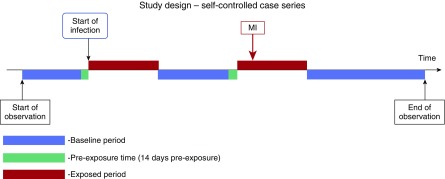
Methods: Using UK electronic primary care records, we conducted a within-person comparison using the self-controlled case series method. We calculated the relative risk of first-time cardiovascular events (either first myocardial infarction or stroke) after a respiratory tract infection compared with the individual's baseline risk.
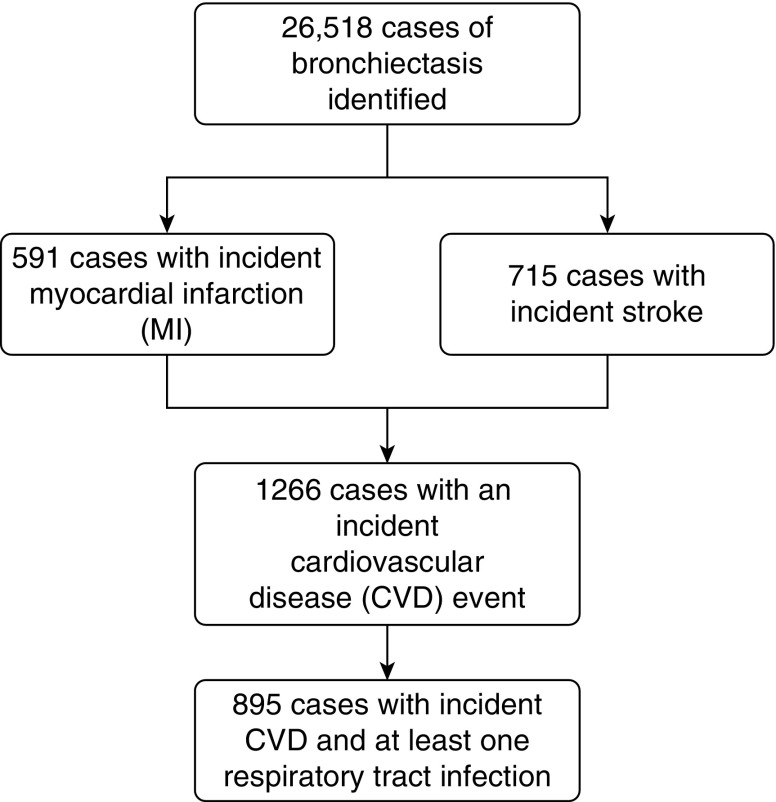
Results: Our cohort consisted of 895 adult men and women with non-cystic fibrosis bronchiectasis with a first myocardial infarction or stroke and at least one respiratory tract infection. There was an increased rate of first-time cardiovascular events in the 91-day period after a respiratory tract infection (incidence rate ratio, 1.56; 95% confidence interval, 1.20-2.02). The rate of a first cardiovascular event was highest in the first 3 days after a respiratory tract infection (incidence rate ratio, 2.73; 95% confidence interval, 1.41-5.27).
Conclusions: These data suggest that respiratory tract infections are strongly associated with a transient increased risk of first-time myocardial infarction or stroke among people with bronchiectasis. As respiratory tract infections are six times more common in people with bronchiectasis than the general population, the increased risk has a disproportionately greater impact in these individuals. These findings may have implications for including cardiovascular risk modifications in airway infection treatment pathways in this population.
Keywords: bronchiectasis; cardiovascular disease; myocardial infarction; self-controlled case series; stroke.
Figures
Comment in
-
Bronchiectasis Exacerbations Are Heart-Breaking.Ann Am Thorac Soc. 2018 Mar;15(3):301-303. doi: 10.1513/AnnalsATS.201710-832ED. Ann Am Thorac Soc. 2018. PMID: 29493334 No abstract available.
References
-
- Meier CR, Jick SS, Derby LE, Vasilakis C, Jick H, Meier CR. Acute respiratory-tract infections and risk of first-time acute myocardial infarction. Lancet. 1998;351:1467–1471. - PubMed
-
- Smeeth L, Thomas SL, Hall AJ, Hubbard R, Farrington P, Vallance P. Risk of myocardial infarction and stroke after acute infection or vaccination. N Engl J Med. 2004;351:2611–2618. - PubMed
Publication types
MeSH terms
Grants and funding
LinkOut - more resources
Full Text Sources
Other Literature Sources
Medical
