. 2018 Apr:54:77-86.
doi: 10.1016/j.jnutbio.2017.10.015. Epub 2017 Nov 4.

Resveratrol and pinostilbene confer neuroprotection against aging-related deficits through an ERK1/2-dependent mechanism

Affiliations

Resveratrol and pinostilbene confer neuroprotection against aging-related deficits through an ERK1/2-dependent mechanism

Erika N Allen et al. J Nutr Biochem. 2018 Apr.

Abstract

Age-related declines in motor function may be due, in part, to an increase in oxidative stress in the aging brain leading to dopamine (DA) neuronal cell death. In this study, we examined the neuroprotective effects of natural antioxidants resveratrol and pinostilbene against age-related DAergic cell death and motor dysfunction using SH-SY5Y neuroblastoma cells and young, middle-aged, and old male C57BL/6 mice. Resveratrol and pinostilbene protected SH-SY5Y cells from a DA-induced decrease in cell viability. Dietary supplementation with resveratrol and pinostilbene inhibited the decline of motor function observed with age. While DA and its metabolites (DOPAC and HVA), dopamine transporter, and tyrosine hydroxylase levels remain unchanged during aging or treatment, resveratrol and pinostilbene increased ERK1/2 activation in vitro and in vivo in an age-dependent manner. Inhibition of ERK1/2 in SH-SY5Y cells decreased the protective effects of both compounds. These data suggest that resveratrol and pinostilbene alleviate age-related motor decline via the promotion of DA neuronal survival and activation of the ERK1/2 pathways.

Keywords: Aging; ERK1/2; Pinostilbene; Resveratrol; SH-SY5Y; Striatum; Substantia nigra.


Conflict of interest statement

Disclosure statements

The authors have no actual or potential conflicts of interest.

Figures
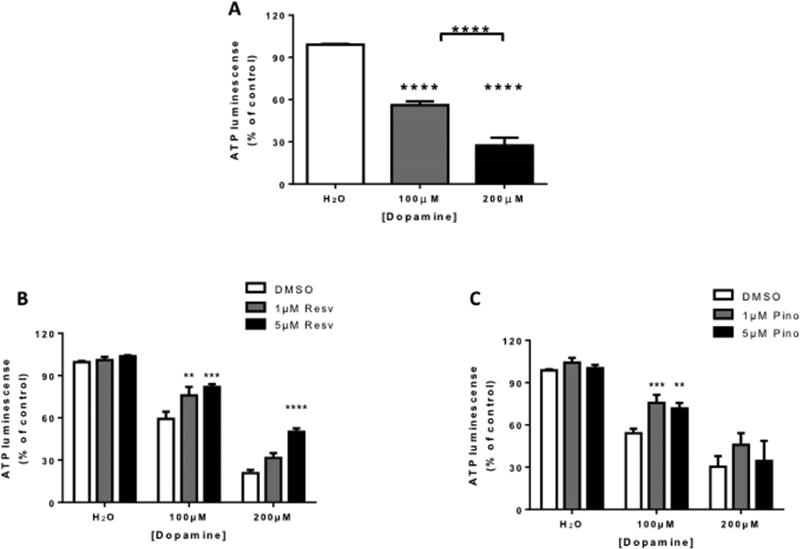
Figure 1
Figure 1. Effect of resveratrol and pinostilbene on dopamine induced loss of ATP in SH-SY5Y cells
(A) DA increased the loss of ATP in SH-SY5Y cells in a dose-dependent manner. (B) Pretreatment with resveratrol inhibited the loss of ATP induced by DA treatment. (C) Pretreatment with pinostilbene inhibited the loss of ATP induced by 100 µM, but not 200 µM, DA treatment. n=3–4 experiments done in triplicate for each group. Data are expressed as mean ± SEM. **** p < 0.0001 compared to the H2O treated group (A), between DA treated groups (A), and compared to the DMSO treated group (B). ***p < 0.001 and **p < 0.01 compared to the DMSO treated group.
Figure 2
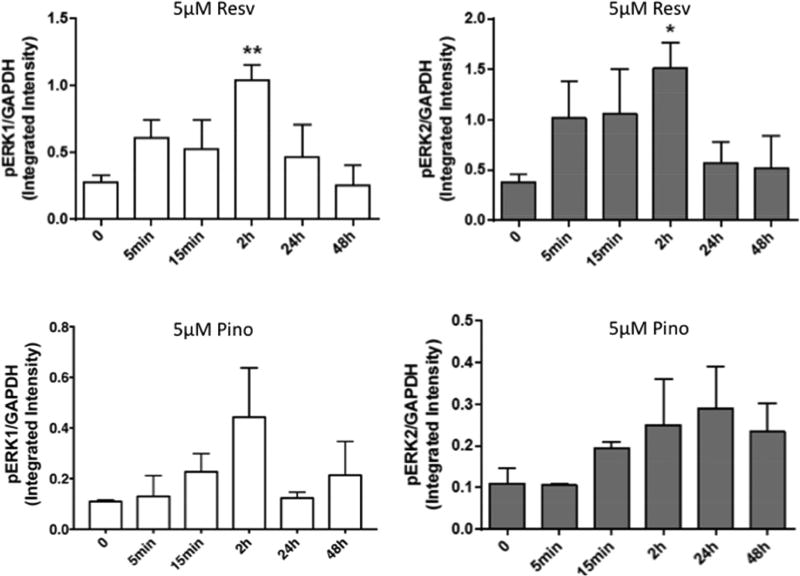
Figure 2. Expression of phosphorylated ERK1/2 in SH-SY5Y cells following resveratrol or pinostilbene treatment
SH-SY5Y cells were treated with 5 µM resveratrol (A, B) or 5 µM pinostilbene (C, D) for the different time points. Cell lysates were collected, resolved on SDS-PAGE gels and probed for phospho and total ERK1 and ERK2. GAPDH was used as a loading control. (A, B) Immunoblot analysis indicating that resveratrol increases ERK1 and ERK2 phosphorylation in a time dependent manner. (C, D) Immunoblot analysis indicating that pinostilbene increases ERK1 and ERK2 phosphorylation in a time dependent manner distinct from resveratrol. The values are calculated using the integrated intensity. Protein expression was standardized to the intensity of GAPDH. n=3–4 for each time point. Data are expressed as mean ± SEM. ** p < 0.01 and * p < 0.05 compared to the 0 time point.
Figure 3
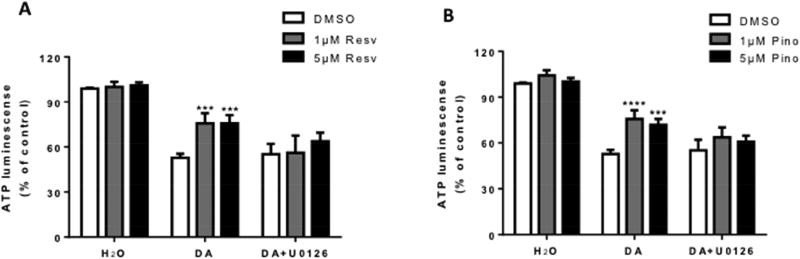
Figure 3. Effect of pharmacological ERK1/2 inhibition on resveratrol- and pinostilbene-mediated protection from DA-induced ATP loss in SH-SY5Y cells
U0126 (10 µM) inhibited the (B) resveratrol- and (C) pinostilbene-mediated protection from 100 µM DA-induced ATP loss. n=3–4 experiments done in triplicate for each group. Data are expressed as mean ± SEM. **** p < 0.0001 and *** p < 0.001 compared to DMSO treatment.
Figure 4
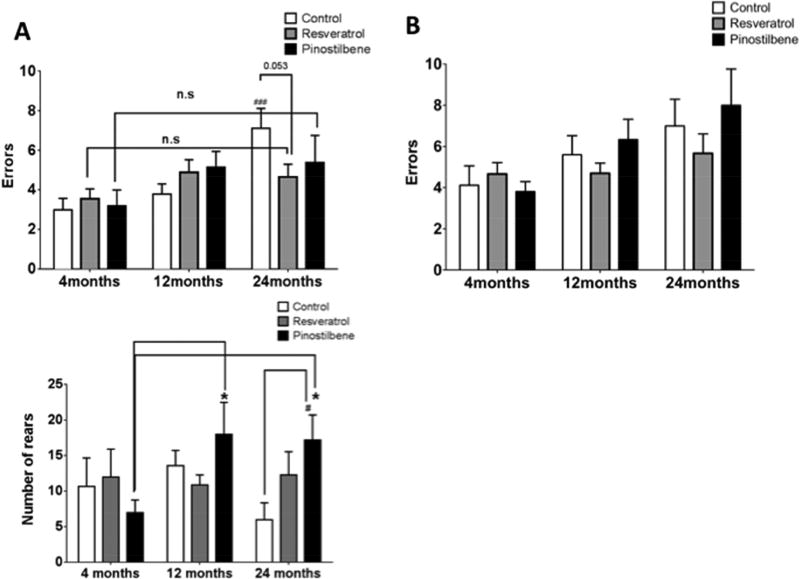
Figure 4. Effects of 4 and 8-week dietary supplementation with resveratrol or pinostilbene on motor coordination and spontaneous activity as measured by the challenging beam and cylinder test
(A) Dietary supplementation for 4 weeks with resveratrol decreased the number of errors made by 24 month old animals. (B) Dietary supplementation for 8 weeks with resveratrol or pinostilbene did not improve motor function of old animals. (C) Dietary supplementation with pinostilbene but not resveratrol increased the number of rears made by middle-aged and old animals.
Figure 5
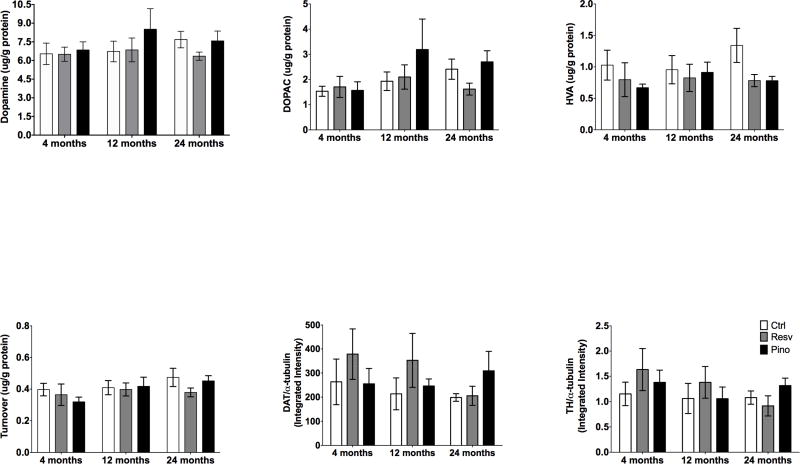
Figure 5. Effect of dietary supplementation with resveratrol or pinostilbene on markers of dopaminergic neurons and function in the striatum with age
(A–F) Dietary supplementation with resveratrol or pinostilbene had no effect on striatal DA, DOPAC, HVA, DAT or TH levels or expression. n=5–7 per group.
Figure 6
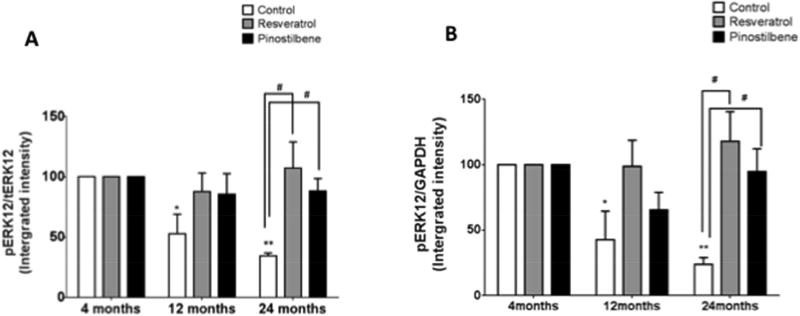
Figure 6. Effect of dietary supplementation with resveratrol or pinostilbene on the ERK1/2 phosphorylation in striatal tissue with age
(A and B) Resveratrol and pinostilbene diet increased ERK1/2 phosphorylation in the striatum of old animals. ERK1/2 phosphorylation in young animals was set at 100%. Data are expressed as mean ± SEM. ** p < 0.01, * p < 0.05 compared to 4 month young control group. #p<0.05 compared to age-matched controls. n=3–4 for each treatment and age.
Figure 7
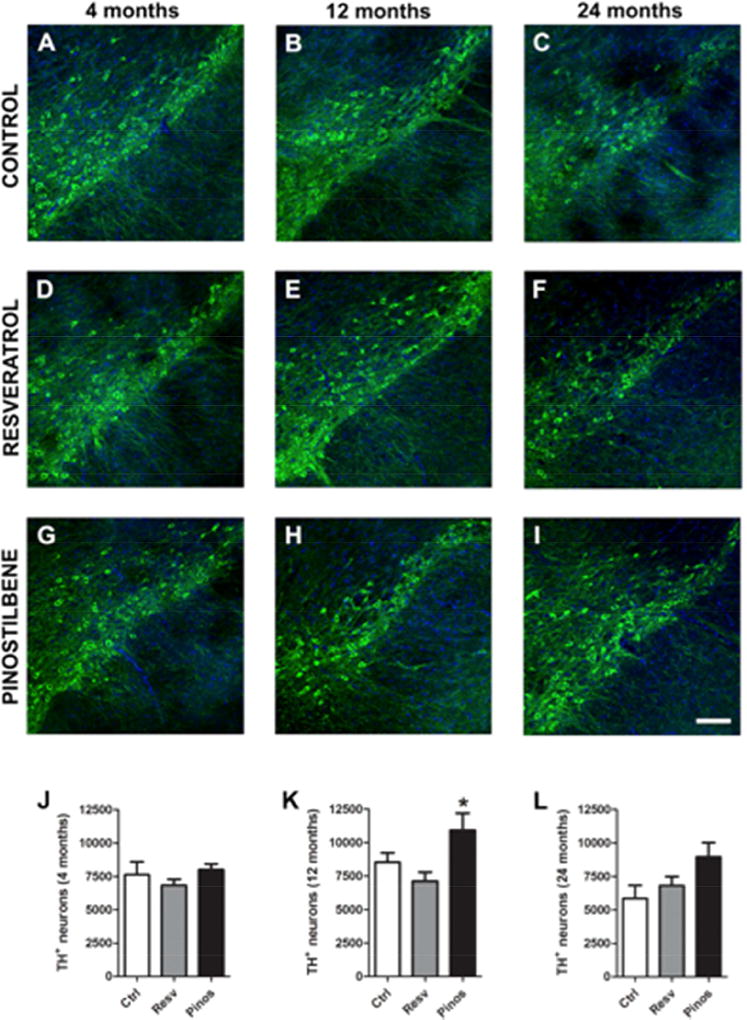
Figure 7. Effect of dietary supplementation with resveratrol or pinostilbene on the number of TH+ neurons in the substantia nigra with age
(A–C; J–L) The number of TH+ neurons decreased with age in the SN. (D–F; J–L) Resveratrol diet did not alter the number of TH+ neurons in an age-dependent manner. (G–I; J–L) Pinostilbene diet increased the number of TH+ neurons in 12 and 24 month old animals. Data are expressed as mean ± SEM. * p < 0.05 compared to age matched control group.

References

    1. Onder G, Pedone C, Gambassi G. Risk of hip fracture in women: not only a smoking issue. Arch Intern Med. 2002;162:101–2. - PubMed
    1. Onder G, Penninx BW, Lapuerta P, Fried LP, Ostir GV, Guralnik JM, et al. Change in physical performance over time in older women: the Women's Health and Aging Study. J Gerontol A Biol Sci Med Sci. 2002;57:M289–93. - PubMed
    1. Guralnik JM, Seeman TE, Tinetti ME, Nevitt MC, Berkman LF. Validation and use of performance measures of functioning in a non-disabled older population: MacArthur studies of successful aging. Aging (Milano) 1994;6:410–9. - PubMed
    1. Guralnik JM, Winograd CH. Physical performance measures in the assessment of older persons. Aging (Milano) 1994;6:303–5. - PubMed
    1. Allum JH, Carpenter MG, Honegger F, Adkin AL, Bloem BR. Age-dependent variations in the directional sensitivity of balance corrections and compensatory arm movements in man. J Physiol. 2002;542:643–63. - PMC - PubMed

Publication types

MeSH terms