Chinese Guideline on allergen immunotherapy for allergic rhinitis
- PMID: 29268533
- PMCID: PMC5721020
- DOI: 10.21037/jtd.2017.10.112
Chinese Guideline on allergen immunotherapy for allergic rhinitis
Abstract
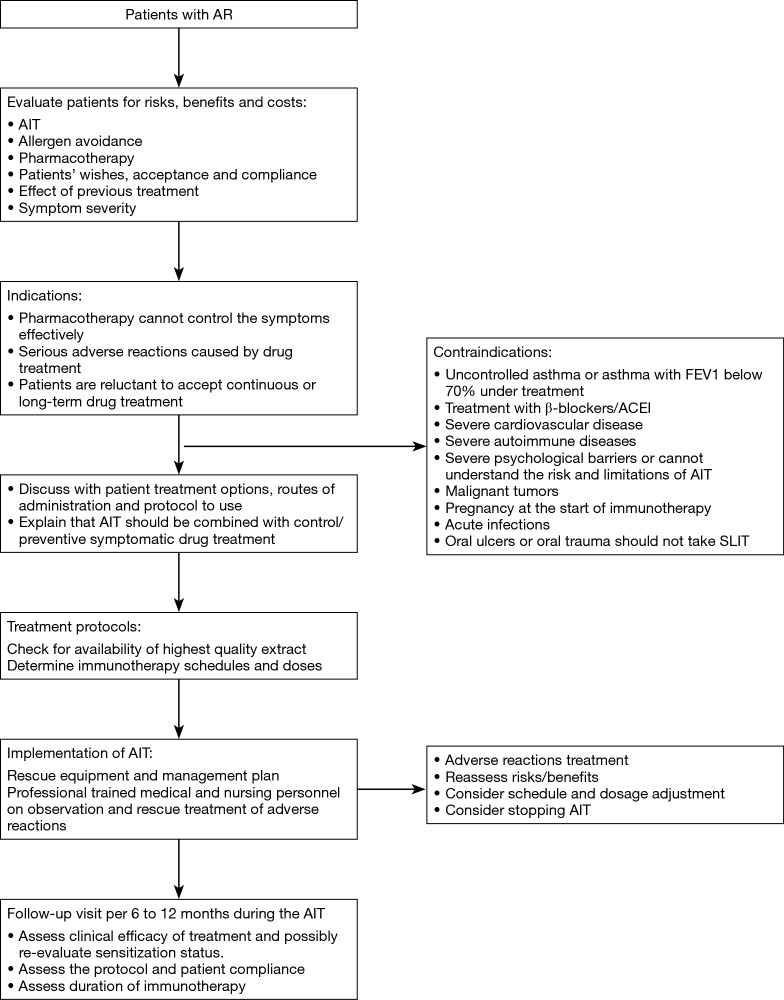
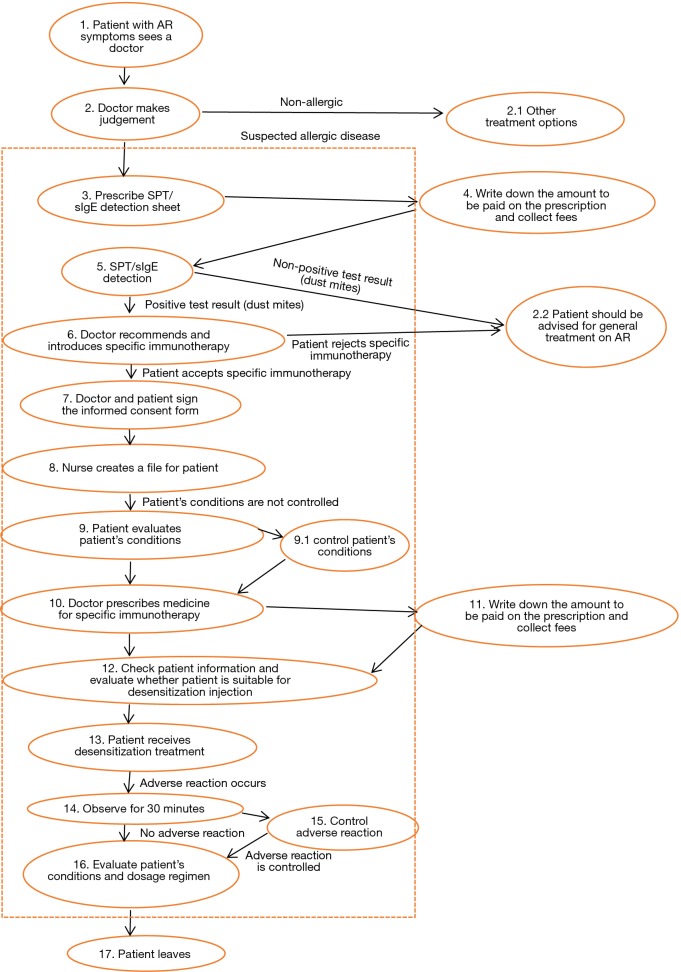
The present document is based on a consensus reached by a panel of experts from Chinese Society of Allergy (CSA) and Chinese Allergic Rhinitis Collaborative Research Group (C2AR2G). Allergen immunotherapy (AIT), has increasingly been used as a treatment for allergic rhinitis (AR) globally, as it has been shown to provide a long-term effect in improving nasal and ocular symptoms, reducing medication need, and improving quality of life. AIT is currently the only curative intervention that can potentially modify the immune system in individuals suffering from AR and prevent the development of new sensitization and the progression of disease from AR to asthma. Although the use of AIT is becoming more acceptable in China, to date no AR immunotherapy guideline from China is available for use by the international community. This document has thus been produced and covers the main aspects of AIT undertaken in China; including selection of patients for AIT, the allergen extracts available on the Chinese market, schedules and doses of allergen employed in different routes of AIT, assessment of effect and safety, patients' administration and follow-up, and management of adverse reactions. The Chinese guideline for AR immunotherapy will thus serve as a reference point by doctors, healthcare professionals and organizations involved in the AIT of AR in China. Moreover, this guideline will serve as a source of information for the international community on AIT treatment strategies employed in China.
Keywords: Allergen immunotherapy (AIT); China; allergic rhinitis (AR); guideline.
Conflict of interest statement
Conflicts of Interest: The authors have no conflicts of interest to declare.
Figures

References
Publication types
LinkOut - more resources
Full Text Sources
Other Literature Sources
Research Materials