


Discovery of novel PDE9A inhibitors with antioxidant activities for treatment of Alzheimer's disease
- PMID: 29271265
- PMCID: PMC7011943
- DOI: 10.1080/14756366.2017.1412315
Discovery of novel PDE9A inhibitors with antioxidant activities for treatment of Alzheimer's disease
Erratum in
-
Correction to: Zhang et al., Discovery of novel PDE9A inhibitors with antioxidant activities for treatment of Alzheimer's disease.J Enzyme Inhib Med Chem. 2018 Dec;33(1):383. doi: 10.1080/14756366.2018.1427691. J Enzyme Inhib Med Chem. 2018. PMID: 29363360 Free PMC article. No abstract available.
Abstract
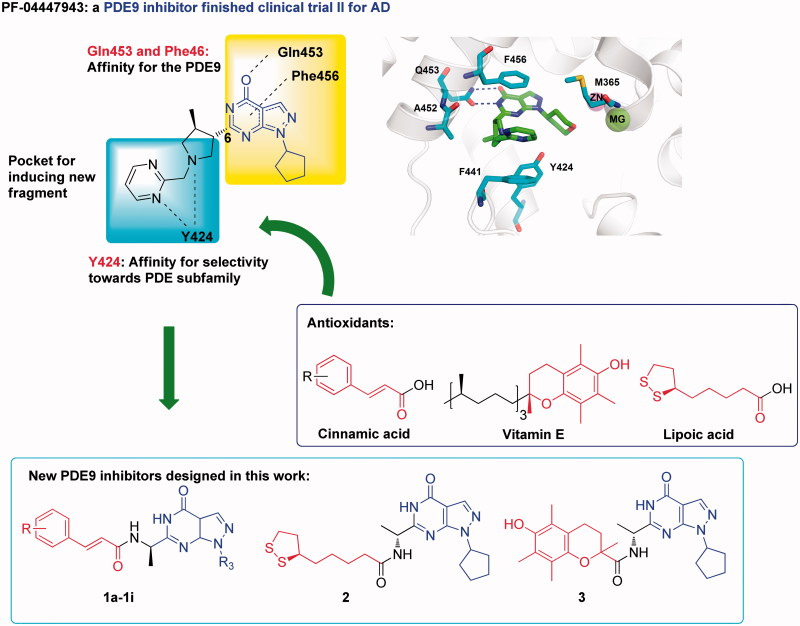
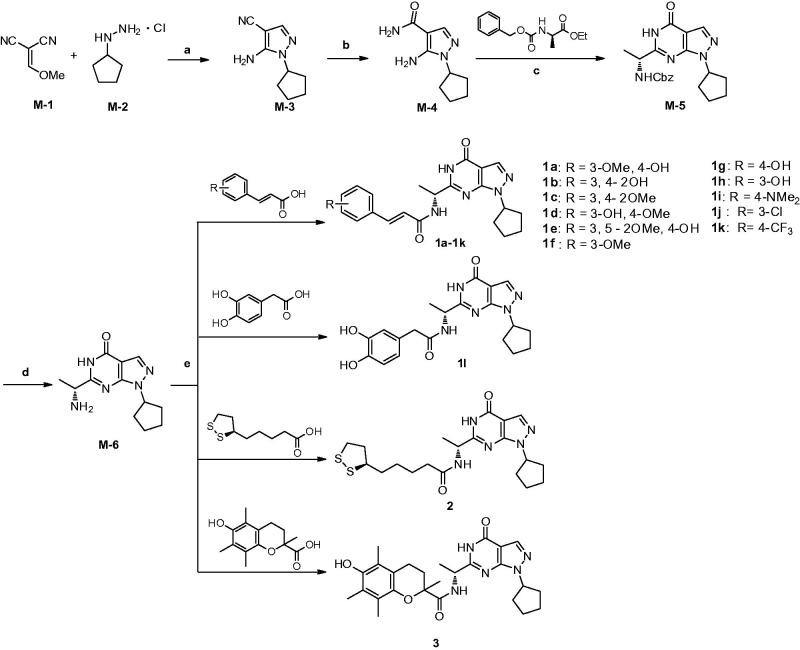
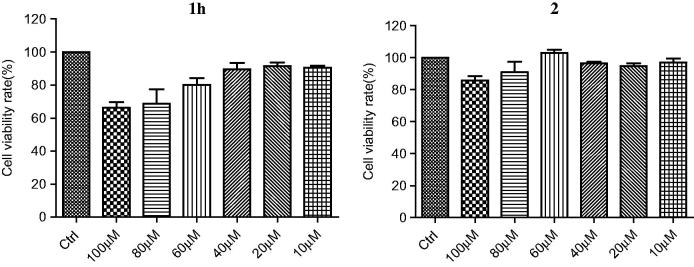
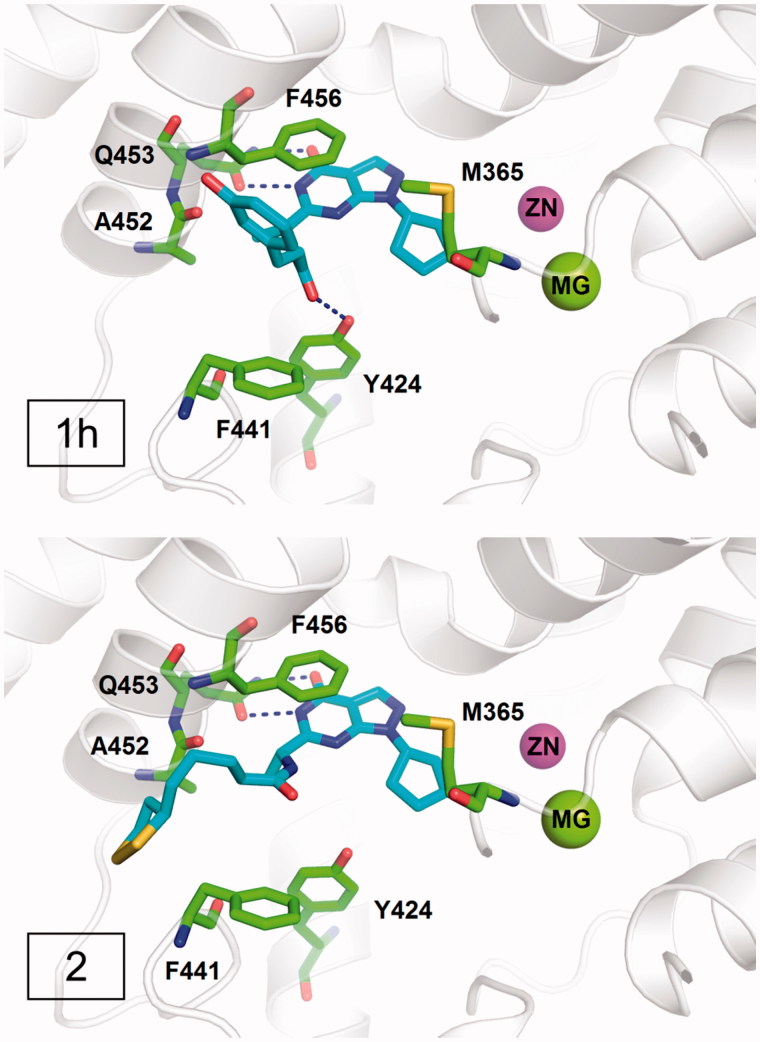
Phosphodiesterase-9 (PDE9) is a promising target for treatment of Alzheimer's disease (AD). To discover multifunctional anti-AD agents with capability of PDE9 inhibition and antioxidant activity, a series of novel pyrazolopyrimidinone derivatives, coupling with the pharmacophore of antioxidants such as ferulic and lipolic acids have been designed with the assistance of molecular docking and dynamics simulations. Twelve out of 14 synthesised compounds inhibited PDE9A with IC50 below 200 nM, and showed good antioxidant capacities in the ORAC assay. Compound 1h, the most promising multifunctional anti-AD agent, had IC50 of 56 nM against PDE9A and good antioxidant ability (ORAC (trolox) = 3.3). The selectivity of 1h over other PDEs was acceptable. In addition, 1h showed no cytotoxicity to human neuroblastoma SH-SY5Y cells. The analysis on structure-activity relationship (SAR) and binding modes of the compounds may provide insight into further modification.
Keywords: Alzheimer’s disease; Phosphodiesterase-9; antioxidant activity; molecular docking; multifunctional anti-AD agents.
Figures
References
-
- Stopschinski BE, Diamond MI.. The prion model for progression and diversity of neurodegenerative diseases. Lancet Neurol 2017;16:323–32. - PubMed
-
- Alzheimer’s Association (USA) World Alzheimer Report. 2015. Available from: http://news.medlive.cn/uploadfile/20150902/14411602338388.pdf
-
- Goedert M, Spillantini MG.. A century of Alzheimer’s disease. Science 2006;314:777–81. - PubMed
-
- Herrmann N, Chau SA, Kircanski I, et al. Current and emerging drug treatment options for Alzheimer’s disease: a systematic review. Drugs 2011;71:2031–65. - PubMed
MeSH terms
Substances
LinkOut - more resources
Full Text Sources
Other Literature Sources
Medical
Miscellaneous
