


Effects of Omega-3 Fatty Acids on Markers of Inflammation in Patients With Chronic Kidney Disease: A Controversial Issue
- PMID: 29271576
- PMCID: PMC5880693
- DOI: 10.1111/1744-9987.12611
Effects of Omega-3 Fatty Acids on Markers of Inflammation in Patients With Chronic Kidney Disease: A Controversial Issue
Abstract
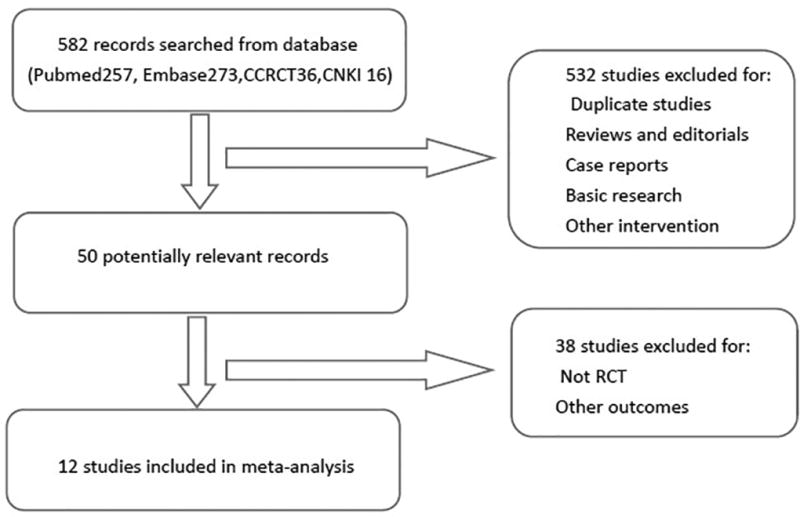
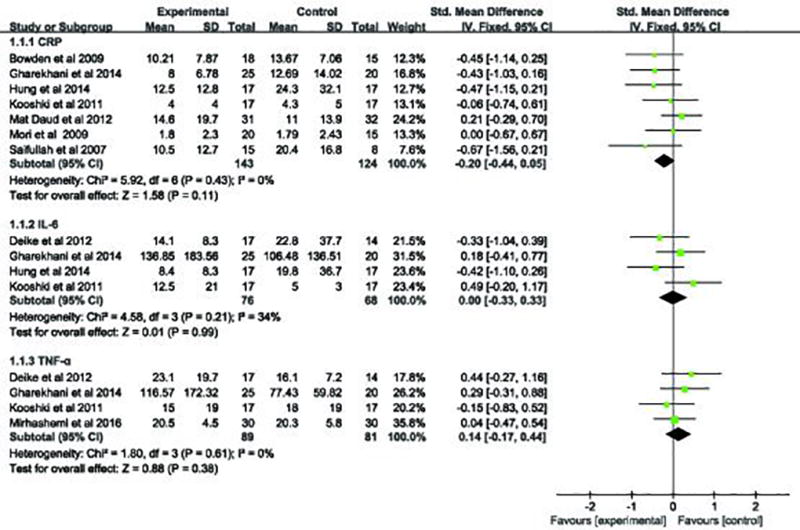
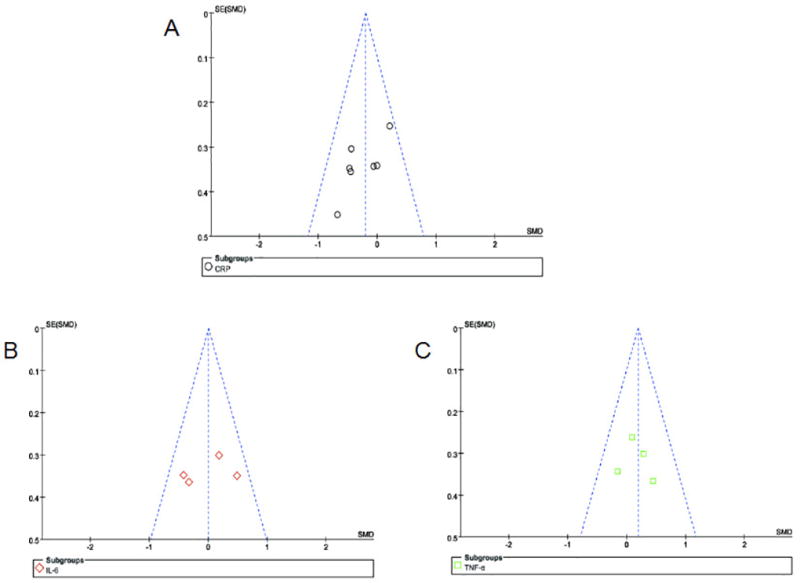
Chronic kidney disease (CKD) is a global problem which contributes to a significant morbidity and mortality in China. Concomitant inflammatory state further boosts the mortality due to cardiovascular events in patients with CKD undergoing dialysis. There is a general notion that Omega-3 fatty acids including docosahexaenoic acids (DHA) and eicosapentaenoic (EPA) have certain health benefits perhaps via the regulation of inflammation. However, the anti-inflammatory effect of omega-3 fatty acids in patients with CKD is controversial. We analyzed the data of oral supplementation of omega-3 fatty acids in CKD patients by searching literature on database from inception to August 2016. The analysis included randomized controlled trials (RCTs) derived from multiple databases, and the effect of omega-3 fatty acids supplementation versus the control cohorts were compared. All of the data analysis was calculated by RevMan 5.2. A total of 12 RCTs involving 487 patients were included in the meta-analysis. Among them 254 patients received omega-3 fatty acids and 233 patients served as controls who received placebo. The meta-analysis revealed no statistical significance in serum levels of C-reactive protein (CRP) (SMD, -0.20; 95% CI, -0.44 to 0.05; P = 0.11), IL-6 (SMD, 0.00; 95% CI, -0.33 to 0.33; P = 0.99) and TNF-α (SMD, 0.14; 95% CI, -0.17 to 0.44; P = 0.38) between the omega-3 fatty acids supplementation group and control. This suggested that there is insufficient evidence to conclude the benefit of omega-3 fatty acids oral supplementation in reducing serum levels of CRP, IL-6 and TNF-α in patients with CKD.
Keywords: C-reactive protein; Chronic kidney disease; Dialysis; Interleukin-6; Omega-3 fatty acids; Tumor necrosis factor-α.
© 2017 International Society for Apheresis, Japanese Society for Apheresis, and Japanese Society for Dialysis Therapy.
Conflict of interest statement
Figures
References
-
- Zimmermann J, Herrlinger S, Pruy A, Metzger T, Wanner C. Inflammation enhances cardiovascular risk and mortality in hemodialysis patients. Kidney Int. 1999;55:648–658. - PubMed
-
- Hung A, Pupim L, Yu C, et al. Determinants of C-reactive protein in chronic hemodialysis patients: relevance of dialysis catheter utilization. Hemodial Int. 2008;12:236–243. - PubMed
-
- Collins AJ, Foley RN, Herzog C, et al. US Renal Data System 2012 Annual Data Report. Am J Kidney Dis. 2013;61:A7, e1–476. - PubMed
-
- Rangel-Huerta OD, Aguilera CM, Mesa MD, Gil A. Omega-3 long-chain polyunsaturated fatty acids supplementation on inflammatory biomakers: a systematic review of randomised clinical trials. Br J Nutr. 2012;107(suppl 2):S159–S170. - PubMed
Publication types
MeSH terms
Substances
Grants and funding
LinkOut - more resources
Full Text Sources
Other Literature Sources
Medical
Research Materials
Miscellaneous
