


Self-Reported Fear Predicts Functional Performance and Second ACL Injury After ACL Reconstruction and Return to Sport: A Pilot Study
- PMID: 29272209
- PMCID: PMC5958451
- DOI: 10.1177/1941738117745806
Self-Reported Fear Predicts Functional Performance and Second ACL Injury After ACL Reconstruction and Return to Sport: A Pilot Study
Abstract
Background: Outcomes after anterior cruciate ligament reconstruction (ACLR) are highly variable. Previous studies have failed to report the relationship between fear, objective measures of function, and reinjury rates. The purpose of this study was to determine whether fear was related to functional performance measures and risk of second ACL injury after ACLR and return to sport (RTS).
Hypothesis: Fear will be associated with performance on functional testing and second ACL injury rate.
Study design: Prospective cohort study.
Level of evidence: Level 2.
Methods: A total of 40 patients cleared to RTS after ACLR completed the Tampa Scale of Kinesiophobia (TSK-11), hop testing, and quadriceps strength testing, bilaterally. Patients were tracked for 12 months after RTS to identify the incidence of second ACL injury. Chi-square analyses determined whether patients with high fear (TSK-11, ≥17) were more likely to have lower levels of activity, greater asymmetry on functional testing, and higher reinjury rates.
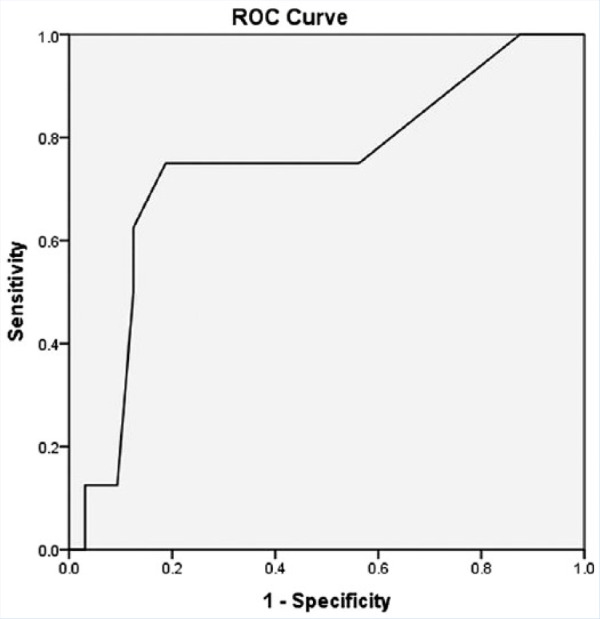
Results: Patients with greater fear on the TSK-11 (≥17) at RTS were 4 times (odds ratio [OR], 3.73; 95% CI, 0.98-14.23) more likely to report lower levels of activity, 7 times (OR, 7.1; 95% CI, 1.5-33.0) more likely to have a hop limb symmetry lower than 95%, and 6 times (OR, 6.0; 95% CI, 1.3-27.8) more likely to have quadriceps strength symmetry lower than 90%. Patients who went on to suffer an ipsilateral second ACL injury had a greater TSK-11 score at the time of RTS (mean, 19.8 ± 4.0) than those who did not suffer a second ACL injury (mean, 16.4 ± 3.6) ( P = 0.03). Patients with a TSK-11 score of 19 or greater at the time of RTS were 13 times (relative risk, 13.0; 95% CI, 2.1-81.0) more likely to suffer a second ACL tear within 24 months after RTS.
Conclusion: Patients with greater self-reported fear were less active, presented with lower single-leg hop performance and isometric quadriceps strength, and had an increased risk of suffering a second ACL injury in the 24 months after RTS.
Clinical relevance: Self-reported fear of movement/reinjury after ACLR at the time of RTS may be an important measure to incorporate into discharge criteria prior to release to return to pivoting and cutting sports after ACLR.
Keywords: ACL reconstruction; fear; functional performance; second injury.
Conflict of interest statement
The following author declared potential conflicts of interest: This work was funded by support from the National Institutes of Health grant F32-AR055844 and the National Football League Charities Medical Research Grants 2007, 2008, 2009, 2011.
Figures
References
-
- Ardern CL, Osterberg A, Tagesson S, Gauffin H, Webster KE, Kvist J. The impact of psychological readiness to return to sport and recreational activities after anterior cruciate ligament reconstruction. Br J Sports Med. 2014;48:1613-1619. - PubMed
-
- Ardern CL, Taylor NF, Feller JA, Webster KE. Return-to-sport outcomes at 2 to 7 years after anterior cruciate ligament reconstruction surgery. Am J Sports Med. 2012;40:41-48. - PubMed
-
- Ardern CL, Taylor NF, Feller JA, Webster KE. Fear of re-injury in people who have returned to sport following anterior cruciate ligament reconstruction surgery. J Sci Med Sport. 2012;15:488-495. - PubMed
-
- Ardern CL, Taylor NF, Feller JA, Webster KE. Fifty-five per cent return to competitive sport following anterior cruciate ligament reconstruction surgery: an updated systematic review and meta-analysis including aspects of physical functioning and contextual factors. Br J Sports Med. 2014;48:1543-1552. - PubMed
MeSH terms
Grants and funding
LinkOut - more resources
Full Text Sources
Other Literature Sources
Medical
Research Materials
