


Quantitative Assessment and Interpretation of Vaginal Conditions
- PMID: 29273316
- PMCID: PMC5815972
- DOI: 10.1016/j.esxm.2017.08.002
Quantitative Assessment and Interpretation of Vaginal Conditions
Abstract
Introduction: Few means exist to provide quantitative and reproducible assessment of vaginal conditions from biomechanical and functional standpoints.
Aim: To develop a new approach for quantitative biomechanical characterization of the vagina.
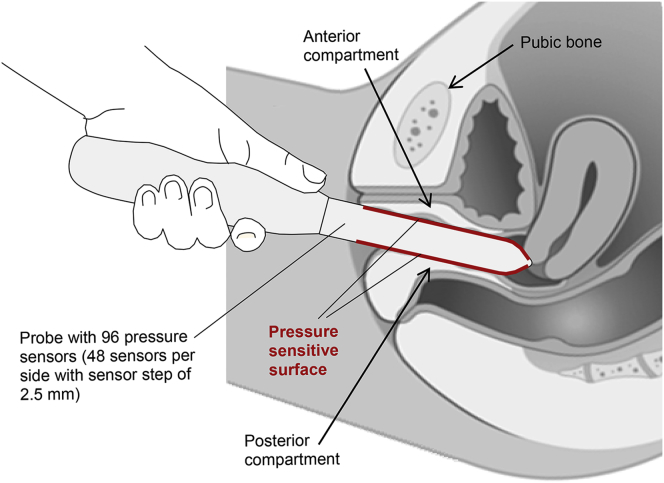
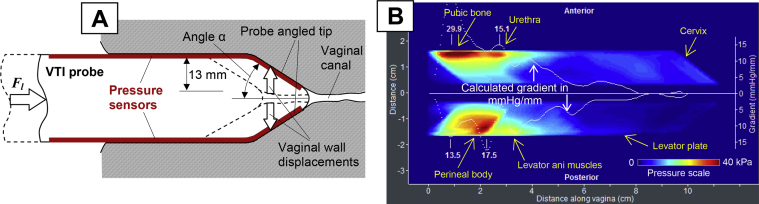
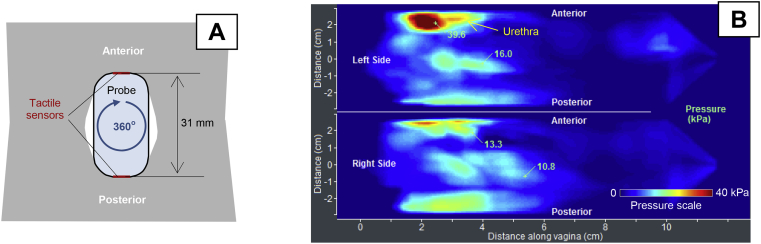
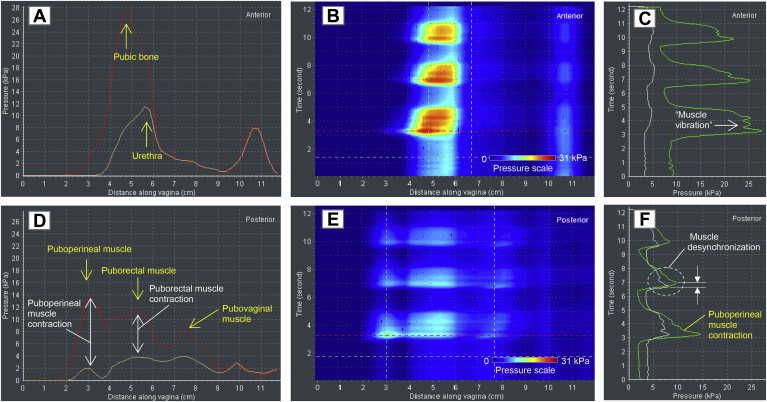
Methods: Vaginal tactile imaging (VTI) allows biomechanical assessment of soft tissue and function along the entire length of the anterior, posterior, and lateral vaginal walls. This can be done at rest, with applied vaginal deformation, and with pelvic muscle contraction.
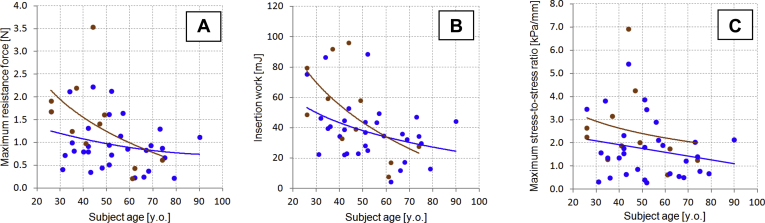
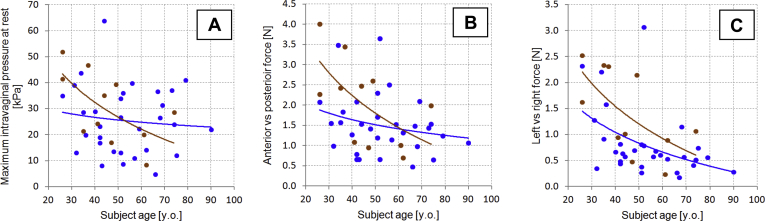
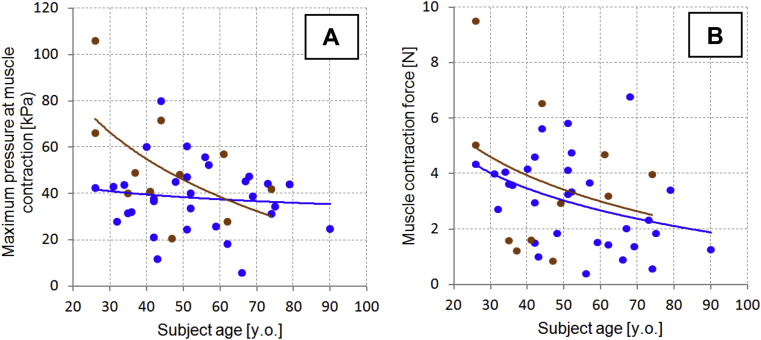
Results: Data were analyzed for 42 subjects with normal pelvic floor support from an observational case-controlled clinical study. The average age was 52 years (range = 26-90 years). We introduced 8 VTI parameters to characterize vaginal conditions: (i) maximum resistance force to insertion (newtons), (ii) insertion work (millijoules), (iii) maximum stress-to-strain ratio (elasticity; kilopascals per millimeter), (iv) maximum pressure at rest (kilopascals), (v) anterior-posterior force at rest (newtons), (vi) left-right force at rest (newtons), (vii) maximum pressure at muscle contraction (kilopascals), and (viii) muscle contraction force (newtons). We observed low to moderate correlation of these parameters with subject age and no correlation with subject weight. 6 of 8 parameters demonstrated a P value less than .05 for 2 subject subsamples divided by age (≤52 vs >52 years), which means 6 VTI parameters change with age.
Conclusions: VTI allows biomechanical and functional characterization of the vaginal conditions that can be used for (i) understanding "normal" vaginal conditions, (ii) quantification of the deviation from normality, (iii) personalized treatment (radiofrequency, laser, or plastic surgery), and (iv) assessment of the applied treatment outcome. Egorov V, Murphy M, Lucente V, et al. Quantitative Assessment and Interpretation of Vaginal Conditions. Sex Med 2018;6:39-48.
Keywords: Tactile Imaging; Vaginal Conditions; Vaginal Elasticity; Vaginal Force; Vaginal Pressure; Vaginal Work.
Copyright © 2017 The Authors. Published by Elsevier Inc. All rights reserved.
Figures
References
-
- Goodman M.P., Placik O.J., Matlock D.L. Evaluation of body image and sexual satisfaction in women undergoing female genital plastic/cosmetic surgery. Aesthet Surg J. 2016;36:1048–1057. - PubMed
-
- Shaw D., Lefebvre G., Bouchard C. Female genital cosmetic surgery. J Obstet Gynaecol Can. 2013;5:1108–1114. - PubMed
-
- Mirzabeigi M.N., Jandali S., Mettel R.K. The nomenclature of “vaginal rejuvenation” and elective vulvovaginal plastic surgery. Aesthet Surg J. 2011;31:723–724. - PubMed
Grants and funding
LinkOut - more resources
Full Text Sources
Other Literature Sources
