


Diagnosis and typing of influenza using fluorescent barcoded probes
- PMID: 29273754
- PMCID: PMC5741751
- DOI: 10.1038/s41598-017-18333-7
Diagnosis and typing of influenza using fluorescent barcoded probes
Abstract
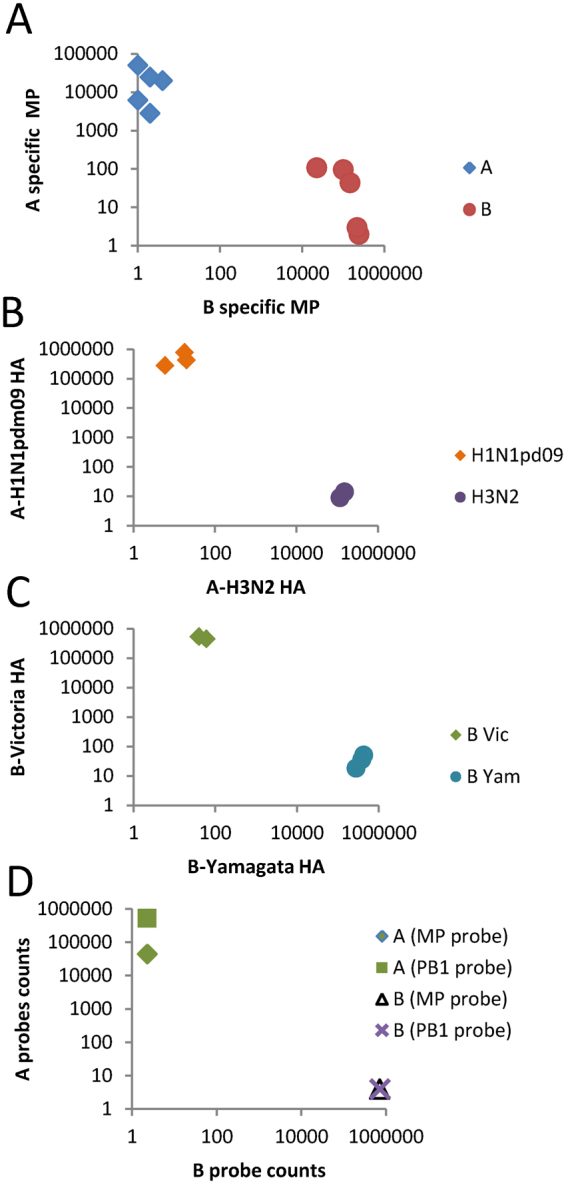
In this work, we explore a new hybridization technology using barcoded probes which has large-scale multiplexing capability. We used influenza virus to test whether the technology has application in virus diagnostics. Typing of influenza virus strains is an important aspect of global health surveillance. Standard typing procedures use serological or amplification-based assays performed sequentially. By comparison, the hybridization technology was correctly able to detect, type and subtype influenza A and B virus strains directly from clinical samples in a single reaction without prior virus isolation or amplification. Whilst currently not as sensitive as amplification-based assays, these results are a first-step towards application of this technology to the detection and typing of influenza and other viruses.
Conflict of interest statement
T.R. is an employee of NanoString Technologies. Otherwise, the authors have no competing financial interests to declare.
Figures
References
-
- World Health Organization. Influenza update no. 294, http://www.who.int/influenza/surveillance_monitoring/updates/2017_07_24_... (2017).
-
- Song MK, Chang J, Hong Y, Hong S, Kim SW. Direct multiplex reverse transcription-nested PCR detection of influenza viruses without RNA purification. J Microbiol Biotechnol. 2009;19:1470–1474. - PubMed
Publication types
MeSH terms
Substances
LinkOut - more resources
Full Text Sources
Other Literature Sources
Medical
