


Review
doi: 10.1053/j.sempedsurg.2017.11.011.
Epub 2017 Nov 7.
Stem cell therapy in necrotizing enterocolitis: Current state and future directions
Affiliations
- PMID: 29275819
- PMCID: PMC5745058
- DOI: 10.1053/j.sempedsurg.2017.11.011
Item in Clipboard
Review
Stem cell therapy in necrotizing enterocolitis: Current state and future directions
Semin Pediatr Surg.
2018 Feb.
Abstract
Stem cell therapy is a promising treatment modality for necrotizing enterocolitis. Among the many promising stem cells identified to date, it is likely that mesenchymal stem cells will be the most useful and practical cell-based therapies for this condition. Using acellular components such as exosomes or other paracrine mediators are promising as well. Multiple mechanisms are likely at play in the positive effects provided by these cells, and further research is underway to further elucidate these effects.
Keywords: Intestine; Ischemia; Necrotizing enterocolitis; Neonatal; Premature; Stem cell therapy.
Copyright © 2018 Elsevier Inc. All rights reserved.
Figures
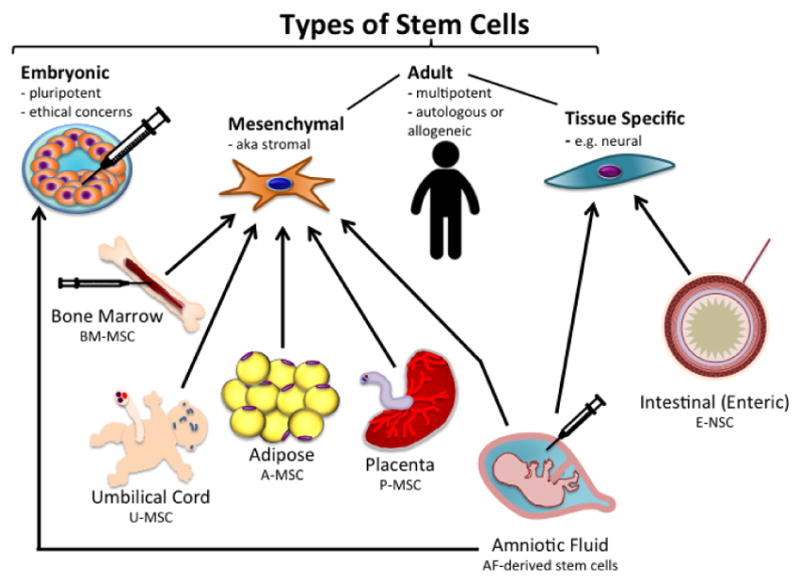
Different types of stem cells available for NEC treatment. Embryonic, while able to differentiate into any tissue, are not used due to ethical concerns with their procurement from the inner mass of the blastocyst of human embryos. Amniotic fluid can give rise to embryonic stem cells as well. Both mesenchymal stem cells and neural stem cells have been used with success in animal models of NEC.
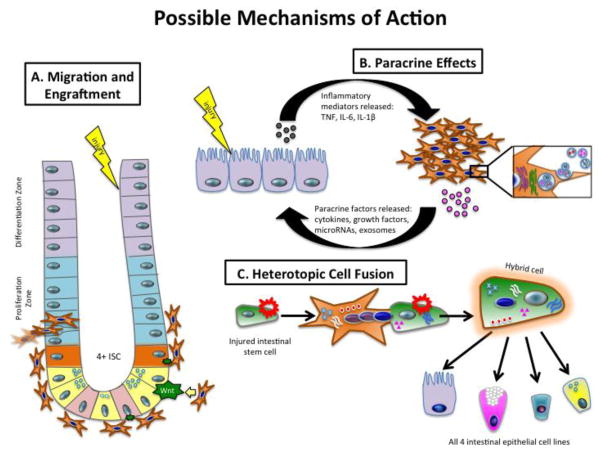
Mechanisms by which mesenchymal stem cells work to protect the intestine against NEC. Beneficial effects provided by stem cells are likely achieved through one or more of these pathways. A) MSC homing, engraftment and differentiation. B) Paracrine release of anti-inflammatory mediators, exosomes, microRNA, and/or cytokines. C) Heterotopic cell fusion with direct transfer of cellular biomaterials.
References
Publication types
MeSH terms
Grants and funding
LinkOut - more resources
Full Text Sources
Other Literature Sources
Medical
