


Isolated unilateral adrenal gland hemorrhage following motor vehicle collision: a case report and review of the literature
- PMID: 29277157
- PMCID: PMC5742871
- DOI: 10.1186/s13256-017-1506-x
Isolated unilateral adrenal gland hemorrhage following motor vehicle collision: a case report and review of the literature
Abstract
Background: Adrenal gland trauma is a rare condition that typically stems from blunt force trauma, and is associated with multiple organ injuries. Alternatively, isolated adrenal gland trauma is extremely rare, accounting for only 1.5 to 4% of all adrenal trauma cases. While isolated adrenal trauma is a mostly self-limiting condition, it is potentially life-threatening, representing a significant cause of bleeding, and/or hypotension due to adrenal insufficiency and adrenal crisis. Due to its rare occurrence, there are no reported guidelines for monitoring and observing isolated adrenal trauma.
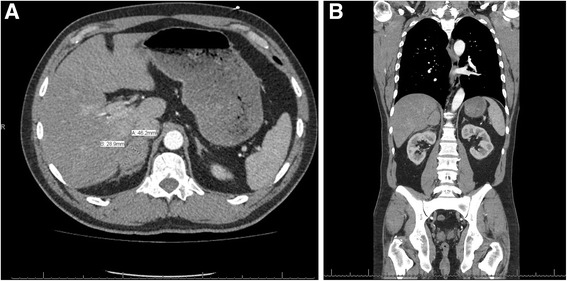
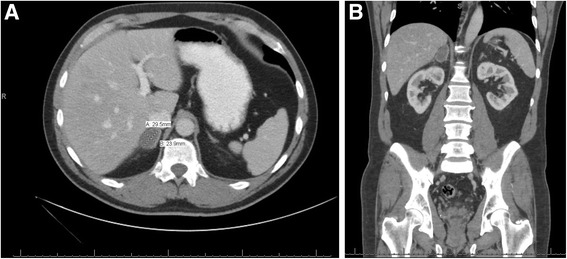
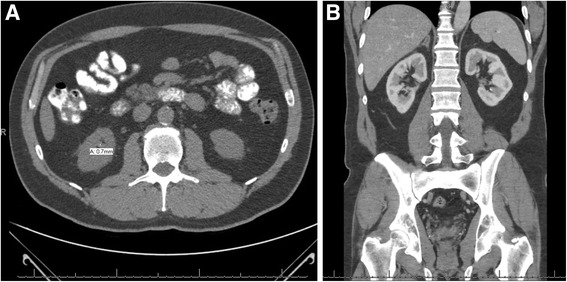
Case presentation: Here we report on an isolated adrenal hemorrhage from a blunt trauma without associated injuries. A 53-year-old white man presented with abdominal pain after a high-speed motor vehicle accident. An initial evaluation revealed minimal abdominal pain and negative focused assessment with sonography for trauma examination; computed tomography imaging revealed a significant fluid collection consistent with adrenal hemorrhage. He was observed in our intensive care unit for 24 hours, and had stable hemoglobin and vital signs, after which he was discharged. At 1-month follow-up, he reported persistent intermittent abdominal pain, which was completely resolved by the 4-month follow-up.
Conclusions: This case report demonstrates isolated adrenal gland injury resulting from significant blunt trauma to the abdomen. There are no current guidelines for monitoring isolated adrenal hemorrhage. Recognizing possible adrenal injury in blunt trauma cases is important due to potentially severe adrenal hemorrhage; therefore, we recommend follow-up with serial abdominal computed tomography until the resolution of hemorrhage and symptoms.
Keywords: Adrenal; Blunt; Hemorrhage; Trauma.
Conflict of interest statement
Ethics approval and consent to participate
The manuscript does not contain any direct patient identification details and hence ethical committee approval was waived.
Consent for publication
Written informed consent was obtained from the patient for publication of this case report and any accompanying images. A copy of the written consent is available for review by the Editor-in-Chief of this journal.
Competing interests
The authors declare that they have no competing interests.
Publisher’s Note
Springer Nature remains neutral with regard to jurisdictional claims in published maps and institutional affiliations.
Figures
References
Publication types
MeSH terms
LinkOut - more resources
Full Text Sources
Other Literature Sources
Medical
