


A baseline metabolomic signature is associated with immunological CD4+ T-cell recovery after 36 months of antiretroviral therapy in HIV-infected patients
- PMID: 29280761
- PMCID: PMC5844590
- DOI: 10.1097/QAD.0000000000001730
A baseline metabolomic signature is associated with immunological CD4+ T-cell recovery after 36 months of antiretroviral therapy in HIV-infected patients
Abstract
Objectives: Poor immunological recovery in treated HIV-infected patients is associated with greater morbidity and mortality. To date, predictive biomarkers of this incomplete immune reconstitution have not been established. We aimed to identify a baseline metabolomic signature associated with a poor immunological recovery after antiretroviral therapy (ART) to envisage the underlying mechanistic pathways that influence the treatment response.
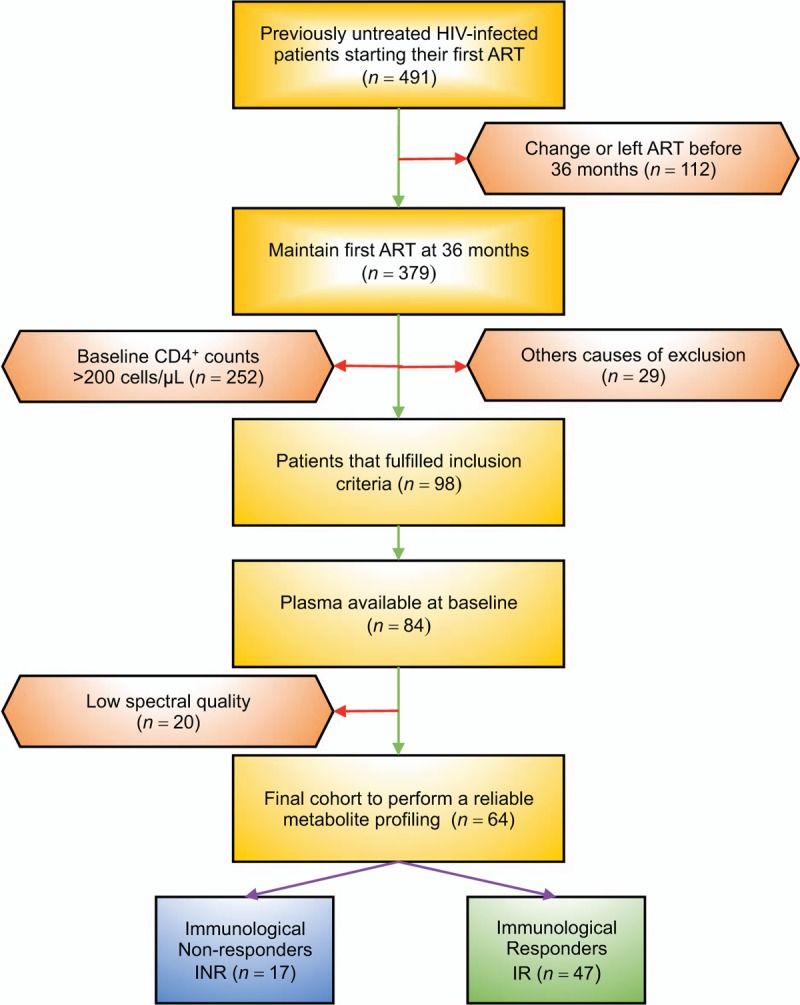
Design: This was a multicentre, prospective cohort study in ART-naive and a pre-ART low nadir (<200 cells/μl) HIV-infected patients (n = 64).
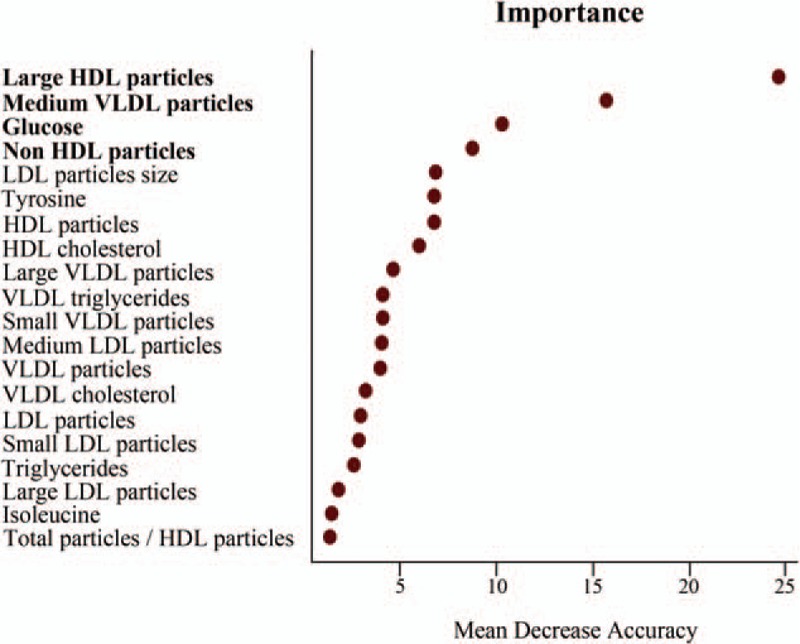
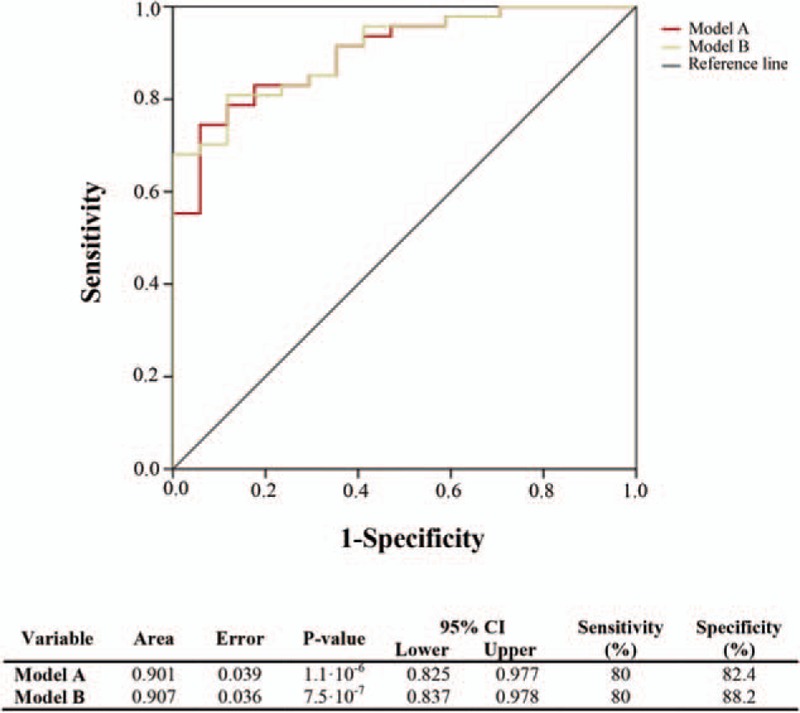
Methods: We obtained clinical data and metabolomic profiles for each individual, in which low molecular weight metabolites, lipids and lipoproteins (including particle concentrations and sizes) were measured by NMR spectroscopy. Immunological recovery was defined as reaching CD4 T-cell count at least 250 cells/μl after 36 months of virologically successful ART. We used univariate comparisons, Random Forest test and receiver-operating characteristic curves to identify and evaluate the predictive factors of immunological recovery after treatment.
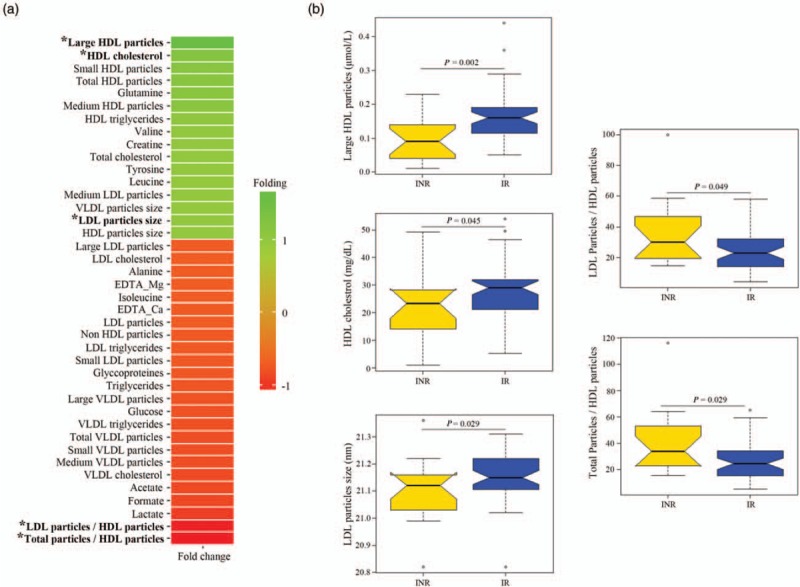
Results: HIV-infected patients with a baseline metabolic pattern characterized by high levels of large high density lipoprotein (HDL) particles, HDL cholesterol and larger sizes of low density lipoprotein particles had a better immunological recovery after treatment. Conversely, patients with high ratios of non-HDL lipoprotein particles did not experience this full recovery. Medium very-low-density lipoprotein particles and glucose increased the classification power of the multivariate model despite not showing any significant differences between the two groups.
Conclusion: In HIV-infected patients, a baseline healthier metabolomic profile is related to a better response to ART where the lipoprotein profile, mainly large HDL particles, may play a key role.
Figures
References
-
- Battegay M, Nüesch R, Hirschel B, Kaufmann GR. Immunological recovery and antiretroviral therapy in HIV-1 infection. Lancet Infect Dis 2006; 6:280–287. - PubMed
-
- Corbeau P, Reynes J. Immune reconstitution under antiretroviral therapy: the new challenge in HIV-1 infection. Blood 2011; 117:5582–5590. - PubMed
-
- Pacheco YM, Jarrin I, Rosado I, Campins AA, Berenguer J, Iribarren JA, et al. Increased risk of non-AIDS-related events in HIV subjects with persistent low CD4 counts despite cART in the CoRIS cohort. Antiviral Res 2015; 117:69–74. - PubMed
-
- Pacheco YM, Jarrín I, Del Amo J, Moreno S, Iribarren JA, Viciana P, et al. Risk factors, CD4 long-term evolution and mortality of HIV-infected patients who persistently maintain low CD4 counts, despite virological response to HAART. Curr HIV Res 2009; 7:612–619. - PubMed
-
- Massanella M, Negredo E, Clotet B, Blanco J. Immunodiscordant responses to HAART – mechanisms and consequences. Expert Rev Clin Immunol 2013; 9:1135–1149. - PubMed
Publication types
MeSH terms
Substances
LinkOut - more resources
Full Text Sources
Other Literature Sources
Medical
Research Materials
