


Effectiveness of behavioral interventions to reduce the intake of sugar-sweetened beverages in children and adolescents: a systematic review and meta-analysis
- PMID: 29281069
- PMCID: PMC5939855
- DOI: 10.1093/nutrit/nux061
Effectiveness of behavioral interventions to reduce the intake of sugar-sweetened beverages in children and adolescents: a systematic review and meta-analysis
Abstract
Context: Consumption of sugar-sweetened beverages (SSBs) among children has been associated with adverse health outcomes. Numerous behavioral interventions aimed at reducing the intake of SSBs among children have been reported, yet evidence of their effectiveness is lacking.
Objective: This systematic review explored the effectiveness of educational and behavioral interventions to reduce SSB intake and to influence health outcomes among children aged 4 to 16 years.
Data sources: Seven databases were searched for randomized controlled trials published prior to September 2016. Studies identified were screened for eligibility.
Study selection: Trials were included in the review if they met the PICOS (Population, Intervention, Comparison, Outcome, and Study design) criteria for inclusion of studies.
Data extraction: Data were extracted by 2 reviewers following Cochrane guidelines and using Review Manager software.
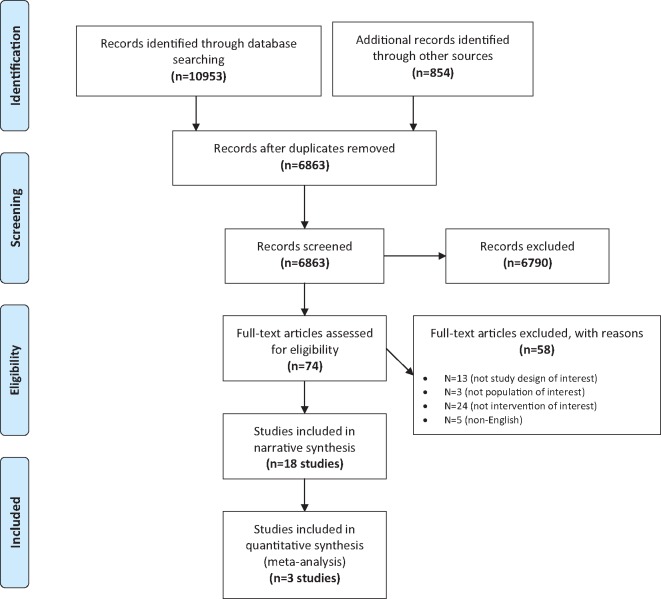
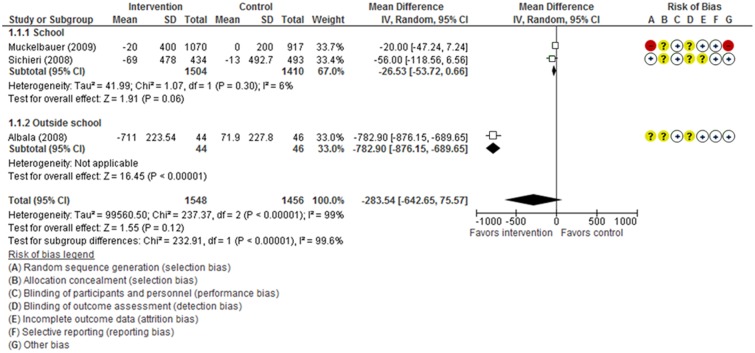
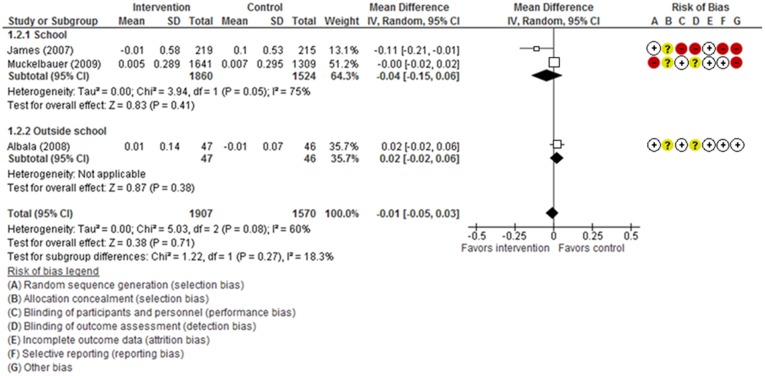
Results: Of the 16 trials included, 12 were school based and 4 were community or home based. Only 3 trials provided data that could be pooled into a meta-analysis for evaluating change in SSB intake. Subgroup analyses showed a trend toward a significant reduction in SSB intake in participants in school-based interventions compared with control groups. Change in body mass index z scores was not statistically significant between groups.
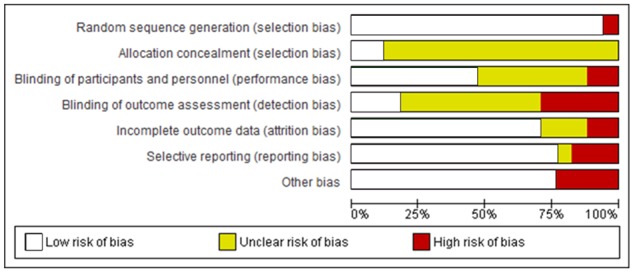
Conclusions: The quality of evidence from included trials was considered moderate, and the effectiveness of educational and behavioral interventions in reducing SSB intake was modest.
Systematic review registration: PROSPERO registration number CRD42014004432.
Keywords: behavior; children; interventions; meta-analysis; sugar-sweetened beverages.
© The Author(s) 2017. Published by Oxford University Press on behalf of the International Life Sciences Institute.
Figures
References
-
- Pereira MA. The possible role of sugar-sweetened beverages in obesity etiology: a review of the evidence. Int J Obes. 2006;30:S28–S36.
-
- Malik VS, Popkin BM, Bray GA, et al. Sugar-sweetened beverages, obesity, type 2 diabetes mellitus, and cardiovascular disease risk. Circulation. 2010;121:1356–1364.http://dx.doi.org/10.1161/CIRCULATIONAHA.109.876185 - DOI - PMC - PubMed
-
- Wang YC, Bleich SN, Gortmaker SL.. Increasing caloric contribution from sugar-sweetened beverages and 100% fruit juices among US children and adolescents, 1988–2004. Pediatrics. 2008;121:e1604–e1614. - PubMed
-
- Hu FB. Resolved: there is sufficient scientific evidence that decreasing sugar-sweetened beverage consumption will reduce the prevalence of obesity and obesity-related diseases. Obes Rev. 2013;14:606–619.http://dx.doi.org/10.1111/obr.12040 - DOI - PMC - PubMed
-
- Ng SW, Mhurchu CN, Jebb SA, et al. Patterns and trends of beverage consumption among children and adults in Great Britain, 1986–2009. Br J Nutr. 2012;108:536–551.http://dx.doi.org/10.1017/S0007114511006465 - DOI - PMC - PubMed
Publication types
MeSH terms
Substances
LinkOut - more resources
Full Text Sources
Other Literature Sources
Molecular Biology Databases
Miscellaneous
