


Rates, indications, and outcomes of caesarean section deliveries: A comparison of tribal and non-tribal women in Gujarat, India
- PMID: 29281645
- PMCID: PMC5744934
- DOI: 10.1371/journal.pone.0189260
Rates, indications, and outcomes of caesarean section deliveries: A comparison of tribal and non-tribal women in Gujarat, India
Abstract
Background: Even though the caesarean section is an essential component of comprehensive obstetric and newborn care for reducing maternal and neonatal mortality, there is a lack of data regarding caesarean section rates, its determinants and health outcomes among tribal communities in India.
Objective: The aim of this study is to estimate and compare rates, determinants, indications and outcomes of caesarean section. The article provides an assessment on how the inequitable utilization can be addressed in a community-based hospital in tribal areas of Gujarat, India.
Method: Prospectively collected data of deliveries (N = 19923) from April 2010 to March 2016 in Kasturba Maternity Hospital was used. The odds ratio of caesarean section was estimated for tribal and non-tribal women. Decomposition analysis was done to decompose the differences in the caesarean section rates between tribal and non-tribal women.
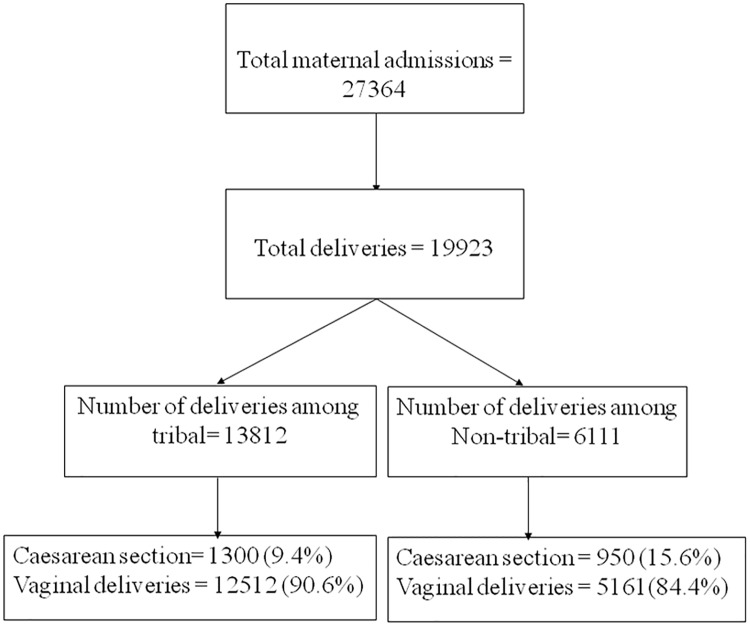
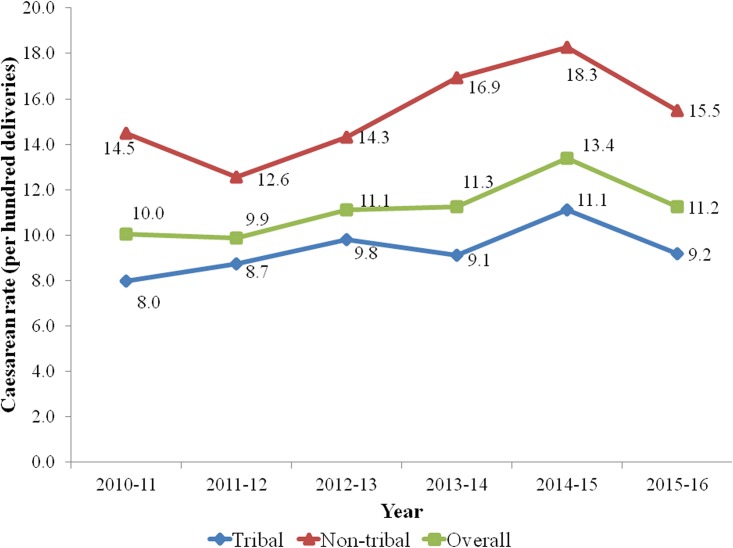
Results: The caesarean section rate was significantly lower among tribal compared to the non-tribal women (9.4% vs 15.6%, p-value < 0.01) respectively. The 60% of the differences in the rates of caesarean section between tribal and non-tribal women were unexplained. Within the explained variation, the previous caesarean accounted for 96% (p-value < 0.01) of the variation. Age of the mother, parity, previous caesarean and distance from the hospital were some of the important determinants of caesarean section rates. The most common indications of caesarean section were foetal distress (31.2%), previous caesarean section (23.9%), breech (16%) and prolonged labour (11.2%). There was no difference in case fatality rate (1.3% vs 1.4%, p-value = 0.90) and incidence of birth asphyxia (0.3% vs 0.6%, p-value = 0.26) comparing the tribal and non-tribal women.
Conclusion: Similar to the prior evidences, we found higher caesarean rates among non-tribal compare to tribal women. However, the adverse outcomes were similar between tribal and non-tribal women for caesarean section deliveries.
Conflict of interest statement
Figures
References
-
- Anderson I, Robson B, Connolly M, Al-Yaman F, Bjertness E, King A, et al. Indigenous and tribal peoples’ health (The Lancet—Lowitja Institute Global Collaboration): a population study. The Lancet. 2016;388(10040):131–157. - PubMed
-
- Stephens C, Porter J, Nettleton C, Willis R. Disappearing, displaced, and undervalued: a call to action for Indigenous health worldwide. The lancet. 2006;367(9527): 2019–2028. - PubMed
-
- Paxton A, Bailey P, Lobis S, Fry D. Global patterns in availability of emergency obstetric care. International Journal of Gynecology & Obstetrics. 2006;93(3):300–307. - PubMed
-
- Ronsmans C, Holtz S, Stanton C. Socioeconomic differentials in caesarean rates in developing countries: a retrospective analysis. The Lancet 2006;368:1516–1523. - PubMed
-
- Weil O, Fernandez H. Is safe motherhood an orphan initiative? The Lancet 1999;54: 940–943. - PubMed
Publication types
MeSH terms
LinkOut - more resources
Full Text Sources
Other Literature Sources
Medical
Miscellaneous
