


Expitope 2.0: a tool to assess immunotherapeutic antigens for their potential cross-reactivity against naturally expressed proteins in human tissues
- PMID: 29282079
- PMCID: PMC5745885
- DOI: 10.1186/s12885-017-3854-8
Expitope 2.0: a tool to assess immunotherapeutic antigens for their potential cross-reactivity against naturally expressed proteins in human tissues
Abstract
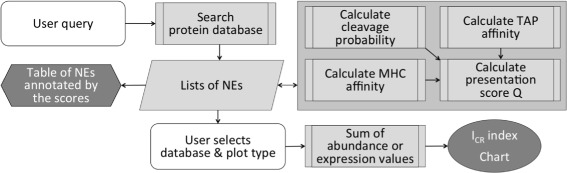
Background: Adoptive immunotherapy offers great potential for treating many types of cancer but its clinical application is hampered by cross-reactive T cell responses in healthy human tissues, representing serious safety risks for patients. We previously developed a computational tool called Expitope for assessing cross-reactivity (CR) of antigens based on tissue-specific gene expression. However, transcript abundance only indirectly indicates protein expression. The recent availability of proteome-wide human protein abundance information now facilitates a more direct approach for CR prediction. Here we present a new version 2.0 of Expitope, which computes all naturally possible epitopes of a peptide sequence and the corresponding CR indices using both protein and transcript abundance levels weighted by a proposed hierarchy of importance of various human tissues.
Results: We tested the tool in two case studies: The first study quantitatively assessed the potential CR of the epitopes used for cancer immunotherapy. The second study evaluated HLA-A*02:01-restricted epitopes obtained from the Immune Epitope Database for different disease groups and demonstrated for the first time that there is a high variation in the background CR depending on the disease state of the host: compared to a healthy individual the CR index is on average two-fold higher for the autoimmune state, and five-fold higher for the cancer state.
Conclusions: The ability to predict potential side effects in normal tissues helps in the development and selection of safer antigens, enabling more successful immunotherapy of cancer and other diseases.
Keywords: Cancer; Cross-reactivity; Immunoinformatics; Immunotherapy; T cell epitope; Tumor antigen expression; Tumor immunology.
Conflict of interest statement
Ethics approval and consent to participate
Not applicable.
Consent for publication
Not applicable.
Competing interests
VJ, AM and SR are employees of Medigene Immunotherapies GmbH/Medigene AG. DJS is Managing Director of Medigene Immunotherapies GmbH and CEO/CSO of Medigene AG.
Publisher’s Note
Springer Nature remains neutral with regard to jurisdictional claims in published maps and institutional affiliations.
Figures

References
-
- Ludewig B, editor. Adoptive Immunotherapy: Methods and Protocols. Methods in molecular medicine. Totowa: Humana Press; 2005.
MeSH terms
Substances
LinkOut - more resources
Full Text Sources
Other Literature Sources
Molecular Biology Databases
Research Materials
