


LncRNA AK023391 promotes tumorigenesis and invasion of gastric cancer through activation of the PI3K/Akt signaling pathway
- PMID: 29282102
- PMCID: PMC5745957
- DOI: 10.1186/s13046-017-0666-2
LncRNA AK023391 promotes tumorigenesis and invasion of gastric cancer through activation of the PI3K/Akt signaling pathway
Erratum in
-
Correction to: LncRNA AK023391 promotes tumorigenesis and invasion of gastric cancer through activation of the PI3K/Akt signaling pathway.J Exp Clin Cancer Res. 2020 Aug 12;39(1):155. doi: 10.1186/s13046-020-01656-1. J Exp Clin Cancer Res. 2020. PMID: 32787877 Free PMC article.
Abstract
Background: Patients with gastric cancer commonly have a poor prognosis, owing to its invasiveness and distant metastasis. Recent studies have confirmed the pivotal role of long non-coding RNAs (lncRNAs) in tumorigenesis and the progression of malignant tumors, including gastric cancer. However, little is known about the molecular mechanism by which lncRNA AK023391 contributes to gastric cancer.
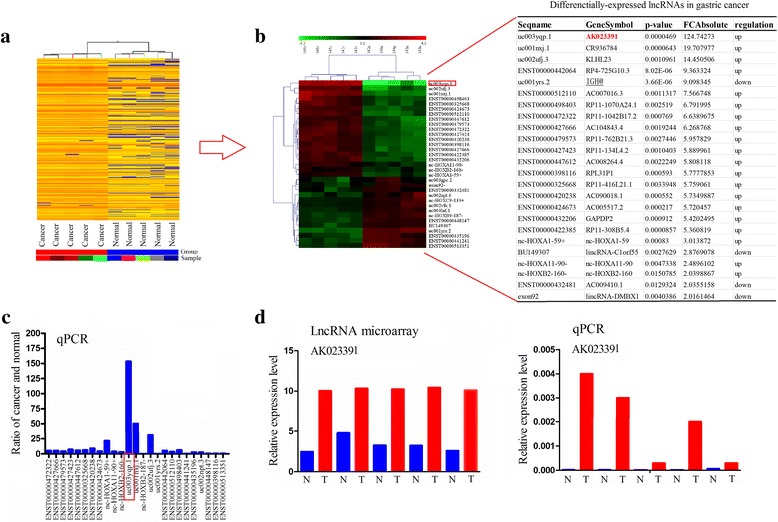
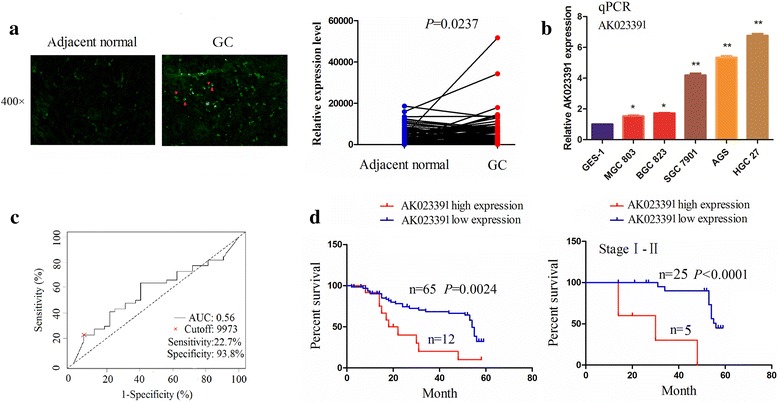
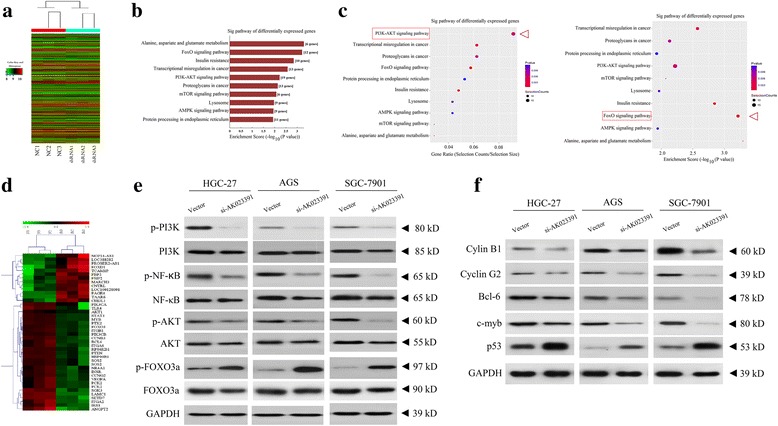
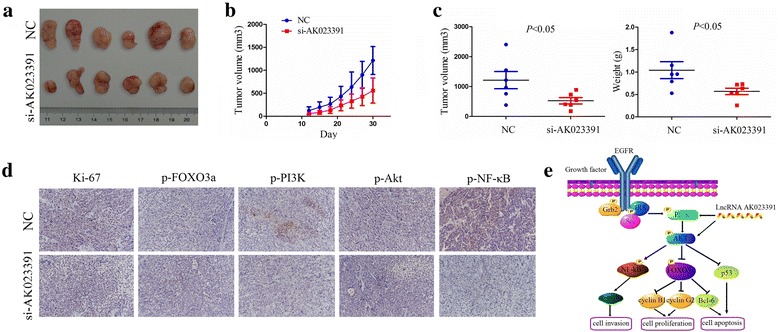
Methods: A lncRNA microarray was used to identify the differentially expressed lncRNA AK023391 in gastric cancer and adjacent normal tissues. In addition, RNA fluorescence in situ hybridization (FISH) was used to investigate the association between AK023391 expression and the clinicopathological characteristics and prognosis of patients with gastric cancer. Subsequently, a series of in vitro assays and a xenograft tumor model were used to observe the functions of lncRNA AK023391 in gastric cancer cells. A cancer pathway microarray, bioinformatic analysis, western blotting, and immunochemistry were carried out to verify the regulation of AK023391 and its downstream PI3K/Akt signaling pathway.
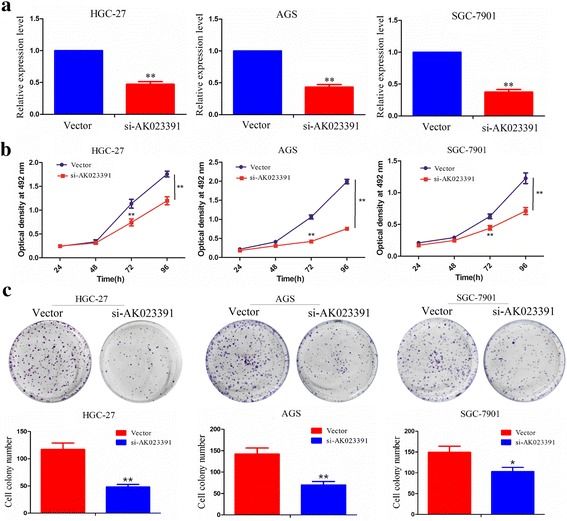
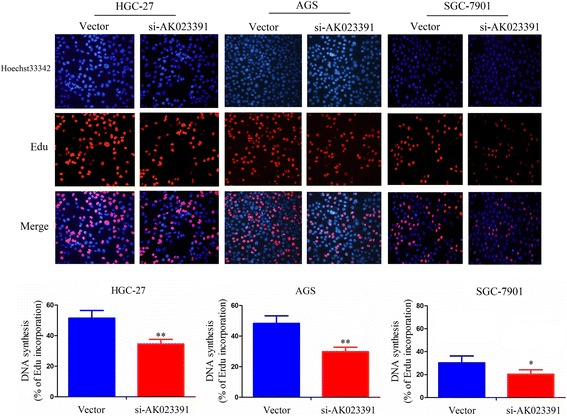
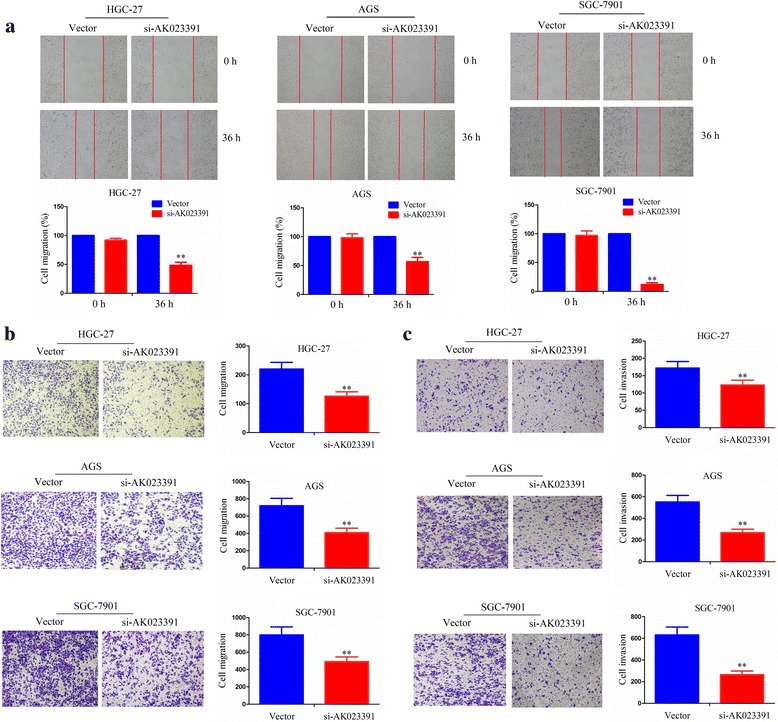
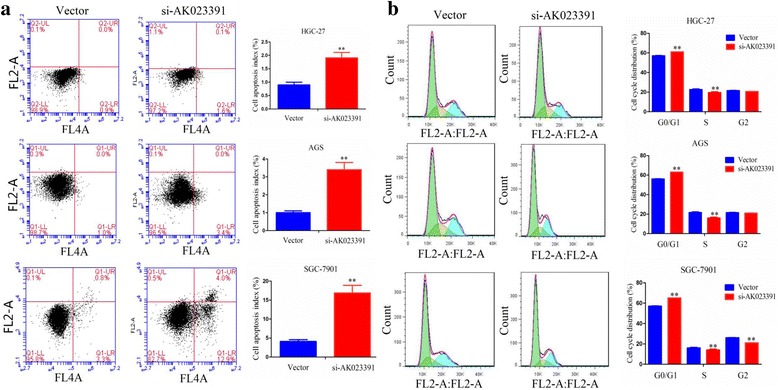
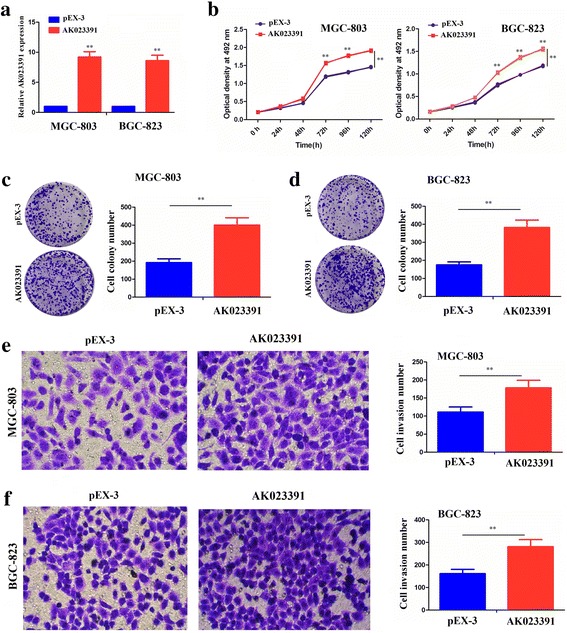
Results: Expression of lncRNA AK023391 was significantly upregulated in gastric cancer samples and cell lines in comparison to adjacent normal tissues, and was positively correlated with poor survival in patients with gastric cancer. The multivariate Cox regression model revealed that AK023391 expression acted as an independent prognostic factor for survival in patients with gastric cancer. Knockdown of AK023391 inhibited cell growth and invasion both in vitro and in vivo, and induced apoptosis and cell cycle arrest in gastric cancer cells, whereas its overexpression reversed these effects. Mechanistically, PI3K/Akt signaling mediated the NF-κB, FOXO3a, and p53 pathways. Moreover, downstream transcription factors, such as c-myb, cyclinB1/G2, and BCL-6 might be involved in AK023391-induced tumorigenesis in gastric cancer.
Conclusions: The novel oncogenic lncRNA AK023391 in gastric cancer exerts its effects through activation of the PI3K/Akt signaling pathway, and may act as a potential biomarker for survival in patients with gastric cancer.
Keywords: Akt; Gastric cancer; Invasion; PI3K; lncRNA AK023391.
Conflict of interest statement
Ethics approval and consent to participate
The present study was approved by the Hospital’s Protection of HumanSubjects Committee.
Competing interests
The authors declare that they have no competing interests.
Publisher’s Note
Springer Nature remains neutral with regard to jurisdictional claims in published maps and institutional affiliations.
Figures
References
-
- Leung WK, M-s W, Kakugawa Y, Kim JJ, Yeoh K-g, Goh KL, Wu K-c, D-c W, Sollano J, Kachintorn U, et al. Asia Pacific working group on gastric cancer: screening for gastric cancer in Asia: current evidence and practice. Lancet Oncol. 2008;9(3):279–287. doi: 10.1016/S1470-2045(08)70072-X. - DOI - PubMed
Publication types
MeSH terms
Substances
Grants and funding
- 81573747/the National Natural Science Foundation of China/International
- XJ2015033/Hong Kong Scholars Program/International
- 17411966500/Shanghai Science and Technology Commission Western Medicine Guide project/International
- BXJ201737/Shanghai Jiao Tong University School of Medicine doctoral innovation fund/International
LinkOut - more resources
Full Text Sources
Other Literature Sources
Medical
Research Materials
Miscellaneous
