. 2017 Dec 28;9(1):66.
doi: 10.1186/s13321-017-0254-7.

HawkRank: a new scoring function for protein-protein docking based on weighted energy terms

Affiliations

HawkRank: a new scoring function for protein-protein docking based on weighted energy terms

Ting Feng et al. J Cheminform. .

Abstract

Deciphering the structural determinants of protein-protein interactions (PPIs) is essential to gain a deep understanding of many important biological functions in the living cells. Computational approaches for the structural modeling of PPIs, such as protein-protein docking, are quite needed to complement existing experimental techniques. The reliability of a protein-protein docking method is dependent on the ability of the scoring function to accurately distinguish the near-native binding structures from a huge number of decoys. In this study, we developed HawkRank, a novel scoring function designed for the sampling stage of protein-protein docking by summing the contributions from several energy terms, including van der Waals potentials, electrostatic potentials and desolvation potentials. First, based on the solvation free energies predicted by the Generalized Born model for ~ 800 proteins, a SASA (solvent accessible surface area)-based solvation model was developed, which can give the aqueous solvation free energies for proteins by summing the contributions of 21 atom types. Then, the van der Waals potentials and electrostatic potentials based on the Amber ff14SB force field were computed. Finally, the HawkRank scoring function was derived by determining the most optimal weights for five energy terms based on the training set. Here, MSR (modified success rate), a novel protein-protein scoring quality index, was used to assess the performance of HawkRank and three other popular protein-protein scoring functions, including ZRANK, FireDock and dDFIRE. The results show that HawkRank outperformed the other three scoring functions according to the total number of hits and MSR. HawkRank is available at http://cadd.zju.edu.cn/programs/hawkrank .

Keywords: Docking; HawkRank; Protein–protein interaction; Scoring.


Figures
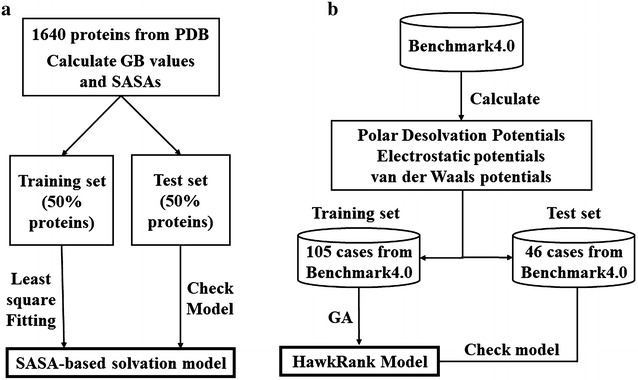
Fig. 1
Fig. 1
Workflow of the development of a the SASA-based solvation model and b the HawkRank scoring function
Fig. 2
Fig. 2
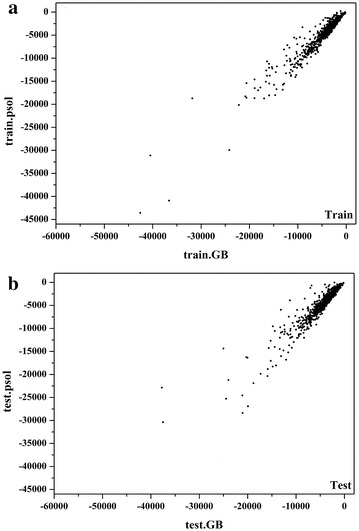
Comparison of the solvation free energies predicted by the GB model and the SASA-based solvation model for the a training set and b test set
Fig. 3
Fig. 3
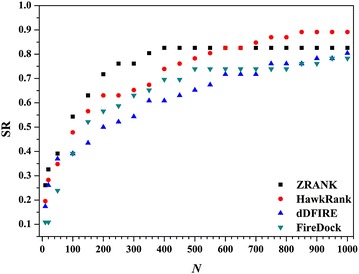
The Success Rate (SR) as a function of the number of the top predictions (N) for HawkRank, ZRANK, dDFIRE and FireDock
Fig. 4
Fig. 4
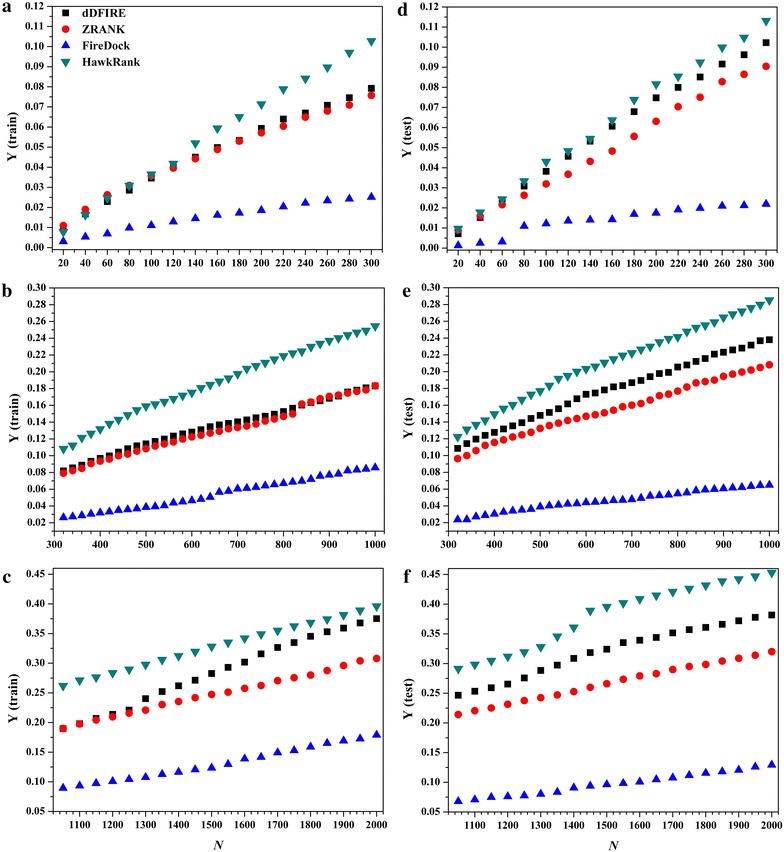
The Y curves for the four scoring functions: a N from 20 to 300 for the training set, b N from 20 to 300 for the test set, c N from 320 to 1000 for the training set, d N from 320 to 1000 for the test set, e N from 1050 to 2000 for the training set, and f N from 1050 to 2000 for the test set
Fig. 5
Fig. 5
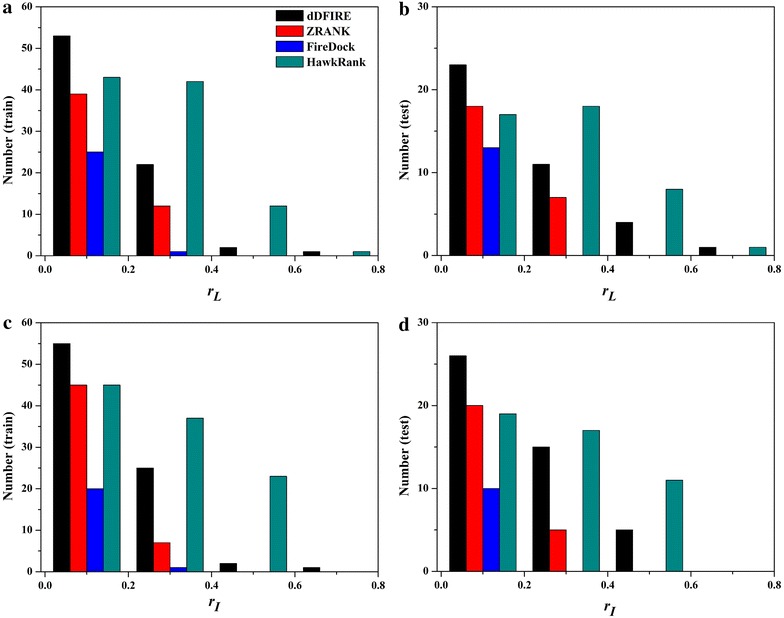
Number of the cases for each scoring function in four intervals: a number of cases about rL for the training set, b number of cases about rL for the test set, c number of cases about rI for the training set, d number of cases about rI for the test set
Fig. 6
Fig. 6
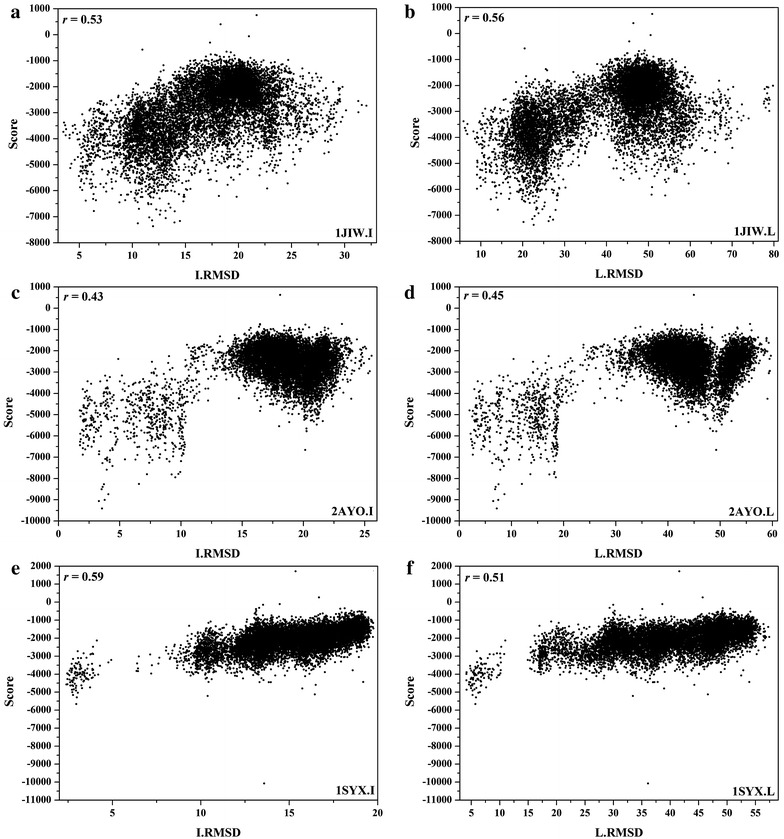
Correlations between I/L_RMSDs and the scores predicted by HawkRank for 1JIW, 2AYO and 1SYX (rI/rL > 0.4): a the correlation between I_RMSDs and scores for 1JIW, b the correlation between L_RMSDs and scores for 1JIW, c the correlation between I_RMSDs and scores for 2AYO, d the correlation between L_RMSDs and scores for 2AYO, e the correlation between I_RMSDs and scores for 1SYX, f the correlation between L_RMSDs and scores for 1SYX
Fig. 7
Fig. 7
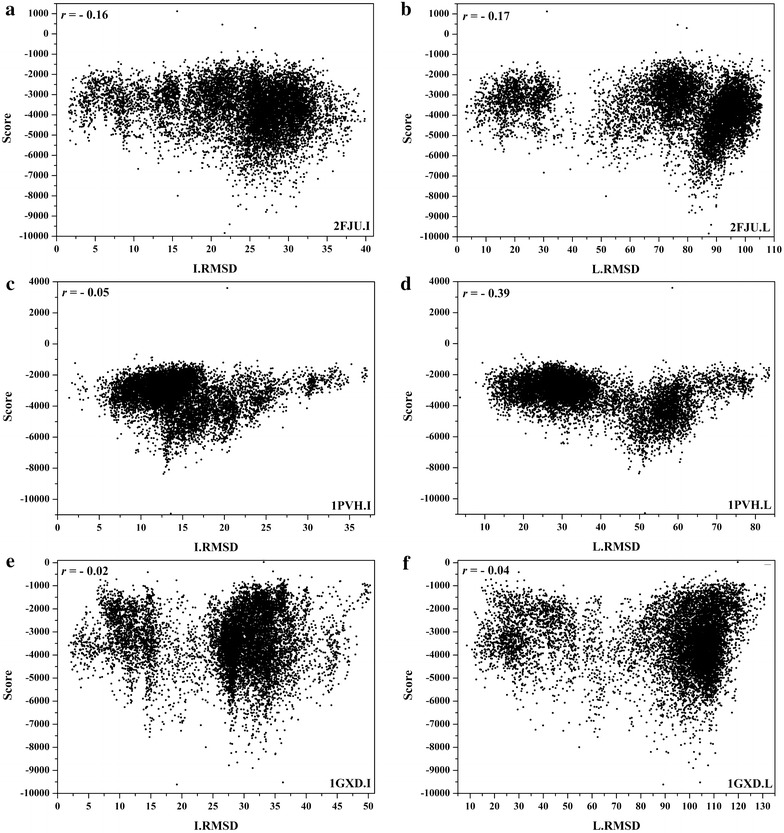
Correlations between I/L_RMSDs and the scores predicted by HawkRank for 2FJU, 1PVH and 1GXD (r I/r L < 0): a the correlation between I_RMSDs and scores for 2FJU, b the correlation between L_RMSDs and scores for 2FJU, c the correlation between I_RMSDs and scores for 1PVH, d the correlation between L_RMSDs and scores for 1PVH, e the correlation between I_RMSDs and scores for 1GXD, f the correlation between L_RMSDs and scores for 1GXD
Fig. 8
Fig. 8
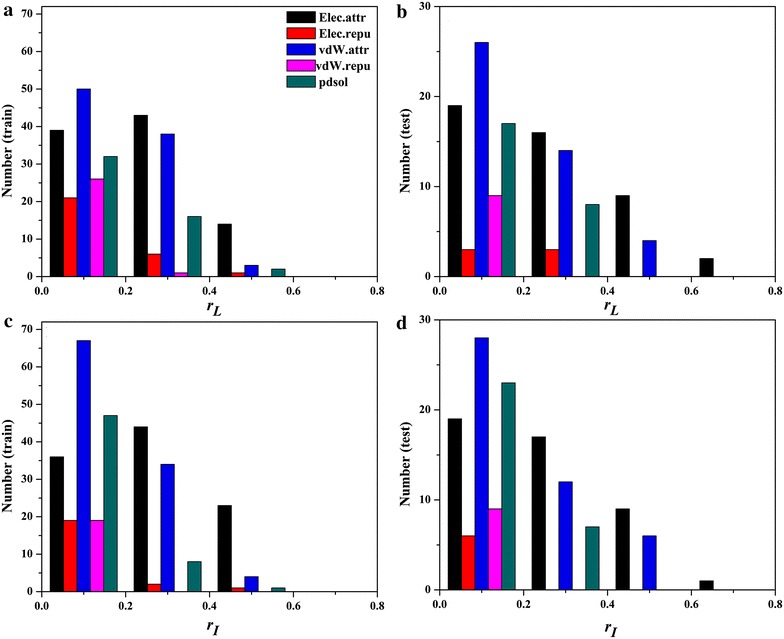
Number of the cases for each energy term of HawkRank in four intervals: a number of cases about rL for the training set, b number of cases about rL for the test set, c number of cases about rI for the training set, d number of cases about rI for the test set

References

    1. Arkin MR, Whitty A. The road less traveled: modulating signal transduction enzymes by inhibiting their protein-protein interactions. Curr Opin Chem Biol. 2009;13(3):284–290. doi: 10.1016/j.cbpa.2009.05.125. - DOI - PubMed
    1. Pawson T, Nash P. Protein-protein interactions define specificity in signal transduction. Gene Dev. 2000;14(9):1027–1047. - PubMed
    1. Hicke L, Dunn R. Regulation of membrane protein transport by ubiquitin and ubiquitin-binding proteins. Annu Rev Cell Dev Biol. 2003;19:141–172. doi: 10.1146/annurev.cellbio.19.110701.154617. - DOI - PubMed
    1. Stone TA, Deber CM. Therapeutic design of peptide modulators of protein-protein interactions in membranes. Biochim Biophys Acta-Biomembr. 2017;1859(4):577–585. doi: 10.1016/j.bbamem.2016.08.013. - DOI - PubMed
    1. Peng HP, Lee KH, Jian JW, Yang AS. Origins of specificity and affinity in antibody-protein interactions. Proc Natl Acad Sci USA. 2014;111(26):E2656–E2665. doi: 10.1073/pnas.1401131111. - DOI - PMC - PubMed

LinkOut - more resources