


Genome Sequencing and Assembly by Long Reads in Plants
- PMID: 29283420
- PMCID: PMC5793159
- DOI: 10.3390/genes9010006
Genome Sequencing and Assembly by Long Reads in Plants
Abstract
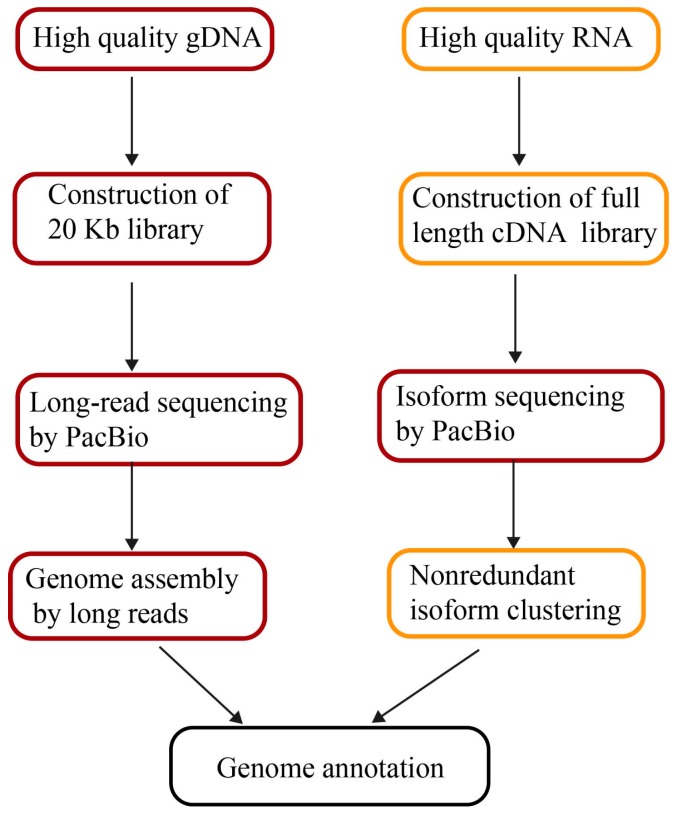
Plant genomes generated by Sanger and Next Generation Sequencing (NGS) have provided insight into species diversity and evolution. However, Sanger sequencing is limited in its applications due to high cost, labor intensity, and low throughput, while NGS reads are too short to resolve abundant repeats and polyploidy, leading to incomplete or ambiguous assemblies. The advent and improvement of long-read sequencing by Third Generation Sequencing (TGS) methods such as PacBio and Nanopore have shown promise in producing high-quality assemblies for complex genomes. Here, we review the development of sequencing, introducing the application as well as considerations of experimental design in TGS of plant genomes. We also introduce recent revolutionary scaffolding technologies including BioNano, Hi-C, and 10× Genomics. We expect that the informative guidance for genome sequencing and assembly by long reads will benefit the initiation of scientists' projects.
Keywords: Next Generation Sequencing; Sanger sequencing; Third Generation Sequencing; genome assembly; long reads.
Conflict of interest statement
The authors declare no conflict of interest.
Figures
References
Publication types
LinkOut - more resources
Full Text Sources
Other Literature Sources
