Long-term persistence and function of hematopoietic stem cell-derived chimeric antigen receptor T cells in a nonhuman primate model of HIV/AIDS
- PMID: 29284044
- PMCID: PMC5746250
- DOI: 10.1371/journal.ppat.1006753
Long-term persistence and function of hematopoietic stem cell-derived chimeric antigen receptor T cells in a nonhuman primate model of HIV/AIDS
Erratum in
-
Correction: Long-term persistence and function of hematopoietic stem cell-derived chimeric antigen receptor T cells in a nonhuman primate model of HIV/AIDS.PLoS Pathog. 2018 Mar 12;14(3):e1006891. doi: 10.1371/journal.ppat.1006891. eCollection 2018 Mar. PLoS Pathog. 2018. PMID: 29529058 Free PMC article.
Abstract
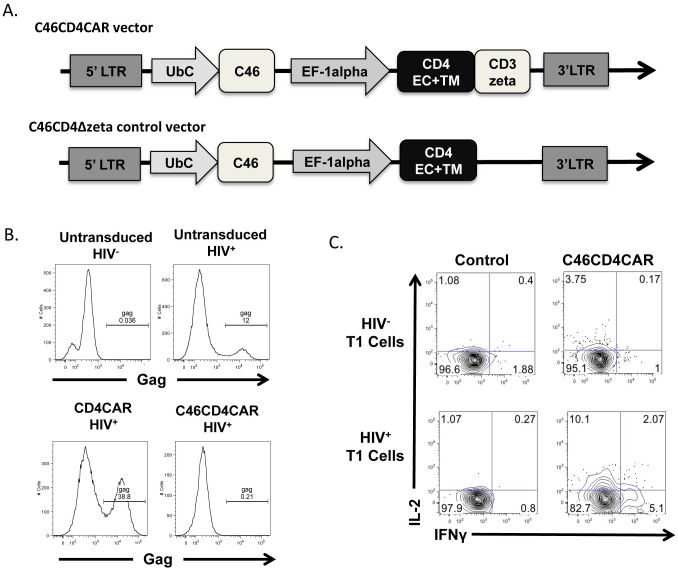
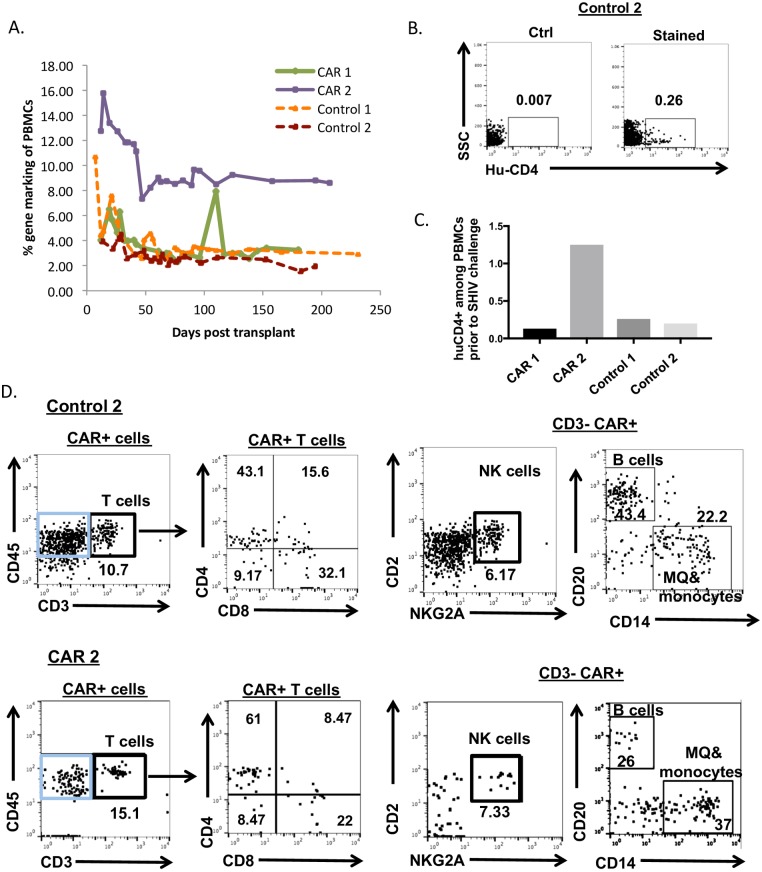
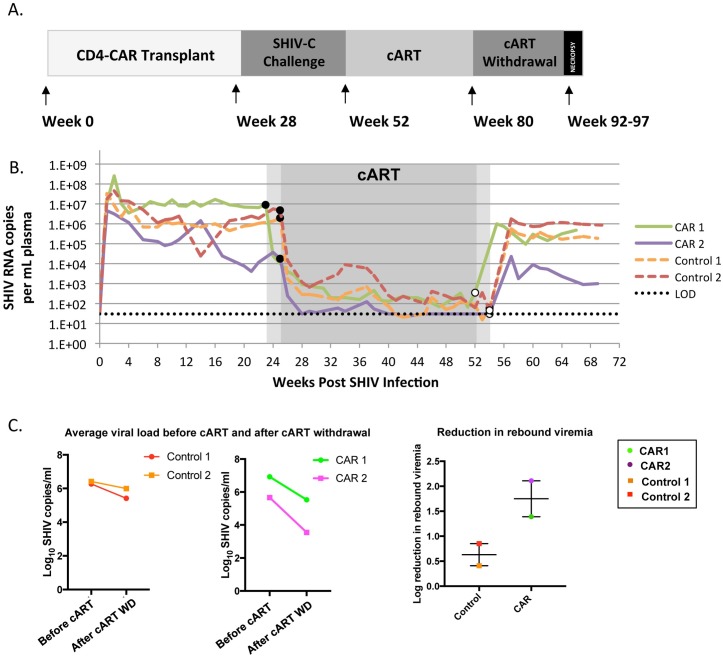
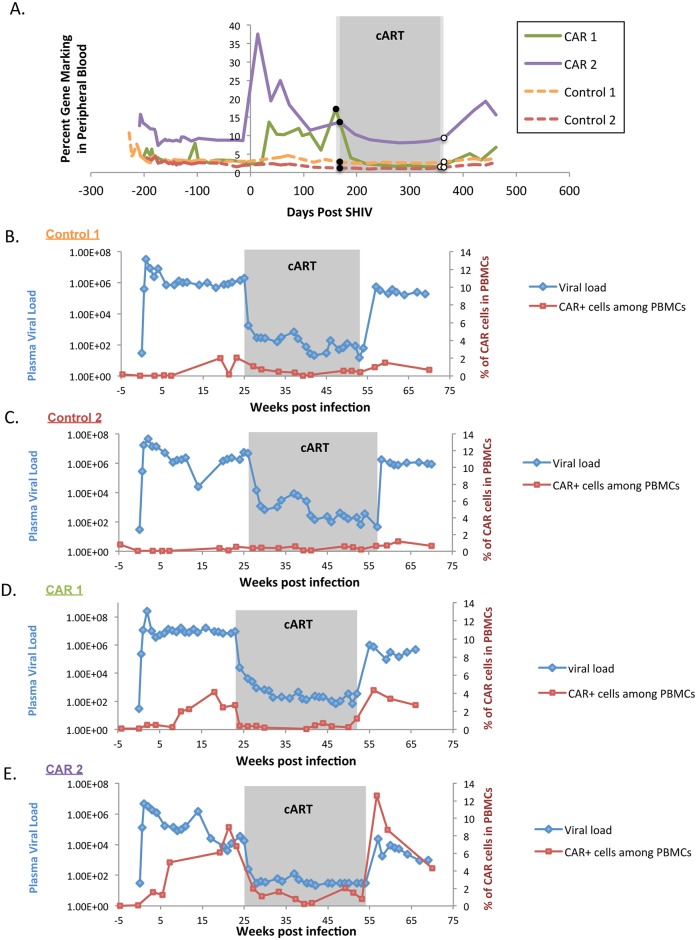
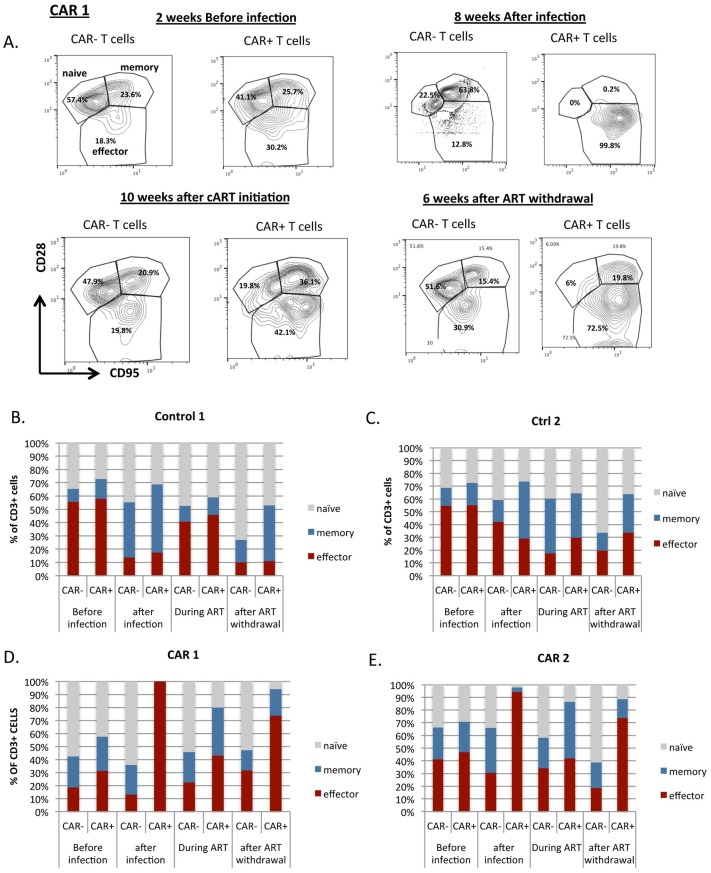
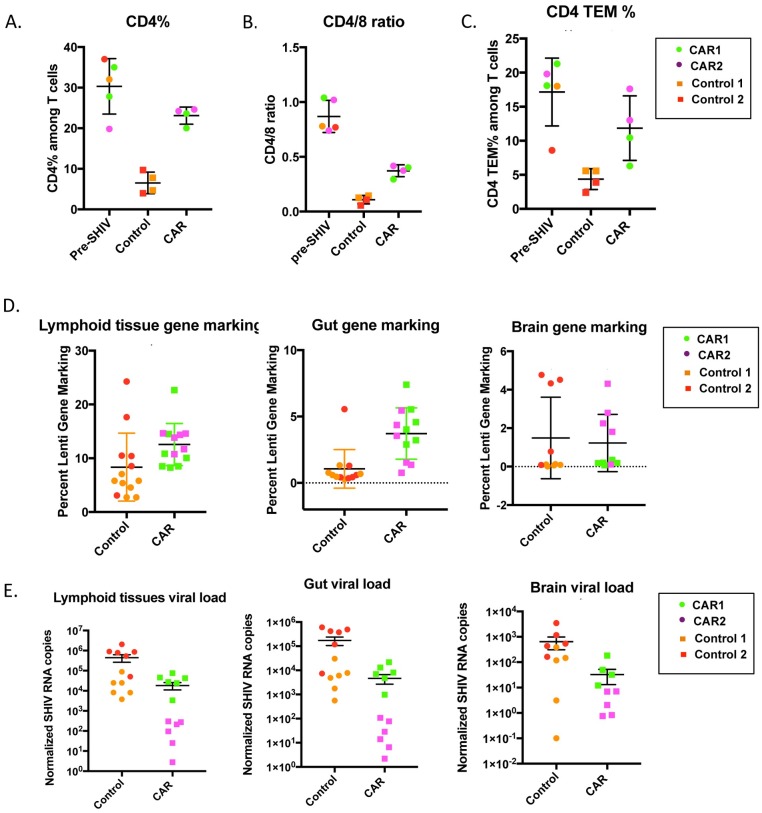
Chimeric Antigen Receptor (CAR) T-cells have emerged as a powerful immunotherapy for various forms of cancer and show promise in treating HIV-1 infection. However, significant limitations are persistence and whether peripheral T cell-based products can respond to malignant or infected cells that may reappear months or years after treatment remains unclear. Hematopoietic Stem/Progenitor Cells (HSPCs) are capable of long-term engraftment and have the potential to overcome these limitations. Here, we report the use of a protective CD4 chimeric antigen receptor (C46CD4CAR) to redirect HSPC-derived T-cells against simian/human immunodeficiency virus (SHIV) infection in pigtail macaques. CAR-containing cells persisted for more than 2 years without any measurable toxicity and were capable of multilineage engraftment. Combination antiretroviral therapy (cART) treatment followed by cART withdrawal resulted in lower viral rebound in CAR animals relative to controls, and demonstrated an immune memory-like response. We found CAR-expressing cells in multiple lymphoid tissues, decreased tissue-associated SHIV RNA levels, and substantially higher CD4/CD8 ratios in the gut as compared to controls. These results show that HSPC-derived CAR T-cells are capable of long-term engraftment and immune surveillance. This study demonstrates for the first time the safety and feasibility of HSPC-based CAR therapy in a large animal preclinical model.
Conflict of interest statement
The authors have declared that no competing interests exist.
Figures
References
-
- Deeks SGS, Wagner BB, Anton PAP, Mitsuyasu RTR, Scadden DTD, Huang CC, et al. A Phase II Randomized Study of HIV-Specific T-Cell Gene Therapy in Subjects with Undetectable Plasma Viremia on Combination Antiretroviral Therapy. Mol Ther. 2002;5: 10–10. doi: 10.1006/mthe.2002.0611 - DOI - PubMed
-
- Mitsuyasu RTR, Anton PAP, Deeks SGS, Scadden DTD, Connick EE, Downs MTM, et al. Prolonged survival and tissue trafficking following adoptive transfer of CD4zeta gene-modified autologous CD4(+) and CD8(+) T cells in human immunodeficiency virus-infected subjects. Blood. 2000;96: 785–793. - PubMed
-
- Zhen A, Kamata M, Rezek V, Rick J, Levin B, Kasparian S, et al. HIV-specific Immunity Derived From Chimeric Antigen Receptor-engineered Stem Cells. Mol Ther. IOP Publishing; 2015;23: 1358–1367. doi: 10.1038/mt.2015.102 - DOI - PMC - PubMed
-
- Liu L, Patel B, Ghanem MH, Bundoc V, Zheng Z, Morgan RA, et al. Novel CD4-Based Bispecific Chimeric Antigen Receptor Designed for Enhanced Anti-HIV Potency and Absence of HIV Entry Receptor Activity. J Virol. 2015;89: 6685–6694. doi: 10.1128/JVI.00474-15 - DOI - PMC - PubMed
Publication types
MeSH terms
Substances
Grants and funding
- U19 AI117941/AI/NIAID NIH HHS/United States
- F32 AI118565/AI/NIAID NIH HHS/United States
- R01 HL115128/HL/NHLBI NIH HHS/United States
- U19 AI0961110 /NH/NIH HHS/United States
- U19 HL129902 /NH/NIH HHS/United States
- R01 HL116217/HL/NHLBI NIH HHS/United States
- 1F32AI118565-01A1 /NH/NIH HHS/United States
- U19 HL129902/HL/NHLBI NIH HHS/United States
- T32 AI060567/AI/NIAID NIH HHS/United States
- R01 HL116217 /NH/NIH HHS/United States
- P30 AI028697/AI/NIAID NIH HHS/United States
- R01 HL115128 /NH/NIH HHS/United States
- AI060567 /NH/NIH HHS/United States
LinkOut - more resources
Full Text Sources
Other Literature Sources
Medical
Research Materials