


Atraumatic restorative treatment versus conventional restorative treatment for managing dental caries
- PMID: 29284075
- PMCID: PMC6486021
- DOI: 10.1002/14651858.CD008072.pub2
Atraumatic restorative treatment versus conventional restorative treatment for managing dental caries
Abstract
Background: Dental caries is a sugar-dependent disease that damages tooth structure and, due to loss of mineral components, may eventually lead to cavitation. Dental caries is the most prevalent disease worldwide and is considered the most important burden of oral health. Conventional treatment methods (drill and fill) involve the use of rotary burs under local anaesthesia. The need for an electricity supply, expensive handpieces and highly trained dental health personnel may limit access to dental treatment, especially in underdeveloped regions.To overcome the limitations of conventional restorative treatment, the Atraumatic Restorative Treatment (ART) was developed, mainly for treating caries in children living in under-served areas of the world where resources and facilities such as electricity and trained manpower are limited. ART is a minimally invasive approach which involves removal of decayed tissue using hand instruments alone, usually without use of anaesthesia and electrically driven equipment, and restoration of the dental cavity with an adhesive material (glass ionomer cement (GIC), composite resins, resin-modified glass-ionomer cement (RM-GICs) and compomers).
Objectives: To assess the effects of Atraumatic Restorative Treatment (ART) compared with conventional treatment for managing dental caries lesions in the primary and permanent teeth of children and adults.
Search methods: Cochrane Oral Health's Information Specialist searched the following databases: Cochrane Oral Health's Trials Register (to 22 February 2017), the Cochrane Central Register of Controlled Trials (CENTRAL) (the Cochrane Library, 2017, Issue 1), MEDLINE Ovid (1946 to 22 February 2017), Embase Ovid (1980 to 22 February 2017), LILACS BIREME Virtual Health Library (Latin American and Caribbean Health Science Information database; 1982 to 22 February 2017) and BBO BIREME Virtual Health Library (Bibliografia Brasileira de Odontologia; 1986 to 22 February 2017). The US National Institutes of Health Trials Registry (ClinicalTrials.gov) and the World Health Organization International Clinical Trials Registry Platform were searched for ongoing trials. No restrictions were placed on the language or date of publication when searching the electronic databases.
Selection criteria: We included randomised controlled trials (RCTs) with at least six months' follow-up that compared the effects of ART with a conventional restorative approach using the same or different restorative dental materials to treat caries lesions.
Data collection and analysis: Two review authors independently screened search results, extracted data from included studies and assessed the risk of bias in those studies. We used standard methodological procedures expected by Cochrane to evaluate risk of bias and synthesise data. Where pooling was appropriate we conducted meta-analyses using the random-effects model. We assessed the quality of the evidence using GRADE criteria.
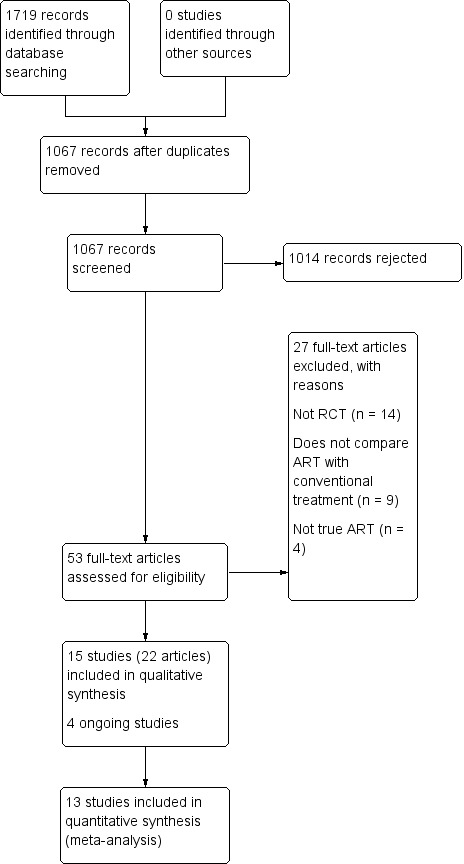
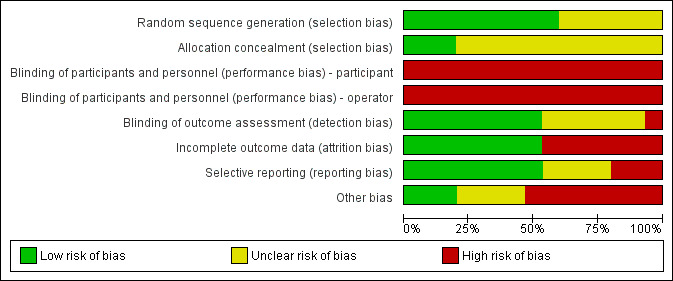
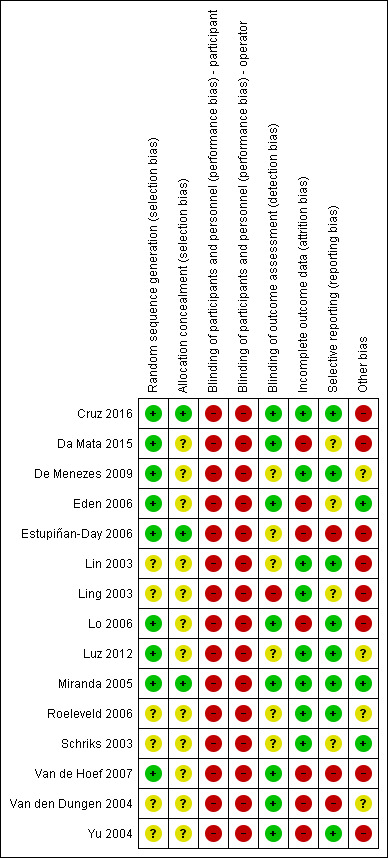
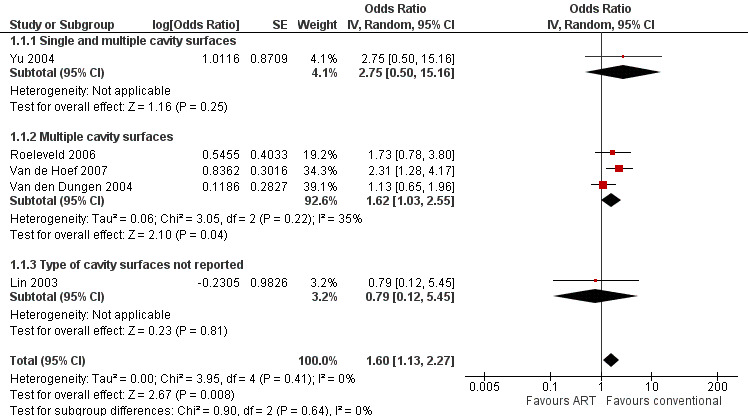
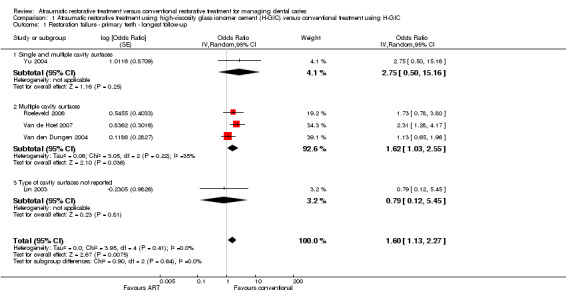
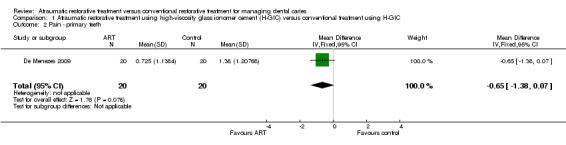
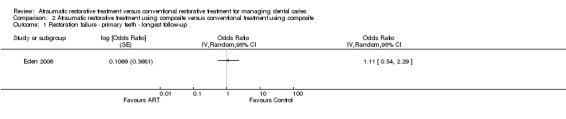
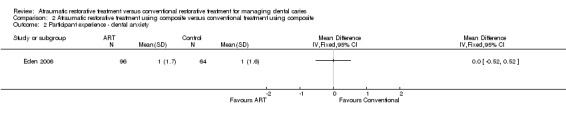
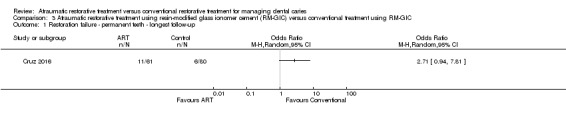
Main results: We included a total of 15 eligible studies randomising 3760 participants in this review. The age of participants across the studies ranged from 3 to 101 years, with a mean of 25.42 years. 48% of participants were male. All included studies were published between 2002 and 2016. Two of the 15 studies declared that the financial support was from companies that manufacture restorative material. Five studies were individually randomised parallel-group studies; six were cluster-randomised parallel-group studies; and four were randomised studies that used a split-mouth design. Eleven studies evaluated the effects of ART on primary teeth only, and four on permanent teeth. The follow-up period of the included studies ranged from 6 months to 36 months. We judged all studies to be at high risk of bias.For the main comparison of ART compared to conventional treatment using the same material: all but two studies used high-viscosity glass ionomer (H-GIC) as the restorative material; one study used a composite material; and one study used resin-modified glass ionomer cement (RM-GIC)).Compared to conventional treatment using H-GIC, ART may increase the risk of restoration failure in the primary dentition, over a follow-up period from 12 to 24 months (OR 1.60, 95% CI 1.13 to 2.27, five studies; 643 participants analysed; low-quality evidence). Our confidence in this effect estimate is limited due to serious concerns over risk of performance and attrition bias. For this comparison, ART may reduce pain during procedure compared with conventional treatment (MD -0.65, 95% CI -1.38 to 0.07; 40 participants analysed; low-quality evidence)Comparisons of ART to conventional treatment using composite or RM-GIC were downgraded to very low quality due to indirectness, imprecision and high risk of performance and attrition bias. Given the very low quality of the evidence from single studies, we are uncertain about the restoration failure of ART compared with conventional treatment using composite over a 24-month follow-up period (OR 1.11, 95% CI 0.54 to 2.29; one study; 57 participants) and ART using RM-GIC in the permanent teeth of older adults with root caries lesions over a six-month follow-up period (OR 2.71, 95% CI 0.94 to 7.81; one study; 64 participants).No studies reported on adverse events or costs.
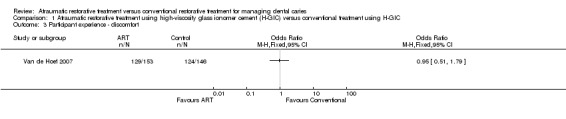
Authors' conclusions: Low-quality evidence suggests that ART using H-GIC may have a higher risk of restoration failure than conventional treatment for caries lesions in primary teeth. The effects of ART using composite and RM-GIC are uncertain due to the very low quality of the evidence and we cannot rely on the findings. Most studies evaluated the effects of ART on the primary dentition.Well-designed RCTs are required that report on restoration failure at clinically meaningful time points, as well as participant-reported outcomes such as pain and discomfort. Due to the potential confounding effects from the use of different dental materials, a robust body of evidence on the effects of ART compared with conventional treatment using the same restoration material is necessary. We identified four ongoing trials that could provide further insights into this area.
Conflict of interest statement
Mojtaba Dorri: none known. Maria José Martinez‐Zapata: none known. Tanya Walsh: none known. Dr Walsh is an Editor with Cochrane Oral Health. Valeria CC Marinho: none known. Aubrey Sheiham: deceased. Declaration of interest from protocol: 'none known'. Carlos Zaror: none known.
Figures
Update of
References
References to studies included in this review
Cruz 2016 {published data only}
-
- Cruz A, Marín D. Clinical outcome of root caries restorations using ART and rotary techniques in institutionalized elders. Brazilian Oral Research 2016;30(1):1‐8. - PubMed
Da Mata 2015 {published data only}
-
- Mata C, Allen PF, Cronin M, O'Mahony D, McKenna G, Woods N. Cost‐effectiveness of ART restorations in elderly adults: a randomized clinical trial. Community Dentistry and Oral Epidemiology 2014;42(1):79‐87. - PubMed
-
- Mata C, Allen PF, McKenna G, Cronin M, O'Mahony D, Woods N. Two‐year survival of ART restorations placed in elderly patients: A randomised controlled clinical trial. Journa of Dentistry 2015;43(4):405‐11. - PubMed
De Menezes 2009 {published data only}
-
- Menezes DM, Leal SC, Frencken FE. Self‐report of pain in children treated according to the atraumatic restorative treatment and the conventional restorative treatment‐‐a pilot study. Journal of Clinical Pediatric Dentistry 2009;34(2):151‐6. - PubMed
Eden 2006 {published data only}
-
- Eden E, Topaloglu‐Ak A, Frencken JE, Van't Hof M. Survival of self‐etch adhesive Class II composite restorations using ART and conventional cavity preparations in primary molars. American Journal of Dentistry 2006;19(6):359‐63. - PubMed
Estupiñan‐Day 2006 {published data only}
-
- Estupiñan‐Day S, Milner T, Tellez M. Oral health of low income children: procedures for atraumatic restorative treatment (PRAT). Pan American Health Organization 2006. - PubMed
-
- Estupiñán‐Day S, Tellez M, Kaur S, Milner T, Solari A. Managing dental caries with atraumatic restorative treatment in children: successful experience in three Latin American countries. Revista Panamericana de Salud Publica 2013;33(4):237‐43. - PubMed
Lin 2003 {published data only}
-
- Lin XP, Guo L, An LX. The clinical effect of ART and psychological guidance in treatment of carious deciduous teeth in preschool children. Shanghai Kou Qiang Yi Xue 2003;12(4):313‐4. - PubMed
Ling 2003 {published data only}
-
- Ling L, Wang X. Evaluation of effects of Atraumatic Restorative Treatment and cooperation degree in primary teeth. Stomatology 2003;23(5):290‐91.
Lo 2006 {published data only}
-
- Lo EC, Luo Y, Tan HP, Dyson JE, Corbet EF. ART and conventional root restorations in elders after 12 months. Journal of Dental Research 2006;85(10):929‐32. - PubMed
Luz 2012 {published data only}
-
- Luz P, Barata J, Meller C, Slavutsky S, Araujo F. ART acceptability in children: a randomized clinical trial. Revista da Faculdade de Odontologia de Porto Alegre 2012;53(1):27‐31.
Miranda 2005 {published data only}
-
- Miranda L. Randomized controlled clinical study comparing atraumatic restorative treatment with conventional amalgam treatment in primary molars: evaluation after 6 and 12 months [Estudo clínico randomizado e controlado comparando o tratamento restaurador atraumático ao convencional com amálgama em molares decíduos: avaliação após 6 e 12 meses] [Thesis].. Rio de Janeiro (Brazil): Faculdade de Odontologia, Universidade do Estado do Rio de Janeiro, 2005.
Roeleveld 2006 {published data only}
-
- Mhaville RJ, Amerongen WE, Mandari GJ. Residual caries and marginal integrity in relation to Class II glass ionomer restorations in primary molars. European Archives of Paediatric Dentistry 2006;7(2):81‐4. - PubMed
-
- Roeleveld AC, Amerongen WE, Mandari GJ. Influence of residual caries and cervical gaps on the survival rate of Class II glass ionomer restorations. European Archives of Paediatric Dentistry 2006;7(2):85‐91. - PubMed
Schriks 2003 {published data only}
-
- Schriks MCM, Amerongen WE. Atraumatic perspectives of ART: psychological and physiological aspects of treatment with and without rotary instruments. Community Dentistry and Oral Epidemiology 2003;31:15‐20. - PubMed
-
- Gemert‐Schriks MC. Discomfort during atraumatic restorative treatment (ART) versus conventional restorative treatment [Ongemak tijdens atraumatic restorative treatment (ART) versus conventionel ebehandel methode]. Ned Tijdschr Tandheelkd 2007;114(5):213‐7. - PubMed
Van de Hoef 2007 {published data only}
-
- Bochove JA, Amerongen WE. The influence of restorative treatment approaches and the use of local analgesia, on the children’s discomfort. European Archives of Paediatric Dentistry 2006;7(1):11‐6. - PubMed
-
- Hoef N, Amerongen E. Influence of local anaesthesia on the quality of class II glass ionomer restorations. International Journal of Paediatric Dentistry 2007;17(4):239‐47. - PubMed
Van den Dungen 2004 {published data only}
-
- Dungen GM, Huddleston Slater AE, Amerongen WE. ART or conventional restorations? A final evaluation of proximal restorations in deciduous molars [Art Of Conventioneel? Onderzoeksresultaten Van Proximale Restauraties In Tijdelijke Molaren]. Ned Tijdschr Tandheelkd 2004;111(9):345‐9. - PubMed
Yu 2004 {published data only}
-
- Yip HK, Smales RJ, Yu C, Gao XJ, Deng DM. Comparison of atraumatic restorative treatment and conventional cavity preparations for glass‐ionomer restorations in primary molars: one‐year results. Quintessence International 2002;33:17‐21. - PubMed
-
- Yu C, Gao XJ, Deng DM, Yip HK, Smales RJ. Survival of glass ionomer restorations placed in primary molars using atraumatic restorative treatment (ART) and conventional cavity preparations: 2‐year results. International Dental Journal 2004;54(1):42‐6. - PubMed
References to studies excluded from this review
Andrade 2010 {published data only}
-
- Andrade P. Atraumatic and chemical‐mechanical methods: a controlled clinical trial of caries progression [Métodos atraumáticos e químico‐mecãnico: um ensaio clínico controlado de progressão de cárie]. Thesis.
Barata 2007 {published data only}
-
- Barata T. Clinical evaluation of two minimally invasive methods: chemi‐mechanical and mechanical [Avaliação clínica de dois métodos minimamente invasivos: químico‐mecânico e mecânico]. Thesis. Faculdade de Odontologia de Bauru, Universidade de São Paulo. 2007.
Barata 2008 {published data only}
Caro 2012 {published data only}
-
- Caro T, Aguilar A, Saavedra J, Alfaya T, França C, Fernandes K, et al. Comparison of operative time, costs, and self‐reported pain in children treated with atraumatic restorative treatment and conventional restorative treatment. Clinical and Experimental Medical Letters 2012;53(4):159‐63.
De Amorim 2014 {published data only}
-
- Amorim RG, Leal SC, Mulder J, Creugers NH, Frencken JE. Amalgam and ART restorations in children: a controlled clinical trial. Clinical Oral Investigations 2014;18(1):117‐24. - PubMed
De Menezes 2011 {published data only}
-
- Menezes Abreu DM, Leal SC, Mulder J, Frencken JE. Dental anxiety in 6‐7‐year‐old children treated in accordance with conventional restorative treatment, ART and ultra‐conservative treatment protocols. Acta Odontologica Scandinavica 2011;69(6):410‐6. - PubMed
-
- Menezes Abreu DM, Leal SC, Mulder J, Frencken JE. Pain experience after conventional, atraumatic, and ultraconservative restorative treatments in 6‐ to 7‐yr‐old children. European Journal of Oral Sciences 2011;119(2):163‐8. - PubMed
Frencken 1994 {published data only}
-
- Frencken JE, Songpaisan Y, Phantumvanit P, Pilot T. An atraumatic restorative treatment (ART) technique: evaluation after one year. International Dental Journal 1994;44(5):460‐4. - PubMed
Frencken 2006 {published data only}
-
- Frencken JE, Taifour D, 't Hof MA. Survival of ART and amalgam restorations in permanent teeth of children after 6.3 years. Journal of Dental Research 2006;85(7):622‐6. - PubMed
-
- Frencken JE, Van't Hof MA, Taifour D, Al‐Zaher I. Effectiveness of ART and traditional amalgam approach in restoring single‐surface cavities in posterior teeth of permanent dentitions in school children after 6.3 years. Community Dentistry and Oral Epidemiology 2007;35(3):207‐14. - PubMed
-
- Taifour D, Frencken JE, Beiruti N, Van´t Hof MA, Truin Gj, Palenstein WH. Comparison between restorations in the permanent dentition produced by hand and rotary instrumentation – survival after 3 years. Community Dentistry and Oral Epidemiology 2003;31(2):122‐8. - PubMed
Hilgert 2014 {published data only}
-
- Hilgert L, Amorin R, Leal S, Mulder J, Creugers N, Frencken J. Is high‐viscosity glass‐ionomer‐cement a successor to amalgam for treating primary molars?. Dental Materials 2014;30:1172–8. - PubMed
Hu 2005 {published data only}
-
- Hu JY, Chen XC, Li YQ, Smales RJ, Yip KH. Radiation‐induced root surface caries restored with glass‐ionomer cement placed in conventional and ART cavity preparations: results at two years. Australian Dental Journal 2005;50(3):186‐90. - PubMed
Hui‐min 2005 {published data only}
-
- Hui‐min L, Zheng‐hong D. Clinical observation of using different material in the elderly decayed tooth ART technique. Practical Clinical Medicine 2005;6:105‐7.
Ibiyemi 2011 {published data only}
-
- Ibiyemi O, Bankole OO, Oke GA. Survival rates of two atraumatic restorative treatment (ART) types in occlusal carious permanent teeth after two years. African Journal of Medicine and Medical Sciences 2011;40(2):127‐34. - PubMed
ISRCTN76299321 {published data only}
-
- ISRCTN76299321. Atraumatic restorative treatment for caries in the Elderly ‐ a study to assess a novel approach for the prevention of root caries. isrctn.com/ISRCTN30662154 2013.
Kalf‐Scholte 2003 {published data only}
-
- Kalf‐Scholte SM, Amerongen WE, Smith AJ, Haastrecht HJ. Atraumatic restorative treatment (ART): a three‐year clinical study in Malawi‐‐comparison of conventional amalgam and ART restorations. Journal of Public Health Dentistry 2003;63(2):99‐103. - PubMed
Mandari 2001 {published data only}
-
- Mandari GJ, Frencken JE, Van't Hof MA. Six‐year success rates of occlusal amalgam and glass‐ionomer restorations placed using three minimal intervention approaches. Caries Research 2003;37(4):246‐53. - PubMed
-
- Mandari GJ1, Truin GJ, Van't Hof MA, Frencken JE. Effectiveness of three minimal intervention approaches for managing dental caries: survival of restorations after 2 years. Caries Research 2001;35(2):90‐4. - PubMed
McComb 2002 {published data only}
-
- McComb D, Erickson RL, Maxymiw WG, Wood RE. A clinical comparison of glass ionomer, resin‐modified glass ionomer and resin composite restorations in the treatment of cervical caries in xerostomic head and neck radiation patients. Operative Dentistry 2002;27(5):430‐7. - PubMed
Menezes 2006 {published data only}
-
- Menezes JP, Rosenblatt A, Medeiros E. Clinical evaluation of atraumatic restorations in primary molars: a comparison between 2 glass ionomer cements. Journal of Dentistry for Children 2006;73(2):91‐7. - PubMed
Mickenautsch 2007 {published data only}
-
- Mickenautsch S, Frencken JE, Van't HM. Atraumatic restorative treatment and dental anxiety in outpatients attending public oral health clinics in South Africa. Journal of Public Health Dentistry 2007;67(3):179‐84. - PubMed
Mizuno 2011 {published data only}
-
- Mizuno D, Guedes C, Hermida L, Motta L, Santos E, Bussadori S. Clinical and radiographic analysis of the chemical‐mechanical caries removal and ART: a pilot study [Análisis clínico y radiográfico de las técnicas ART y remoción químico‐mecánica de caries: estudio piloto]. Odontoestomatología 2011;13(18):29‐35.
NCT02234609 {published data only}
-
- NCT02234609. Effectiveness of modified class IV atraumatic restorative treatment. clinicaltrials.gov/show/NCT02234609 2014.
NCT02274142 {published data only}
-
- NCT02274142. Randomized clinical trial, double‐blinded on ART restorations. clinicaltrials.gov/show/NCT02274142.
NTR4400 {unpublished data only}
-
- NTR4400. Hand instruments are better accepted than rotary instrumentation for restoring tooth cavities in people with disabilities. www.trialregister.nl/trialreg/admin/rctview.asp?TC=4400.
Phantumvanit 1996 {published data only}
-
- Phantumvanit P, Songpaisan Y, Pilot T, Frencken JE. Atraumatic restorative treatment (ART): a three‐year community field trial in Thailand‐‐survival of one‐surface restorations in the permanent dentition. Journal of Public Health Dentistry 1996;56(3 Spec No):141‐5. - PubMed
Phonghanyudh 2012 {published data only}
-
- Phonghanyudh A, Phantumvanit P, Songpaisan Y, Petersen PE. Clinical evaluation of three caries removal approaches in primary teeth: a randomised controlled trial. Community Dental Health 2012;29(2):173‐8. - PubMed
Rahimtoola 2002 {published data only}
-
- Rahimtoola 2002. Comparison of two tooth‐saving preparation techniques for one‐surface cavities. ASDC Journal of Dentistry for Children 2002;69(1):16‐26. - PubMed
-
- Rahimtoola S, Amerongen E, Maher R, Groen H. Pain related to different ways of minimal intervention in the treatment of small caries lesions. ASDC Journal of Dentistry for Children 2000;67(2):123‐7. - PubMed
-
- Amerongen WE, Rahimtoola S. Is ART really atraumatic?. Community Dentistry and Oral Epidemiology 1999;27:41‐5. - PubMed
Taifour 2002 {published data only}
-
- Taifour D, Frencken JE, Beiruti N, Vant´t Hof MA, Truin GJ. Effectiveness of glass–ionomer (ART) and amalgam restorations in the deciduous dentitions: results after 3 years. Caries Research 2002;36:437‐44. - PubMed
Yip 2002b {published data only}
-
- Yip KH, Smales RJ, Gao W, Peng D. The effects of two cavity preparation methods on the longevity of glass ionomer cement restorations: an evaluation after 12 months. Journal of the American Dental Association 2002;133(6):744‐51. - PubMed
References to ongoing studies
CTRI007332 {published data only}
-
- CTRI007332. Comparison of efficacy and acceptability of caries removal methods ‐ a randomized controlled clinical trial. ctri.nic.in/Clinicaltrials/advsearch.php.
NCT02562456 {published data only}
-
- NCT02562456. Cost‐efficacy between ART and composite resin restorations in primary molars. clinicaltrials.gov/show/NCT02562456.
NCT02568917 {published data only}
-
- NCT02568917. Effectiveness of ART and conventional treatment ‐ practice‐based clinical trial. clinicaltrials.gov/show/NCT02568917.
RBR‐4nwmk4 {published data only}
-
- RBR‐4nwmk4. Evaluation of atraumatic restorative treatment (ART) in the family health strategy of Teresina, Piauí. www.ensaiosclinicos.gov.br/rg/RBR‐4nwmk4/ 2016.
Additional references
AAPD 2008‐2009
-
- American Academy of Pediatric Dentistry Council on Clinical Affairs. Policy on interim therapeutic restorations (ITR). Pediatric Dentistry 2008‐2009;30(7 Suppl):38‐9. - PubMed
Antoft 1999
-
- Antoft P, Rambusch E, Antoft B, Christensen HW. Caries experience, dental health behaviour and social status: three comparative surveys among Danish military recruits in 1972, 1982 and 1993. Community Dental Health 1999;16(2):80‐4. - PubMed
Anusavice 1999
-
- Anusavice KJ. Does ART have a place in preservative dentistry?. Community Dentistry and Oral Epidemiology 1999;27(6):442‐8. - PubMed
Banerjee 2000
-
- Banerjee A, Watson TF, Kidd EA. Dentine caries excavation: a review of current clinical techniques. British Dental Journal 2000;188(9):476‐82. - PubMed
Berggren 1984
-
- Berggren U, Meynert G. Dental fear and avoidance: causes, symptoms, and consequences. Journal of the American Dental Association 1984;109(2):247‐51. - PubMed
Cole 2000
-
- Cole BO, Welbury RR. The atraumatic restorative treatment (ART) technique: does it have a place in everyday practice?. Dental Update 2000;27(3):118‐20, 122‐3. - PubMed
De Amorin 2012
Deeks 2011
-
- Deeks JJ, Higgins JPT, Altman DG (editors). Chapter 9: Analysing data and undertaking meta‐analyses. In: Higgins JPT, Green S (editors). Cochrane Handbook for Systematic Reviews of Interventions Version 5.1.0 (updated March 2011). The Cochrane Collaboration, 2011. Available from handbook.cochrane.org.
Dorri 2015
Egger 1997
Ekstrand 2007
-
- Ekstrand KR, Martignon S, Christiansen ME. Frequency and distribution patterns of sealants among 15‐year‐olds in Denmark in 2003. Community Dental Health 2007;24(1):26‐30. - PubMed
Elbourne 2002
-
- Elbourne DR, Altman DG, Higgins JP, Curtin F, Worthington HV, Vail A. Meta‐analyses involving cross over trials: methodological issues. International Journal of Epidemiology 2002;31(1):140‐9. - PubMed
Fejerskov 2004
-
- Fejerskov O. Changing paradigms in concepts on dental caries: consequences for oral health care. Caries Research 2004;38:182‐91. - PubMed
Frencken 1996
-
- Frencken JE, Pilot T, Songpaisan Y, Phantumvanit P. Atraumatic restorative treatment (ART): rationale, technique, and development. Journal of Public Health Dentistry 1996;56(3 Spec No):135‐40, 161‐3. - PubMed
Frencken 1999
-
- Frencken JE, Holmgren CJ. How effective is ART in the management of dental caries?. Community Dentistry and Oral Epidemiology 1999;27(6):423‐30. - PubMed
Frencken 2004a
-
- Frencken JE, 't Hof MA, Amerongen WE, Holmgren CJ. Effectiveness of single‐surface ART restorations in the permanent dentition: a meta‐analysis. Journal of Dental Research 2004;83(2):120‐3. - PubMed
Frencken 2004b
-
- Frencken JE, Holmgren CJ. ART: a minimal intervention approach to manage dental caries. Dental Update 2004;31(5):295‐8, 301. - PubMed
GRADEpro GDT 2015 [Computer program]
-
- McMaster University (developed by Evidence Prime). GRADEpro GDT. Hamilton (ON): McMaster University (developed by Evidence Prime), 2015.
Hannigan 2000
-
- Hannigan A, O’Mullane DM, Barry D, Schäfer F, Roberts AJ. A caries susceptibility classification of tooth surfaces by survival time. Caries Research 2000;34(2):103‐8. - PubMed
Higgins 2003
Higgins 2011
-
- Higgins JPT, Altman DG, Sterne JAC (editors). Chapter 8: Assessing risk of bias in included studies. In: Higgins JPT, Green S (editors). Cochrane Handbook for Systematic Reviews of Interventions Version 5.1.0 (updated March 2011). The Cochrane Collaboration, 2011. Available from: handbook.cochrane.org.
Holmgren 2013
-
- Holmgren CJ, Roux D, Doméjean S. Minimal intervention dentistry: part 5. Atraumatic restorative treatment (ART) a minimum intervention and minimally invasive approach for the management of dental caries. British Dental Journal 2013;214(1):11‐18. - PubMed
Honkala 2002
-
- Honkala S, Honkala E. Atraumatic dental treatment among Finnish elderly persons. Journal of Oral Rehabilitation 2002;29(5):435‐40. - PubMed
Kidd 2004
-
- Kidd EAM, Fejerskov O. What constitutes dental caries? Histopathology of carious enamel and dentin related to the action of cariogenic biofilms. Journal of Dental Research 2004;83:C35‐8. - PubMed
Kidd 2005
-
- Kidd EAM. Essentials of Dental Caries: The Disease and Its Management. 3rd Edition. London: Wright, 2005.
Leal 2012
-
- Leal SC, Bronkhorst EM, Fan M, Frencken JE. Untreated cavitated dentine lesions: impact on children’s quality of life. Caries Research 2012;46(2):102‐6. - PubMed
Lefebvre 2011
-
- Lefebvre C, Manheimer E, Glanville J. Chapter 6: Searching for studies. In: Higgins JP, Green S, editor(s). Cochrane Handbook for Systematic Reviews of Interventions Version 5.1.0 (updated March 2011). The Cochrane Collaboration, 2011. Available from handbook.cochrane.org.
Marcenes 2013
Martignon 2010
-
- Martignon S, Tellez M, Santamaría RM, Gomez J, Ekstrand KR. Sealing distal proximal caries lesions in first primary molars: efficacy after 2.5 years. Caries Research 2010;44(6):562‐70. - PubMed
Mickenautsch 2010
-
- Mickenautsch S, Yengopal V, Banerjee A. Atraumatic restorative treatment versus amalgam restoration longevity: a systematic review. Clinical Oral Investigations 2010;14(3):233‐40. - PubMed
Mickenautsch 2012
-
- Mickenautsch S, Yengopal V. Failure rate of atraumatic restorative treatment using high‐viscosity glass‐ionomer cement compared to that of conventional amalgam restorative treatment in primary and permanent teeth: a systematic review update. Journal of Minimum Intervention in Dentistry 2012;5:63‐124.
Mjör 1999
-
- Mjör IA, Gordan VV. A review of atraumatic restorative treatment (ART). International Dental Journal 1999;49(3):127‐31. - PubMed
Moher 2009
Monse‐Schneider 2003
-
- Monse‐Schneider B, Heinrich‐Weltzien R, Schug D, Sheiham A, Borutta A. Assessment of manual restorative treatment (MRT) with amalgam in high‐caries Filipino children: results after 2 years. Community Dentistry and Oral Epidemiology 2003;31(2):129‐35. - PubMed
Petersen 2005
Pettar 2011
-
- Pettar M, Jin Z, Tai‐xiang W, Memetimin N, Zhen‐hua L. Atraumatic restorative treatment versus conventional restorative treatment for childhood caries: a systematic review. Chinese Journal of Evidence‐Based Medicine 2011;11(4):413‐8.
RevMan 2014 [Computer program]
-
- Nordic Cochrane Centre, The Cochrane Collaboration. Review Manager 5 (RevMan 5). Version 5.3. Copenhagen: Nordic Cochrane Centre, The Cochrane Collaboration, 2014.
Ricketts 2013
Schwendicke 2015
-
- Schwendicke F, Dörfer C, Schlattmann P, Foster Page L, Thomson M, Paris S. Socioeconomic inequality and caries: a systematic review and meta‐analysis. Journal of Dental Research 2015;94(1):10‐18. - PubMed
Schünemann 2011
-
- Schünemann HJ, Oxman AD, Vist GE, Higgins JPT, Deeks JJ, Glasziou P, et al. Chapter 12: Interpreting results and drawing conclusions. In: Higgins JPT, Green S (editors), Cochrane Handbook for Systematic Reviews of Interventions Version 5.1.0 (updated March 2011). The Cochrane Collaboration, 2011. Available from handbook.cochrane.org.
Sheiham 2010
-
- Sheiham A, Sabbah W. Using universal patterns of caries for planning and evaluating dental care. Caries Research 2010;44(2):141‐50. - PubMed
Simon 2017
Steele 2007
-
- Steele J. ART for treating root caries in older people: is the atraumatic restorative technique an effective method of treating root caries in older people?. Evidence‐Based Dentistry 2007;8:5‐6. - PubMed
Sterne 2011
-
- Sterne JAC, Egger M, Moher D (editors). Chapter 10: Addressing reporting biases. In: Higgins JPT, Green S (editors). Cochrane Handbook for Systematic Reviews of Interventions. Version 5.1.0 (updated March 2011). The Cochrane Collaboration, 2011. Available from handbook.cochrane.org.
Tyas 2000
-
- Tyas MJ, Anusavice KJ, Frencken JE, Mount GJ. Minimal intervention dentistry‐‐a review. FDI Commission Project 1‐97. International Dental Journal 2000;50(1):1‐12. - PubMed
Van 't Hof 2006
-
- 't Hof MA, Frencken JE, Palenstein Helderman WH, Holmgren CJ. The atraumatic restorative treatment (ART) approach for managing dental caries: a meta‐analysis. International Dental Journal 2006;56(6):345‐51. - PubMed
Vas 2008
-
- Vas J, Modesto M, Mendez C, Perea‐Milla E, Aguilar I, Carrasco‐Lozano JM, et al. Effectiveness of acupuncture, special dressings and simple, low‐adherence dressings for healing venous leg ulcers in primary healthcare: study protocol for a cluster‐randomized open‐labelled trial. BMC Complementary and Alternative Medicine 2008;8:29. - PMC - PubMed
Weerheijm 1999
-
- Weerheijm KL, Groen HJ. The residual caries dilemma. Community Dentistry and Oral Epidemiology 1999;27(6):436‐41. - PubMed
Worthington 2015
-
- Worthington H, Clarkson J, Weldon J. Priority oral health research identification for clinical decision‐making. Evidence‐based Dentistry 2015;16(3):69‐71. - PubMed
Yip 2001
-
- Yip HK, Smales RJ, Ngo HC, Tay FR, Chu FC. Selection of restorative materials for the atraumatic restorative treatment (ART) approach: a review. Special Care in Dentistry 2001;21(6):216‐21. - PubMed
Yip 2002a
-
- Yip HK, Smales RJ. Glass ionomer cements used as fissure sealants with the atraumatic restorative treatment (ART) approach: review of literature. International Dental Journal 2002;52(2):67‐70. - PubMed
Publication types
MeSH terms
Substances
LinkOut - more resources
Full Text Sources
Other Literature Sources
Medical
