


Acacia hydaspica R. Parker prevents doxorubicin-induced cardiac injury by attenuation of oxidative stress and structural Cardiomyocyte alterations in rats
- PMID: 29284479
- PMCID: PMC5747129
- DOI: 10.1186/s12906-017-2061-0
Acacia hydaspica R. Parker prevents doxorubicin-induced cardiac injury by attenuation of oxidative stress and structural Cardiomyocyte alterations in rats
Abstract
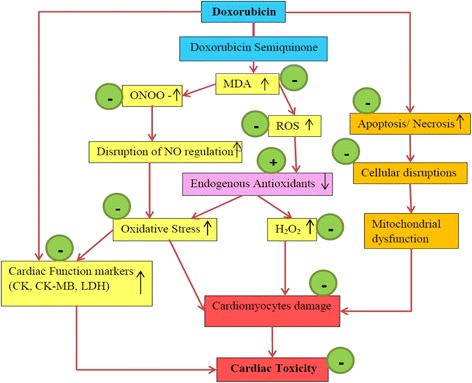
Background: The use of doxorubicin (DOX) an anthracycline antineoplastic agent is withdrawn due to its cardio-toxic side effects. Oxidative stress has been recognized as the primary cause of DOX induced cardiotoxicity. We have investigated whether polyphenol rich ethyl acetate extract of Acacia hydaspica (AHE) can attenuate doxorubicin-induced cardiotoxicity via inhibition of oxidative stress.
Methods: AHE was administered orally to rats once daily for 6 weeks at doses of 200 and 400 mg/kg b.w. DOX (3 mg/kg b.w. i.p., single dose/week) was administered for 6 weeks (chronic model). The parameters studied to evaluate cardioprotective potential were the serum cardiac function biomarkers (CK, CKMB, AST and LDH), hematological parameters, cardiac tissue antioxidant enzymatic status and oxidative stress markers, and histopathological analysis to validate biochemical findings.
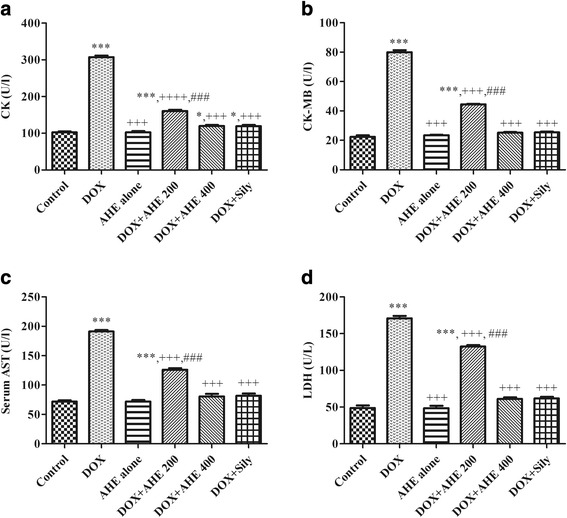
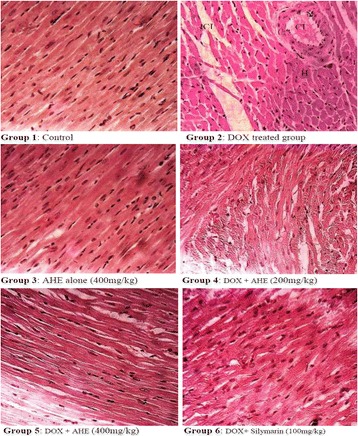
Results: Chronic 6 week treatment of DOX significantly deteriorated cardiac function biomarkers and decreased the activities of antioxidant enzymes, whereas significant increase in oxidative stress biomarkers was noticed in comparison to control group. AHE dose dependently protected DOX-induced leakage of cardiac enzymes in serum and ameliorated DOX-induced oxidative stress; as evidenced by decreasing lipid peroxidation, H2O2 and NO content with increase in phase I and phase II antioxidant enzymes. Doxorubicin treatment produced severe morphological lesions, leucopenia, decrease in red blood cell counts and hemoglobin concentrations. AHE co-treatment protected the heart and blood elements from the toxic effects of doxorubicin as indicated by the recovery of hematological parameters to normal values and prevention of myocardial injuries in a dose dependent way. The protective potency of AHE (400 mg/kg b.w) was equivalent to silymarin.
Conclusion: Results revealed that AHE showed protective effects against DOX induce cardiotoxicity. The protective effect might attribute to its polyphenolic constituents and antioxidant properties. AHE might be helpful in combination therapies as safer and efficient.
Keywords: Antioxidants; Cardiac function biomarkers; Cardiotoxicity; Doxorubicin; Oxidative stress; Polyphenolics.
Conflict of interest statement
Ethics approval
This study makes use of rats, and the experimental protocol for the use of animal was approved (Bch#0256) by the ethical board of Quaid-i-Azam University, Islamabad Pakistan.
Consent for publication
Not applicable
Competing interests
The authors declare that they have no competing interests.
Publisher’s Note
Springer Nature remains neutral with regard to jurisdictional claims in published maps and institutional affiliations.
Figures
References
MeSH terms
Substances
LinkOut - more resources
Full Text Sources
Other Literature Sources
Medical
Research Materials
