


Barriers and Explanatory Mechanisms of Delays in the Patient and Diagnosis Intervals of Care for Breast Cancer in Mexico
- PMID: 29284758
- PMCID: PMC5896704
- DOI: 10.1634/theoncologist.2017-0431
Barriers and Explanatory Mechanisms of Delays in the Patient and Diagnosis Intervals of Care for Breast Cancer in Mexico
Abstract
Background: Most breast cancer patients in low- and middle-income settings are diagnosed at advanced stages due to lengthy intervals of care. This study aimed to understand the mechanisms through which delays occur in the patient interval and diagnosis interval of care.
Materials and methods: We conducted a cross-sectional survey including 886 patients referred to four major public cancer hospitals in Mexico City. Based in a conceptual model of help-seeking behavior, a path analysis strategy was used to identify the relationships between explanatory factors of patient delay and diagnosis delay.
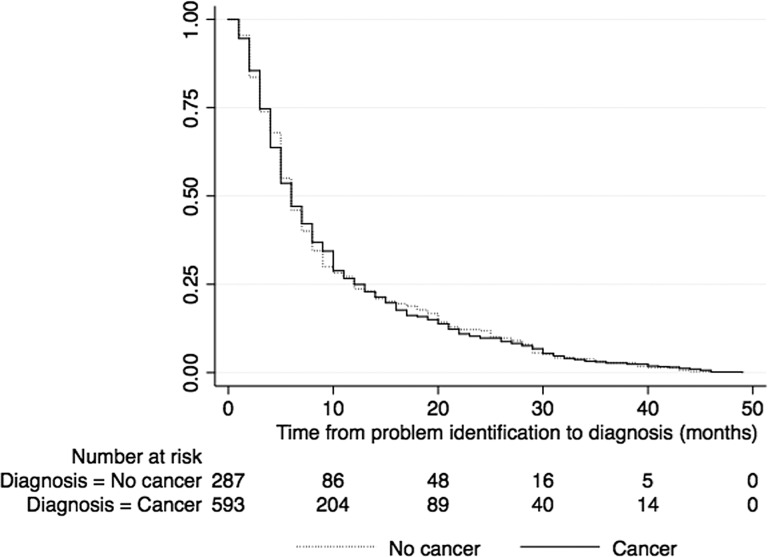
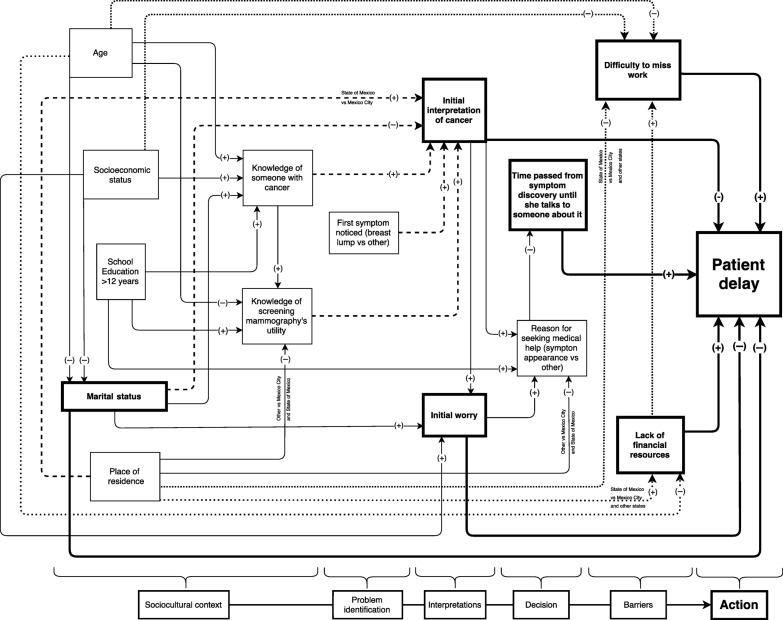
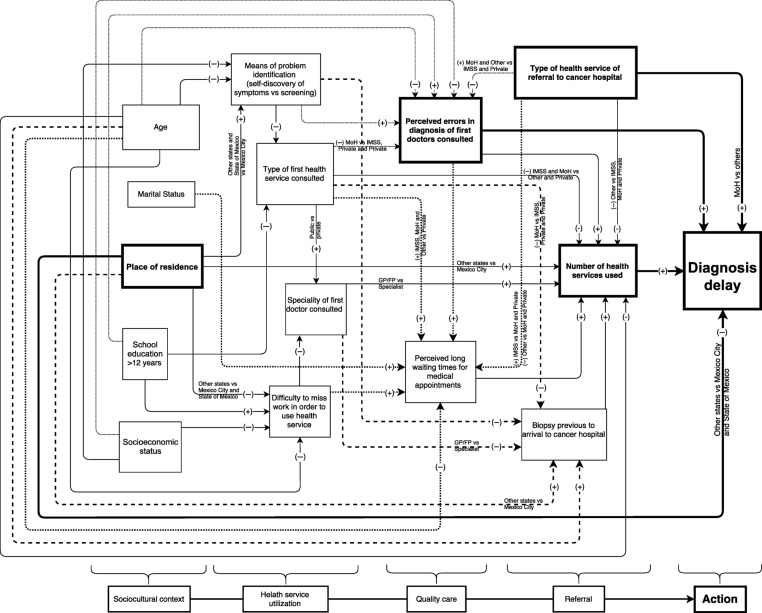
Results: The patient and the diagnosis intervals were greater than 3 months in 20% and 65% of participants, respectively. We present explanatory models for each interval and the interrelationship between the associated factors. The patient interval was longer among women who were single, interpreted their symptoms as not worrisome, concealed symptoms, and perceived a lack of financial resources and the difficulty of missing a day of work as barriers to seek care. These barriers were more commonly perceived among patients who were younger, had lower socioeconomic status, and lived outside of Mexico City. The diagnosis interval was longer among those who used several different health services prior to the cancer hospital and perceived medical errors in these services. More health services were used among those who perceived errors and long waiting times for appointments, and who first consulted private services.
Conclusion: Our findings support the relevance of strengthening early cancer diagnosis strategies, especially the improvement of quality of primary care and expedited referral routes to cancer services.
Implications for practice: This study's findings suggest that policy in low- and middle-income countries (LMICs) should be directed toward reducing delays in diagnosis, before the implementation of mammography screening programs. The results suggest several factors susceptible to early diagnosis interventions. To reduce patient delays, the usually proposed intervention of awareness promotion could better work in LMIC contexts if the message goes beyond the advertising of screening mammography to encourage the recognition of potential cancer symptoms and sharing of symptoms with significant others. To reduce diagnosis delay, efforts should focus on strengthening the quality of public primary care services and improving referral routes to cancer care centers.
Keywords: Barriers; Breast cancer; Delays; Early diagnosis; Intervals of care.
© AlphaMed Press 2017.
Conflict of interest statement
Disclosures of potential conflicts of interest may be found at the end of this article.
Figures
References
-
- Anderson BO, Cazap E, El Saghir NS et al. Optimisation of breast cancer management in low‐resource and middle‐resource countries: Executive summary of the Breast Health Global Initiative consensus, 2010. Lancet Oncol 2011;12:387–398. - PubMed
-
- Richards MA, Westcombe AM, Love SB et al. Influence of delay on survival in patients with breast cancer: A systematic review. Lancet 1999;353:1119–1126. - PubMed
-
- Torring ML, Frydenberg M, Hansen RP et al. Evidence of increasing mortality with longer diagnostic intervals for five common cancers: A cohort study in primary care. Eur J Cancer 2013;49:2187–2198. - PubMed
Publication types
MeSH terms
LinkOut - more resources
Full Text Sources
Other Literature Sources
Medical
