


Fighting against a protean enemy: immunosenescence, vaccines, and healthy aging
- PMID: 29285399
- PMCID: PMC5740164
- DOI: 10.1038/s41514-017-0020-0
Fighting against a protean enemy: immunosenescence, vaccines, and healthy aging
Abstract
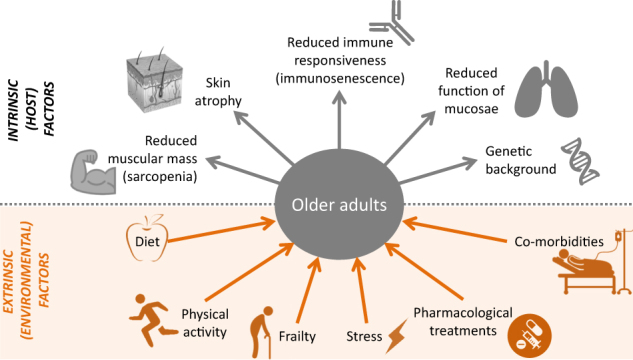
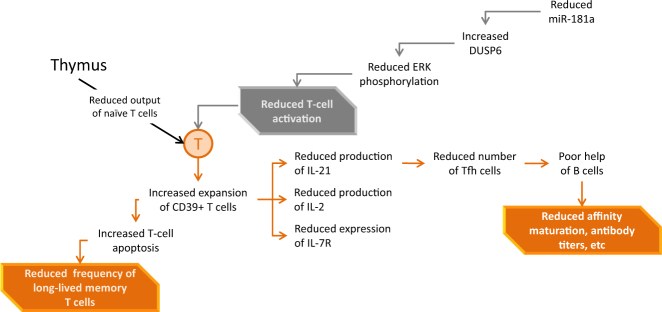
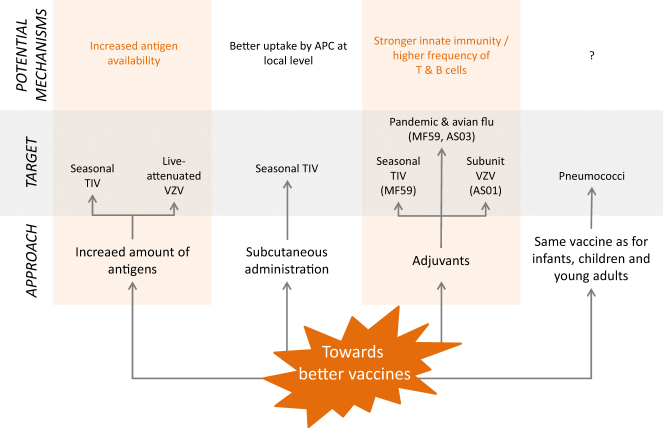
The progressive increase of the aged population worldwide mandates new strategies to ensure sustained health and well-being with age. The development of better and/or new vaccines against pathogens that affect older adults is one pivotal intervention in approaching this goal. However, the functional decline of various physiological systems, including the immune system, requires novel approaches to counteract immunosenescence. Although important progress has been made in understanding the mechanisms underlying the age-related decline of the immune response to infections and vaccinations, knowledge gaps remain, both in the areas of basic and translational research. In particular, it will be important to better understand how environmental factors, such as diet, physical activity, co-morbidities, and pharmacological treatments, delay or contribute to the decline of the capability of the aging immune system to appropriately respond to infectious diseases and vaccination. Recent findings suggest that successful approaches specifically targeted to the older population can be developed, such as the high-dose and adjuvanted vaccines against seasonal influenza, the adjuvanted subunit vaccine against herpes zoster, as well as experimental interventions with immune-potentiators or immunostimulants. Learning from these first successes may pave the way to developing novel and improved vaccines for the older adults and immunocompromised. With an integrated, holistic vaccination strategy, society will offer the opportunity for an improved quality of life to the segment of the population that is going to increase most significantly in numbers and proportion over future decades.
Conflict of interest statement
M.T., D.T.M., D.G.G., and S.J. are employees of the GSK group of companies. M.T. and D.T.M. hold shares in the GSK group of companies. Rest of the authors declare no competing financial interests.
Figures
References
-
- United Nations. World Population Ageing 2015. http://www.un.org/en/development/desa/population/publications/pdf/ageing... (2015).
-
- Fülöp T, Dupuis G, Witkowski JM, Larbi A. The role of immunosenescence in the development of age-related diseases. Rev. Inves. Clin. 2016;68:84–91. - PubMed
-
- World Health Organization. Progress towards regional measeles elimination worldwide, 2000–2015. Wkly. Epidemiol. Rec. 2016;91:525–536.
Grants and funding
LinkOut - more resources
Full Text Sources
Other Literature Sources
