Hypothyroidism and Depression: Are Cytokines the Link?
- PMID: 29285454
- PMCID: PMC5729679
- DOI: 10.4103/ijem.IJEM_265_17
Hypothyroidism and Depression: Are Cytokines the Link?
Abstract
Context: Primary hypothyroidism has been thought of as an inflammatory condition characterized by raised levels of cytokines such as C-reactive protein (CRP), interleukin-6 (IL-6), and tumor necrosis factor-alpha (TNF-α). Depression is also well known to occur in hypothyroidism. Depression is also characterized by elevated inflammatory cytokines. We planned to study whether cytokines play an important part in linking these two conditions.
Objectives: (1) To know the prevalence of depression in overt hypothyroidism due to autoimmune thyroid disease. (2) To correlate the levels of inflammatory markers with the occurrence of depression. (3) To study the effect of levothyroxine on inflammatory markers and depression.
Materials and methods: In this longitudinal, case-controlled study, 33 patients with autoimmune hypothyroidism (thyroid-stimulating hormone >10 uIU/ml) were included with 33 age-, sex-, and body max index-matched healthy controls. Individuals were tested for Serum TNF-α, IL-6, high-sensitivity-CRP (hs-CRP). They were assessed for depression using Montgomery Asberg Depression Rating Scale (MADRS) and World Health Organization Quality of Life (QOL) Scale. Patients received L Thyroxine titrated to achieve euthyroidism and were reassessed for inflammatory markers and cognitive dysfunction.
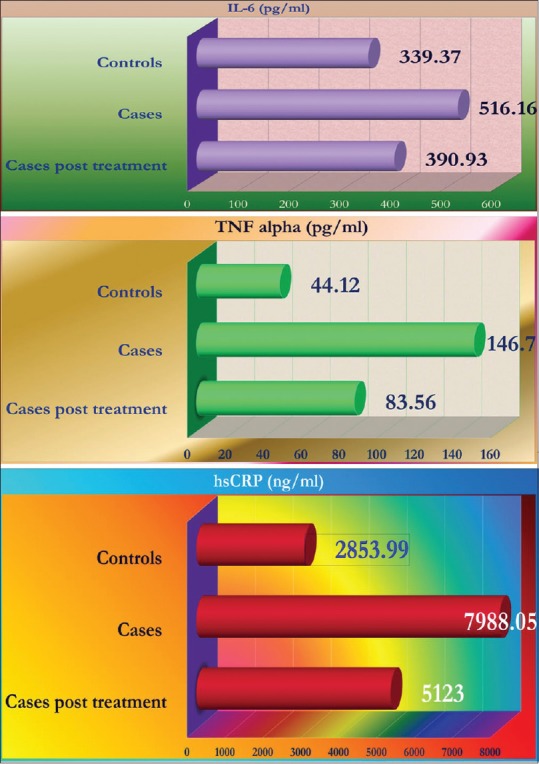
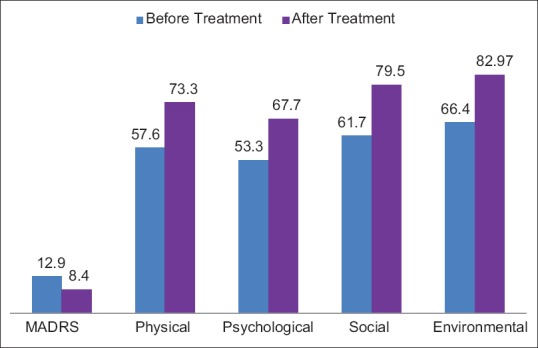
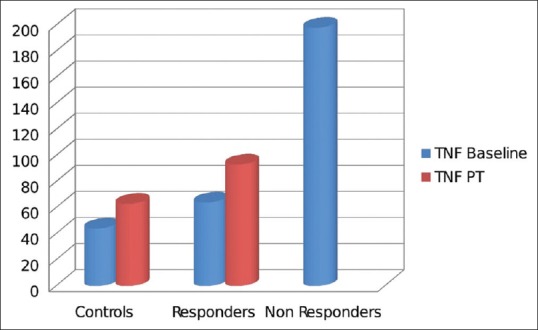
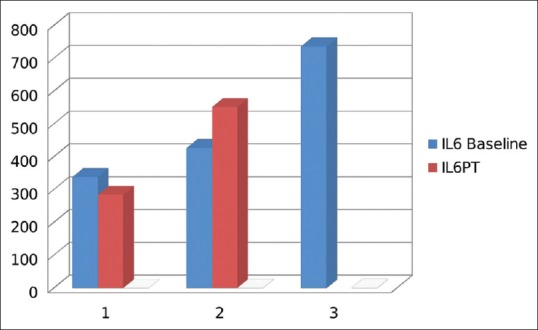
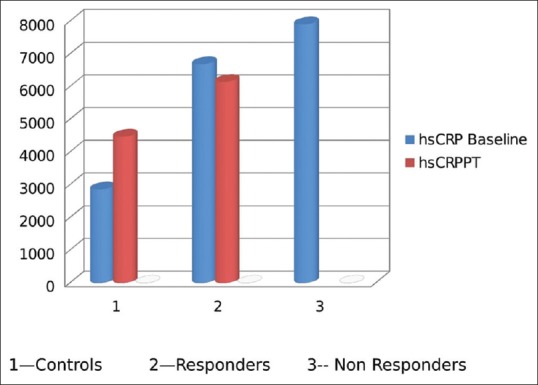
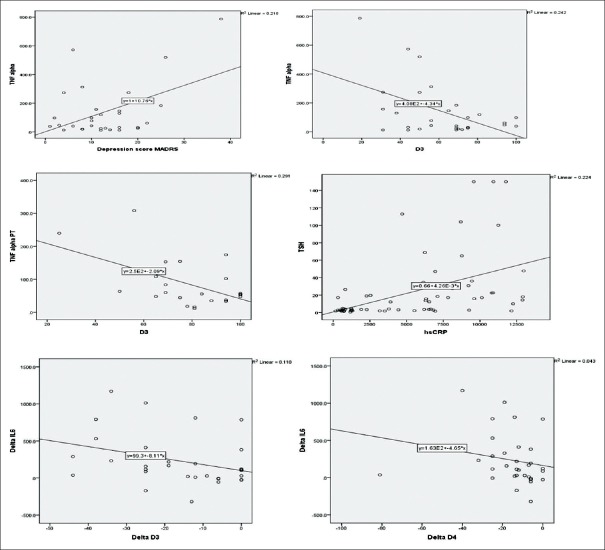
Results: Nineteen patients (57%) had mild to moderate depression (MADRS >11). After 6 months of treatment, eight patients (42%) had remission of depression with significant improvement in QOL scores (P < 0.05). TNF-α, IL-6, and hs-CRP were significantly elevated in patients compared with controls and reduced with therapy but did not reach baseline as controls. The change in inflammatory markers correlated with improvement in QOL scores in social and environmental domains (P < 0.01).
Conclusions: Primary autoimmune hypothyroidism is an inflammatory state characterized by elevated cytokines which decline with LT4 therapy. It is associated with depression and poor quality of life. Treatment of hypothyroidism results in alleviation of depression in the majority of patients. Similarly, patients with mild to moderate depression should be tested for hypothyroidism as simple treatment may ameliorate their depression and improves MADRS score and QOL.
Keywords: Depression; Montgomery Asberg Depression Rating Scale; World Health Organization Quality of Life Scale; high-sensitivity C-reactive protein; hypothyroidism; interleukin-6; tumor necrosis factor alpha.
Conflict of interest statement
There are no conflicts of interest.
Figures
References
-
- Larry Jameson J, Anthony Weetman A. Harrison's Principles of Internal Medicine. 18th ed. USA: McGraw Hill Publishers; 2012. Disorders of thyroid gland; p. 2918.
-
- Cleare AJ, McGregor A, O'Keane V. Neuroendocrine evidence for an association between hypothyroidism, reduced central 5-HT activity and depression. Clin Endocrinol (Oxf) 1995;43:713–9. - PubMed
-
- Schuett H, Luchtefeld M, Grothusen C, Grote K, Schieffer B. How much is too much? Interleukin-6 and its signalling in atherosclerosis. Thromb Haemost. 2009;102:215–22. - PubMed
-
- Boswell EB, Anfinson TH, Nemeroff CB. Depression associated with endocrine disorders. In: Robertson MM, Katona CL, editors. Depression and Physical Illness. England: Wiley, Chichester; 1997. pp. 256–92.
-
- Wolkowitz OM, Rothschild AJ. Psychoneuroendocrinology: The Scientific Basis of Clinical Practice. 1st ed. Washington, DC, USA: American Psychiatric; 2003.
LinkOut - more resources
Full Text Sources
Other Literature Sources
Research Materials
Miscellaneous