


Retention in HIV Care During Pregnancy and the Postpartum Period in the Option B+ Era: Systematic Review and Meta-Analysis of Studies in Africa
- PMID: 29287029
- PMCID: PMC5844830
- DOI: 10.1097/QAI.0000000000001616
Retention in HIV Care During Pregnancy and the Postpartum Period in the Option B+ Era: Systematic Review and Meta-Analysis of Studies in Africa
Abstract
Background: Under Option B+ guidelines for prevention of mother-to-child transmission of HIV, pregnant and breastfeeding women initiate antiretroviral therapy for lifelong use. The objectives of this study were: (1) to synthesize data on retention in care over time in option B+ programs in Africa, and (2) to identify factors associated with retention in care.
Methods: PubMed, EMBASE, and African Index Medicus were systematically searched from January 2012 to June 2017. Pooled estimates of the proportion of women retained were generated and factors associated with retention were analyzed thematically.
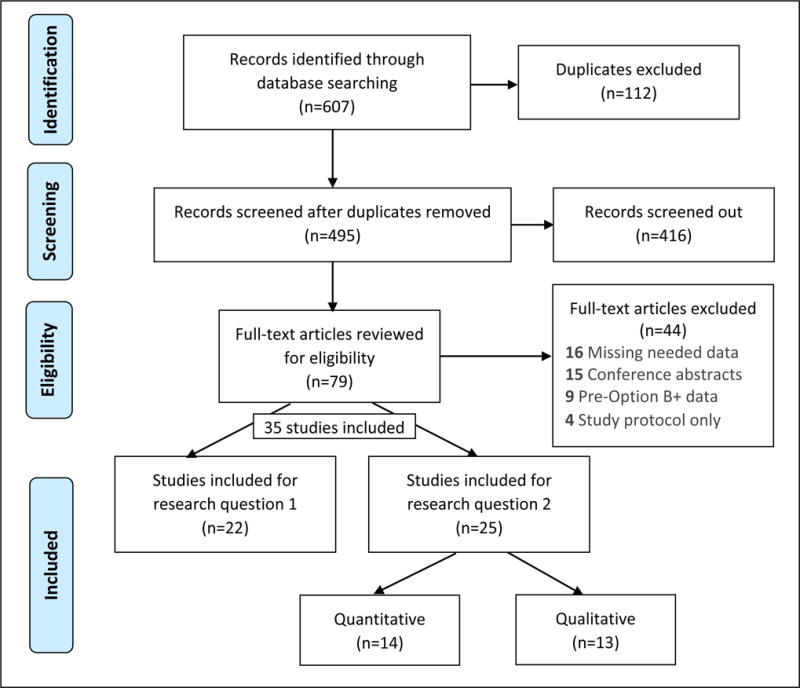
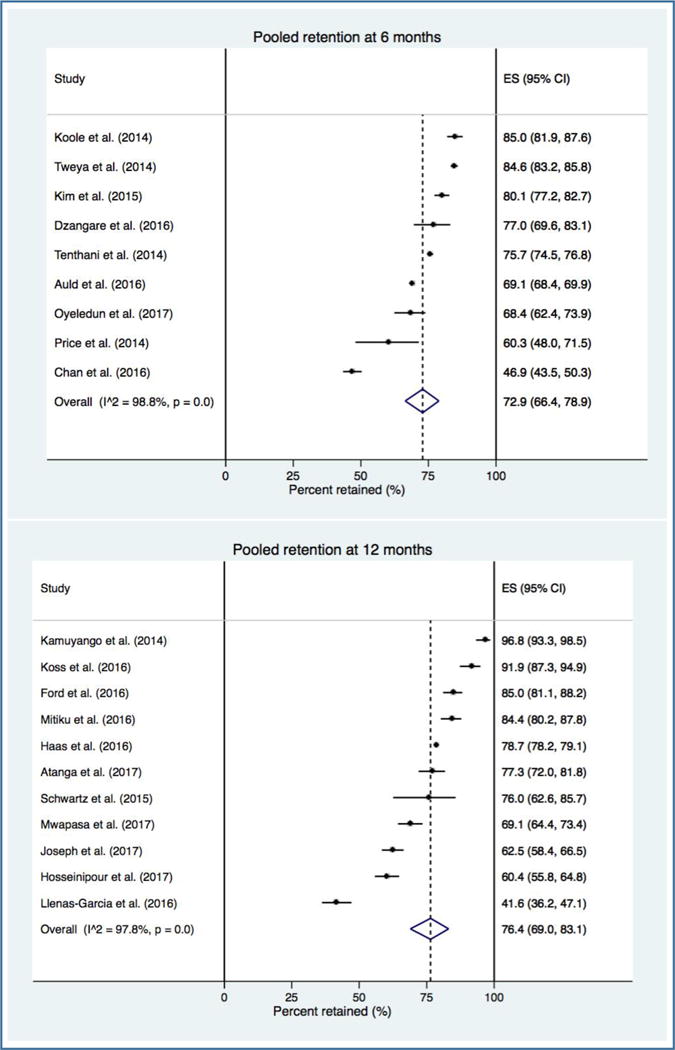
Results: Thirty-five articles were included in the final review; 22 reported retention rates (n = 60,890) and 25 reported factors associated with retention. Pooled estimates of retention were 72.9% (95% confidence interval: 66.4% to 78.9%) at 6 months for studies reporting <12 months of follow-up and 76.4% (95% confidence interval: 69.0% to 83.1%) at 12 months for studies reporting ≥12 months of follow-up. Data on undocumented clinic transfers were largely absent. Risk factors for poor retention included younger age, initiating antiretroviral therapy on the same day as diagnosis, initiating during pregnancy versus breastfeeding, and initiating late in the pregnancy. Retention was compromised by stigma, fear of disclosure, and lack of social support.
Conclusions: Retention rates in prevention of mother-to-child transmission under option B+ were below those of the general adult population, necessitating interventions targeting the complex circumstances of women initiating care under option B+. Improved and standardized procedures to track and report retention are needed to accurately represent care engagement and capture undocumented transfers within the health system.
Figures
References
-
- UNAIDS. Prevention Gap Report. Geneva, Switzerland: Joint United Nations Programme on HIV/AIDS; 2016.
-
- UNAIDS. 90-90-90: An ambitious treatment target to help end the AIDS epidemic. Geneva, Switzerland: Joint United Nations Programme on HIV/AIDS; 2014.
-
- Prendergast AJ, Essajee S, Penazzato M. HIV and the Millennium Development Goals. Arch Dis Child. 2015;100(Suppl 1):S48–52. - PubMed
-
- Helleringer S. Understanding the Adolescent Gap in HIV Testing Among Clients of Antenatal Care Services in West and Central African Countries. AIDS Behav. 2017;21(9):2760–2773. - PubMed
-
- WHO. Consolidated guidelines on the use of antiretroviral drugs for treating and preventing HIV infection: Recommendations for a public health approach (Second edition) Geneva, Switzerland: World Health Organization; 2016. - PubMed
Publication types
MeSH terms
Substances
Grants and funding
LinkOut - more resources
Full Text Sources
Other Literature Sources
Medical
