Review
. 2018 Oct-Nov;20(9-10):543-551.
doi: 10.1016/j.micinf.2017.12.010. Epub 2017 Dec 26.

Immune responses to congenital cytomegalovirus infection

Affiliations
Review

Immune responses to congenital cytomegalovirus infection

Ilija Brizić et al. Microbes Infect. 2018 Oct-Nov.

Abstract

Human cytomegalovirus (HCMV) is the most common cause of viral infection acquired in utero. Even though the infection has been studied for several decades, immune determinants important for virus control and mechanisms of long-term sequelae caused by infection are still insufficiently characterized. Animal models of congenital HCMV infection provide unique opportunity to study various aspects of human disease. In this review, we summarize current knowledge on the role of immune system in congenital CMV infection, with emphasis on lessons learned from mouse model of congenital CMV infection.

Keywords: Brain pathology; Congenital CMV infection; Cytomegalovirus; Immune response; Vaccines.


Conflict of interest statement

Conflict of interests:

The authors declare no conflict of interests regarding the publication of this paper.

Figures
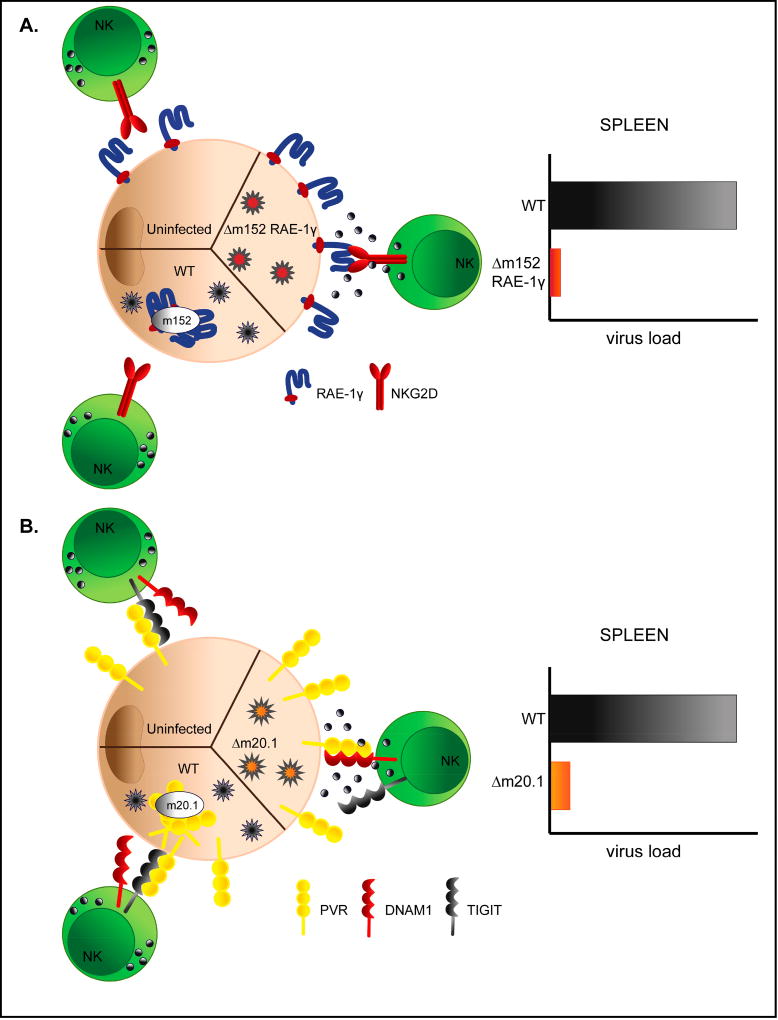
Figure 1
Figure 1. Viral immunoevasion compromises virus control in newborn mice
A) Efficient control of MCMV expressing NKG2D ligand RAE-1γ. WT MCMV downregulates RAE-1γ via m152 protein making the virus resistant to NKG2D dependent control in vivo. Insertion of gene encoding RAE-1γ in place of its viral inhibitor results in overexpression of RAE-1γ on the surface of infected cells and makes virus immunologically attenuated in vivo. B) MCMV inhibitor of PVR (CD155) encoded by MCMV gene m20.1 causes retention of PVR inside of the infected cell resulting in lower cell surface expression and preferential engagement of NK inhibitory receptor TIGIT. Deletion of m20.1 gene restores high cell surface expression of PVR and attenuates the virus in vivo via engagement of activating receptor DNAM-1.
Figure 2
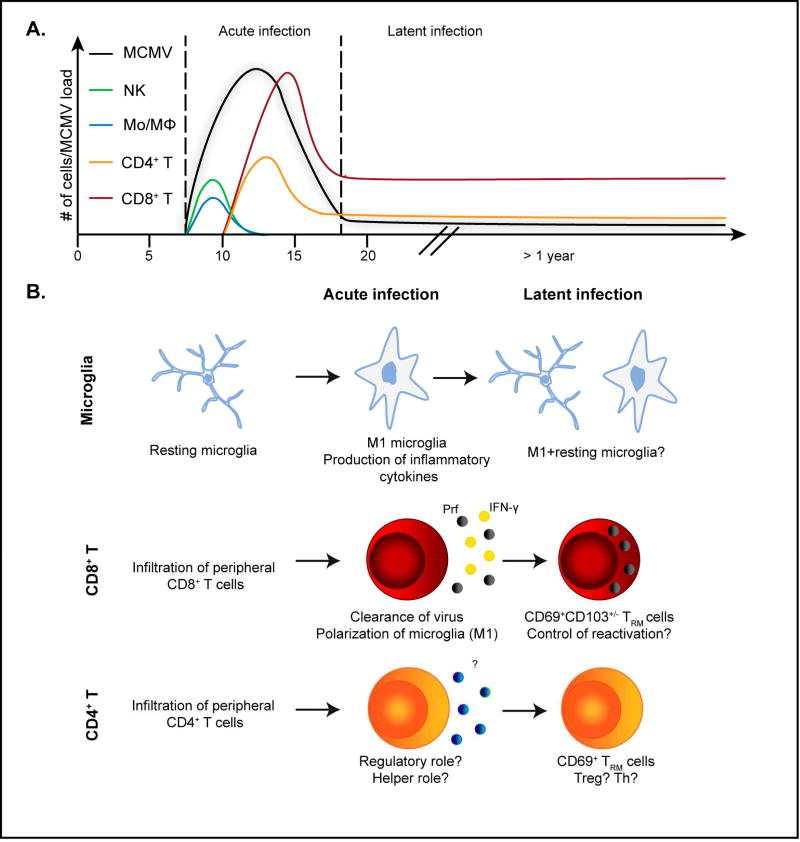
Figure 2. Immune response in the brain of MCMV-infected newborn mice
A) Kinetics of infiltrating immune cells and virus in the brain of neonatal mice infected intraperitoneally. Upon infiltration in brain, MCMV replicates up to day 20 after infection. Infection of brain results in rapid infiltration of NK cells and monocytes/macrophages (Mo/MΦ), followed by infiltration of T cells. Upon resolution of acute infection, latent virus persist in brain, as well as CD8+ and CD4+ T cells. B) MCMV infection of newborn mice permanently changes immune cell homeostasis in brain. Microglia: Upon infection, resting microglia polarizes towards proinflammatory, M1, phenotype which is maintained for prolonged period of time. CD8+ T and CD4+ T cells: Upon infection of brain, activated CD8+ T and CD4+ T cells 26 infiltrate the brain. While CD8+ T cells control the infection (Perforin, IFN-γ), the role of CD4+ T cells is not determined. Upon resolution of acute infection, CD8+ T and CD4+ T cells are maintained in the brain as tissue resident memory cells (TRM cells).

References

    1. Hyde TB, Schmid DS, Cannon MJ. Cytomegalovirus seroconversion rates and risk factors: implications for congenital CMV. Rev Med Virol. 2010;20:311–26. - PubMed
    1. Bate SL, Dollard SC, Cannon MJ. Cytomegalovirus seroprevalence in the United States: the national health and nutrition examination surveys, 1988-2004. Clin Infect Dis. 2010;50:1439–47. - PMC - PubMed
    1. Arvin AM, Fast P, Myers M, Plotkin S, Rabinovich R, Committee NVA Vaccine development to prevent cytomegalovirus disease: report from the National Vaccine Advisory Committee. Clin Infect Dis. 2004;39:233–9. - PubMed
    1. Zanghellini F, Boppana SB, Emery VC, Griffiths PD, Pass RF. Asymptomatic primary cytomegalovirus infection: virologic and immunologic features. J Infect Dis. 1999;180:702–7. - PubMed
    1. Sinzger C, Digel M, Jahn G. Cytomegalovirus cell tropism. Curr Top Microbiol Immunol. 2008;325:63–83. - PubMed

Publication types