Bifidobacterium longum and Lactobacillus helveticus Synergistically Suppress Stress-related Visceral Hypersensitivity Through Hypothalamic-Pituitary-Adrenal Axis Modulation
- PMID: 29291614
- PMCID: PMC5753912
- DOI: 10.5056/jnm16167
Bifidobacterium longum and Lactobacillus helveticus Synergistically Suppress Stress-related Visceral Hypersensitivity Through Hypothalamic-Pituitary-Adrenal Axis Modulation
Abstract
Background/aims: Visceral pain and hypothalamic-pituitary-adrenal axis (HPA) dysregulation is a common characteristic in irritable bowel syndrome (IBS) patients. Previously, we reported that a probiotic formulation (Lactobacillus helveticus R0052 and Bifidobacterium longum R0175) prevents chronic stress-mediated brain function abnormalities by attenuating the HPA axis response. Here, we compared the effect between different probiotic treatments on the perception of visceral pain during colorectal distension (CRD) following a chronic stress and the consequences to the activity of the HPA axis.
Methods: After a 2-week treatment with a combined probiotic formulation, or L. helveticus or B. longum alone in stressed mice, the visceral pain in response to CRD was recorded. The expression of glucocorticoid receptors was determined in the different brain areas involved in the stress response (hypothalamus, hippocampus, and prefrontal cortex). The plasma levels of stress hormones were also measured.
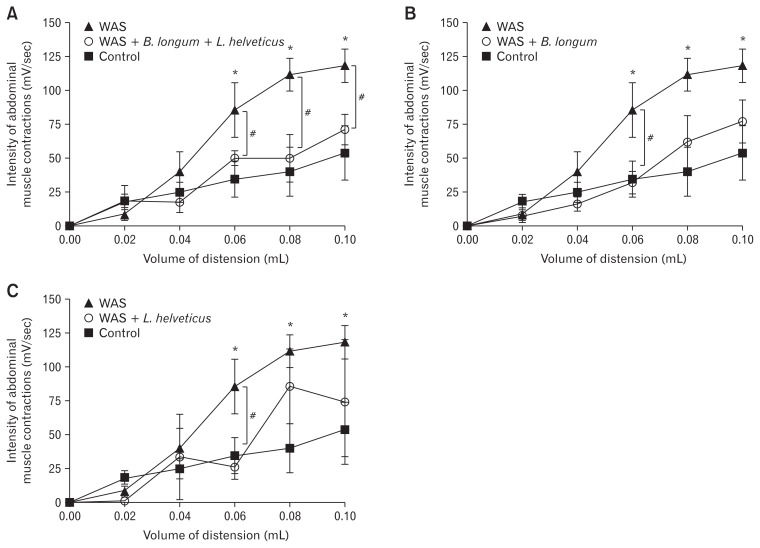
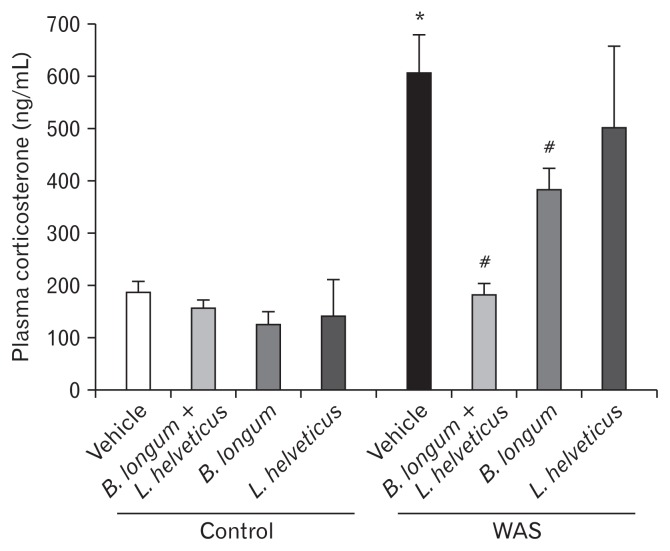
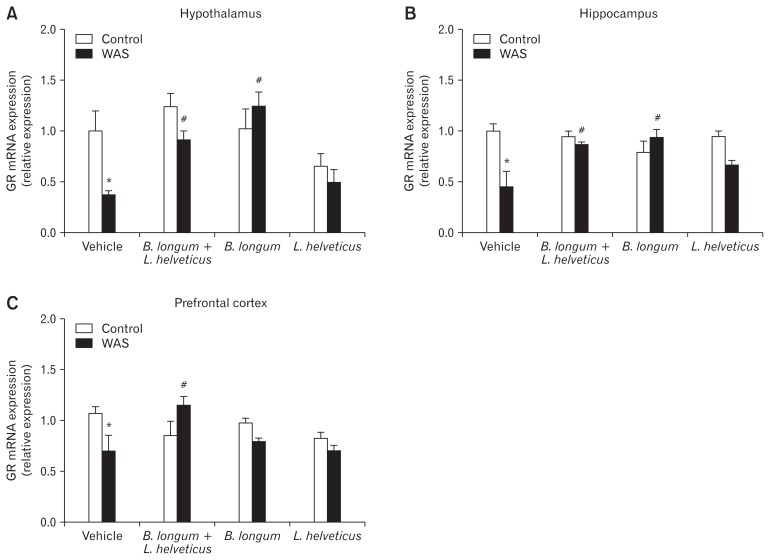
Results: A pretreatment using the combination of probiotic formulation significantly reduces the chronic stress-induced visceral hypersensitivity respectively at 0.06, 0.08, and 0.10 mL CRD volume. However, a single probiotic (B. longum or L. helveticus) administration is less effective in reducing visceral pain in stressed mice. Moreover, the expression of the glucocorticoid receptor mRNA was consistently up-regulated in several brain areas after pretreatment with a combined probiotic, which correlated with the normalization of stress response compared to the inconsistent effects of a single probiotic.
Conclusion: The combination of L. helveticus and B. longum is more effective in regulating glucocorticoid negative feedback on the HPA axis than probiotic alone and subsequently in treating stress-induced visceral pain.
Keywords: Chronic stress; Glucocorticoid receptors; Probiotics; Visceral pain.
Conflict of interest statement
Figures
References
LinkOut - more resources
Full Text Sources
Other Literature Sources
Medical