Review
. 2018 Feb:39:124-136.
doi: 10.1016/j.cytogfr.2017.12.003. Epub 2017 Dec 22.

Dually modified transmembrane proteoglycans in development and disease

Affiliations
Review

Dually modified transmembrane proteoglycans in development and disease

Laura M Jenkins et al. Cytokine Growth Factor Rev. 2018 Feb.

Erratum in

Abstract

Aberrant cell signaling in response to secreted growth factors has been linked to the development of multiple diseases, including cancer. As such, understanding mechanisms that control growth factor availability and receptor-growth factor interaction is vital. Dually modified transmembrane proteoglycans (DMTPs), which are classified as cell surface macromolecules composed of a core protein decorated with covalently linked heparan sulfated (HS) and/or chondroitin sulfated (CS) glycosaminoglycan (GAG) chains, provide one type of regulatory mechanism. Specifically, DMTPs betaglycan and syndecan-1 (SDC1) play crucial roles in modulating key cell signaling pathways, such as Wnt, transforming growth factor-β and fibroblast growth factor signaling, to affect epithelial cell biology and cancer progression. This review outlines current and potential functions for betaglycan and SDC1, with an emphasis on comparing individual roles for HS and CS modified DMTPs. We highlight the mutual dependence of DMTPs' GAG chains and core proteins and provide comprehensive knowledge on how these DMTPs, through regulation of ligand availability and receptor internalization, control cell signaling pathways involved in development and disease.

Keywords: Betaglycan; Cancer; Cell signaling; Glycosaminoglycan; Proteoglycan; Syndecan.


Conflict of interest statement

H. Conflict of Interest

The authors declare that they have no conflicts of interest with the contents of this article.

Figures

Figure 1
Figure 1. Structure and features of DMTPs betaglycan and SDC1
(A) Structures of DMTP CS (top) and HS (lower) glycosaminoglycan (GAG) chains. Both GAG chains share a common linkage tetrasaccharide covalently attached to a serine hydroxyl group on the DMTP core protein. These serine residues have an adjacent glycine residue on the carboxy-terminal side and usually lie within an area rich in acidic residues. (B) Betaglycan’s core protein contains two ZP domains in its ECD for ligand binding and both DMTPs contain a small cytoplasmic domain, which can be cleaved by γ-secretase to release the cytoplasmic fragment. A PDZ motif in betaglycan’s cytoplasmic domain is frequently phosphorylated and regulates betaglycan cell surface expression and intracellular protein interactions. SDC1’s cytoplasmic domain is divided into two conserved regions and a variable region, which are responsible for intracellular protein binding. SDC1 can also interact with proteins containing a PDZ motif. Betaglycan and SDC1 both undergo ectodomain shedding by MMPs to release (C) soluble forms of each receptor, which can both bind growth factors and modulate their activity. Abbreviations: C1: Conserved Domain 1, C2: Conserved Domain 2, MMP: Matrix Metalloproteinases, PDZ: Postsynaptic Density-95/Disc large protein/Zonula occludens-1, sBetaglycan: Soluble/shed betaglycan, sSDC1: Soluble/shed SDC1, V: Variable Domain, ZP: Zona Pellucida, HS: Heparan Sulfate, CS: Chondroitin Sulfate
Figure 2
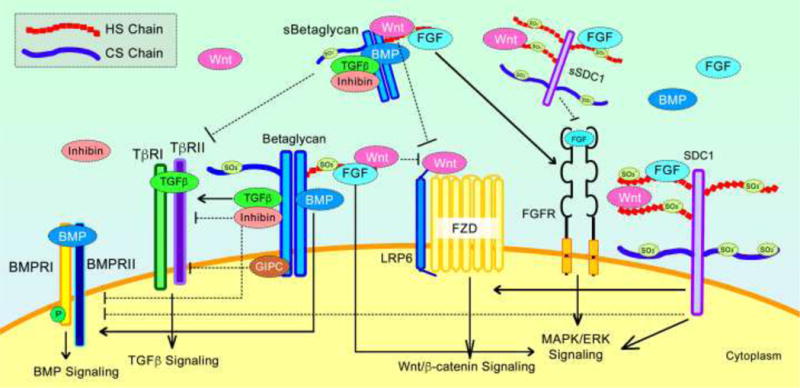
Figure 2. DMTPs in growth factor signaling pathways
DMTPs betaglycan and SDC1 bind growth factors either through their GAG chains or core protein and then regulate ligand function through distinct mechanisms. Growth factors bound to membrane DMTPs are localized to the cell surface and are either presented to their associated signaling receptors (➔) or sequestered away to prevent signal transduction (—|). Additionally, soluble DMTP forms, generated by ectodomain shedding, bind ligands and either enhance or prevent signal complex formation. Abbreviations: BMP: Bone Morphogenetic Protein, BMPR: Bone Morphogenetic Protein Receptor, CS: Chondroitin Sulfate, ERK: Extracellular Signal-regulated Kinase, FGF: Fibroblast Growth Factor, FGFR: Fibroblast Growth Factor Receptor, FZD: Frizzled, GIPC: GAIP-interacting protein C terminus, HS: Heparan Sulfate, LRP6: LDL Receptor Related Protein 6, MAPK: Mitogen-activated protein kinase, sBetaglycan: Soluble/shed betaglycan, sSDC1: Soluble/shed SDC1, TGFβ: Transforming Growth Factor β, TβRI, RII: Transforming Growth Factor β Receptors I and II, Wnt: Wingless.
Figure 3
Figure 3. Raft-dependent SDC1 endocytosis
(A) First phase, (1) growth factor binding induces rapid (2) ERK activation with (3) SDC1 clustering leading to movement of SDC1 into membrane rafts. In the presence of cortactin and SDC1’s MKKK motif, ERK is activated and (4) drives SDC1 dissociation from α-tubulin. (B) Second phase, Clustering of SDC1’s MKKK motif triggers (5) Src-dependent phosphorylation of tyrosyl residues within SDC1’s transmembrane and cytoplasmic domains. This phosphorylation step leads to (6) cortactin recruitment followed by (7) actin-dependent endocytosis into caveolin vesicles. Abbreviations: CS: Chondroitin Sulfate, HS: Heparan Sulfate, MK: SDC1 MKKK motif, p: phosphorylation, pY: tyrosyl phosphorylation, Src: Src kinases.
Figure 4
Figure 4. Betaglycan Internalization and Trafficking
Betaglycan is internalized via a (1) clathrin-independent (lipid raft/caveolin-mediated) pathway or (2) a clathrin-dependent mechanism. Clathrin dependent endocytosis increases signal transduction via (3) betaglycan association with SARA in early endosomes. This SARA-betaglycan interaction leads to recycling of betaglycan back to the cell surface to continue signal transduction. To degrade betaglycan and downregulate signaling, (4) TβRII phosphorylates betaglycan at Threonine 841, increasing (5) betaglycan association with β-arrestin2 and (6) caveolin-mediated internalization and degradation of betaglycan. Additionally, betaglycan’s cytoplasmic domain can be (7) cleaved by γ-secretase to release the cytoplasmic domain and enhance growth factor signaling. Abbreviations: CS: Chondroitin Sulfate, HS: Heparan Sulfate, T841: Threonine 841, TβRII: Transforming Growth Factor β Receptors II, SARA: SMAD Anchor for Receptor Activation.

References

    1. Couchman JR. Transmembrane signaling proteoglycans. Annu Rev Cell Dev Biol. 2010;26:89–114. - PubMed
    1. Mythreye K, Blobe GC. Proteoglycan signaling co-receptors: roles in cell adhesion, migration and invasion. Cellular signalling. 2009;21(11):1548–58. - PMC - PubMed
    1. Teng YH, Aquino RS, Park PW. Molecular functions of syndecan-1 in disease. Matrix Biol. 2012;31(1):3–16. - PMC - PubMed
    1. Khotskaya YB, Dai Y, Ritchie JP, MacLeod V, Yang Y, Zinn K, Sanderson RD. Syndecan-1 is required for robust growth, vascularization, and metastasis of myeloma tumors in vivo. The Journal of biological chemistry. 2009;284(38):26085–95. - PMC - PubMed
    1. Gatza CE, Holtzhausen A, Kirkbride KC, Morton A, Gatza ML, Datto MB, Blobe GC. Type III TGF-beta receptor enhances colon cancer cell migration and anchorage-independent growth. Neoplasia. 2011;13(8):758–70. - PMC - PubMed

Publication types

MeSH terms