Review
. 2018 Jan 2;128(1):4-15.
doi: 10.1172/JCI95300. Epub 2018 Jan 2.

Genetic basis of human congenital anomalies of the kidney and urinary tract

Affiliations
Review

Genetic basis of human congenital anomalies of the kidney and urinary tract

Simone Sanna-Cherchi et al. J Clin Invest. .

Abstract

The clinical spectrum of congenital anomalies of the kidney and urinary tract (CAKUT) encompasses a common birth defect in humans that has significant impact on long-term patient survival. Overall, data indicate that approximately 20% of patients may have a genetic disorder that is usually not detected based on standard clinical evaluation, implicating many different mutational mechanisms and pathogenic pathways. In particular, 10% to 15% of CAKUT patients harbor an unsuspected genomic disorder that increases risk of neurocognitive impairment and whose early recognition can impact clinical care. The emergence of high-throughput genomic technologies is expected to provide insight into the common and rare genetic determinants of diseases and offer opportunities for early diagnosis with genetic testing.


Conflict of interest statement

Conflict of interest: A.G. Gharavi received support from the Renal Research Institute in 2016.

Figures

Figure 1
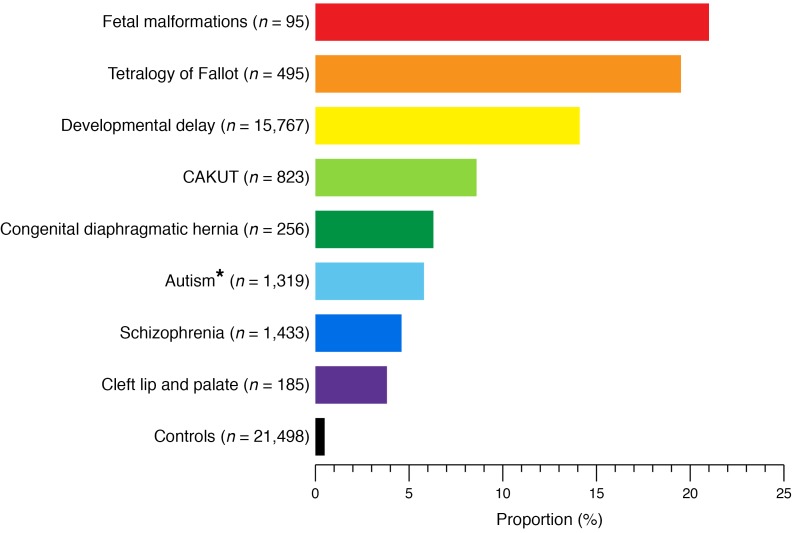
Figure 1. Proportion of patients with known genomic disorders in different human developmental phenotypes and healthy controls.
There is a striking enrichment of known genomic disorders in human developmental disease compared with controls (–, –, –71). The prevalence in controls is based on 21,498 controls generated from previously published studies (70, 71). *The proportion of known genomic disorders in autism spectrum disorder is displayed as the weighted average of two independent studies (64, 65). CAKUT, congenital anomalies of the kidney and urinary tract.
Figure 2
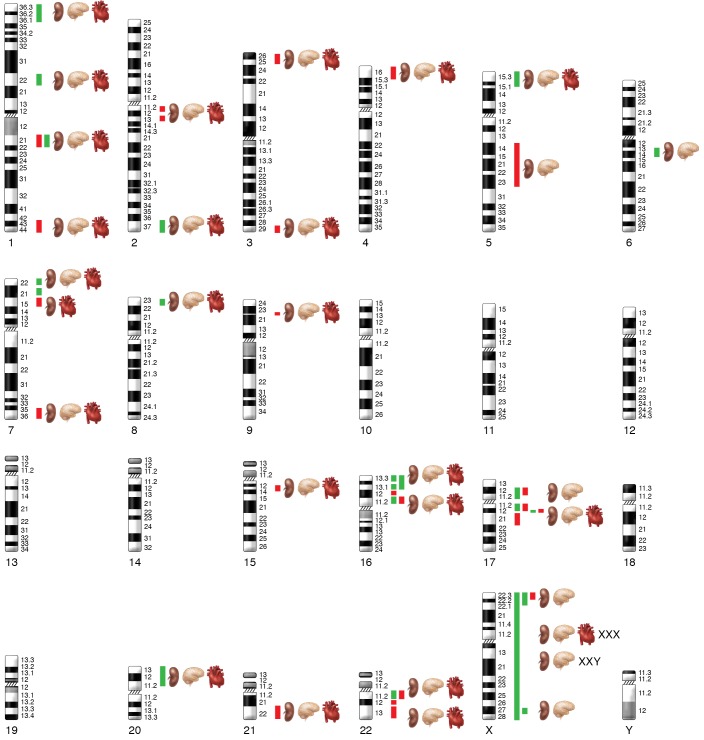
Figure 2. Overview of identified genomic disorders in isolated CAKUT presented on a human chromosomal map.
The overlap of known CAKUT genomic disorder loci (kidney symbol) (–71) with developmental delay (brain symbol) and congenital heart defects (heart symbol) are indicated based on a review of the literature. Red = deletion; green = duplication.
Figure 3
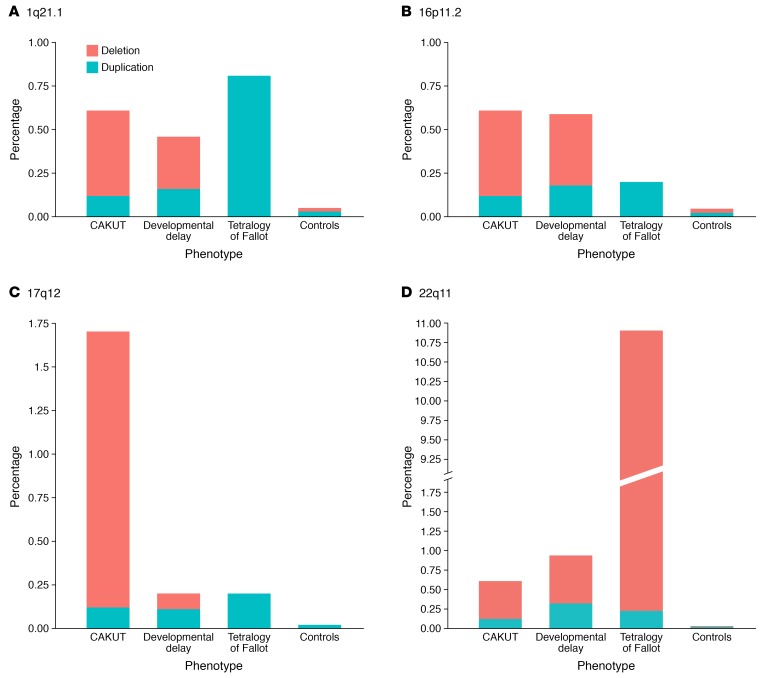
Figure 3. Differences and similarities in the prevalence of the four most commonly implicated CNV loci in CAKUT patients.
Bar graphs compare the prevalence of common loci in CAKUT patients (n = 823) to the prevalence of identical loci in patients with developmental delay (n = 15,767), tetralogy of Fallot (n = 495), and in-house genotyping data of healthy controls (n = 21,498) (, –71, 80). Genomic imbalances are enriched for all phenotypes compared with controls. Duplications are shown in green, deletions are shown in red. (A) Prevalence of duplications and deletions at chromosomal locus 1q21.1. (B) Prevalence of duplications and deletions at chromosomal locus 16p11.2. (C) Prevalence of duplications and deletions at chromosomal locus 17q12. As expected, CAKUT patients show a significant enrichment for the renal cysts and diabetes (RCAD) syndrome deletion. (D) Prevalence of duplications and deletions at chromosomal locus 22q11.2. Patients with tetralogy of Fallot are typically enriched for the 22q11.2 microdeletion syndrome.

References

    1. Goodyear PR. Renal dysplasia/hypoplasia. In: Avner ED, Harmon WE, Niaudet P, eds. Pediatric Nephrology. 5th ed. Philadelphia, Pennsylvania, USA: Lippincott Williams and Wilkins; 2004:83–91.
    1. Ichikawa I, Kuwayama F, Pope JC, Stephens FD, Miyazaki Y. Paradigm shift from classic anatomic theories to contemporary cell biological views of CAKUT. Kidney Int. 2002;61(3):889–898. doi: 10.1046/j.1523-1755.2002.00188.x. - DOI - PubMed
    1. Nakanishi K, Yoshikawa N. Genetic disorders of human congenital anomalies of the kidney and urinary tract (CAKUT) Pediatr Int. 2003;45(5):610–616. doi: 10.1046/j.1442-200X.2003.01779.x. - DOI - PubMed
    1. Sanna-Cherchi S, et al. Genetic approaches to human renal agenesis/hypoplasia and dysplasia. Pediatr Nephrol. 2007;22(10):1675–1684. doi: 10.1007/s00467-007-0479-1. - DOI - PMC - PubMed
    1. Chen F. Genetic and developmental basis for urinary tract obstruction. Pediatr Nephrol. 2009;24(9):1621–1632. doi: 10.1007/s00467-008-1072-y. - DOI - PMC - PubMed

Publication types

MeSH terms