. 2018 Jan 2;13(1):e0189892.
doi: 10.1371/journal.pone.0189892. eCollection 2018.

Mobius Assembly: A versatile Golden-Gate framework towards universal DNA assembly

Affiliations

Mobius Assembly: A versatile Golden-Gate framework towards universal DNA assembly

Andreas I Andreou et al. PLoS One. .

Abstract

Synthetic biology builds upon the foundation of engineering principles, prompting innovation and improvement in biotechnology via a design-build-test-learn cycle. A community-wide standard in DNA assembly would enable bio-molecular engineering at the levels of predictivity and universality in design and construction that are comparable to other engineering fields. Golden Gate Assembly technology, with its robust capability to unidirectionally assemble numerous DNA fragments in a one-tube reaction, has the potential to deliver a universal standard framework for DNA assembly. While current Golden Gate Assembly frameworks (e.g. MoClo and Golden Braid) render either high cloning capacity or vector toolkit simplicity, the technology can be made more versatile-simple, streamlined, and cost/labor-efficient, without compromising capacity. Here we report the development of a new Golden Gate Assembly framework named Mobius Assembly, which combines vector toolkit simplicity with high cloning capacity. It is based on a two-level, hierarchical approach and utilizes a low-frequency cutter to reduce domestication requirements. Mobius Assembly embraces the standard overhang designs designated by MoClo, Golden Braid, and Phytobricks and is largely compatible with already available Golden Gate part libraries. In addition, dropout cassettes encoding chromogenic proteins were implemented for cost-free visible cloning screening that color-code different cloning levels. As proofs of concept, we have successfully assembled up to 16 transcriptional units of various pigmentation genes in both operon and multigene arrangements. Taken together, Mobius Assembly delivers enhanced versatility and efficiency in DNA assembly, facilitating improved standardization and automation.


Conflict of interest statement

Competing Interests: The authors have declared that no competing interests exist.

Figures

Fig 1
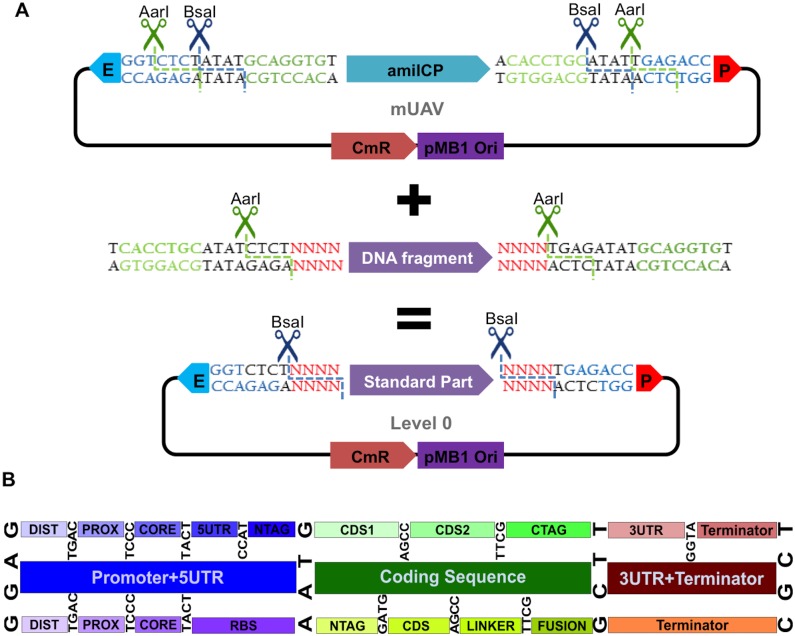
Fig 1. Mobius Assembly standard part generation.
(A) Mobius Universal Acceptor Vector (mUAV) is the vector which converts and hosts DNA fragments as standard parts. mUAV is flanked by the Type IIS restriction enzymes BsaI and AarI and carries amilCP gene as visible cloning screening marker. The inserts are amplified with primers containing AarI recognition sites, the fusion sites with the mUAV, and the standard overhangs, and they replace amilCP cassette in a Golden Gate reaction. The standard parts are released by BsaI digestion. E: EcoRI; P: PstI. (B) Mobius Assembly embraces the 4bp standard part overhangs defined by MoClo, Golden Braid, and Phytobricks, to facilitate part sharing. The middle row illustrates the standard overhangs for major functional parts (promoter, coding sequence, and terminator); the top row shows the recommended overhangs for eukaryotic sub-functional parts, while the bottom row indicates ones for the prokaryotic counterparts.
Fig 2
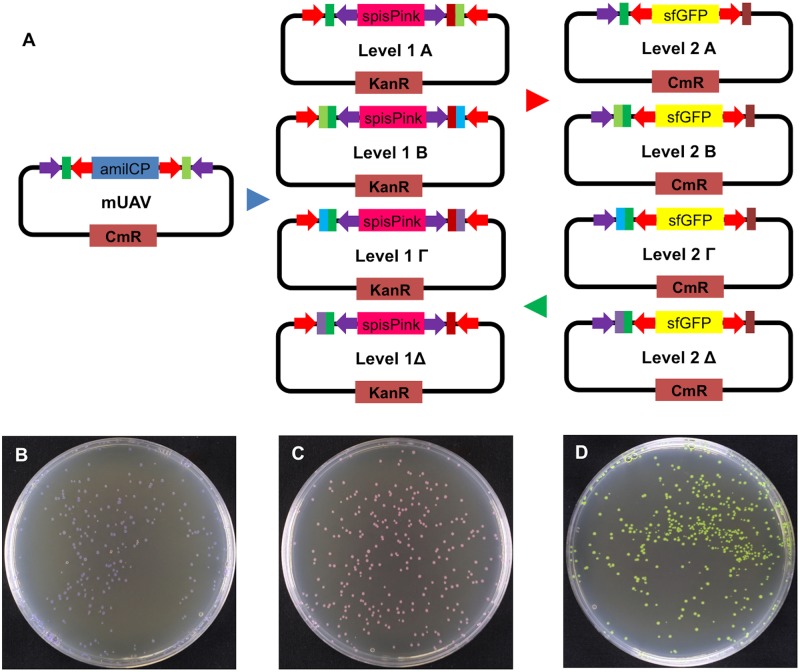
Fig 2. Mobius Assembly framework.
(A) Mobius Assembly uses a two-level (Level 1 and 2) approach for transcriptional unit (TU) and multi-TU augmentation. Each level is comprised of four Acceptor Vectors. The four Level 1 Acceptor Vectors (A, B, Γ, and Δ) carry spisPink gene as the visible cloning screening marker and confer Kanamycin resistance. The four Level 2 Acceptor Vectors (A, B, Γ, and Δ) carry sfGFP gene as the visible cloning screening marker and confer Chloramphenicol resistance. The standard parts stored in mUAVs are released and fused in a Level 1 reaction to form a TU. Up to four Level 1 TUs can be fused in a Level 2 reaction to form a multi-TU cassette. Switching back and forth between Level 1 and 2 leads to further expansion of multi-TUs according to the geometric sequence: 1, 4, 16, 64,…. Red arrows denote AarI restriction sites and Purple arrows BsaI restriction sites. (B, C, and D) E. coli colonies carrying mUAV (B), Level Acceptor 1 Vector A (C), and Level 2 Acceptor Vector A (D), which respectively exhibit purple, magenta and yellow colour after overnight incubation. Successful assembly produces white colonies.
Fig 3
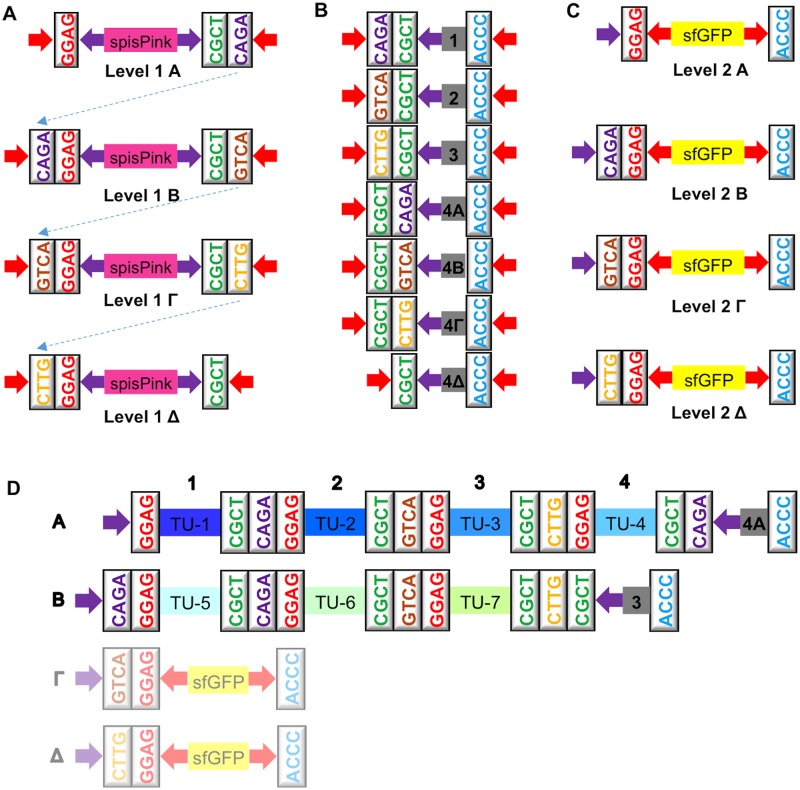
Fig 3. Mobius Assembly vector toolkit.
(A) The overhangs of the four Level 1 Acceptor Vectors. BsaI digestion releases the spisPink gene upon digestion to expose GGAG and CGCT, between which a TU will be incorporated. Each type of vector has unique overhangs at the 3’ end which guides the assembly of up to four TUs in a Level 2 Acceptor Vector. (B) Seven Auxiliary Plasmids provide End-to-End linkers and Middle-to-End linkers to assist Level 2 cloning. (C) The overhangs of the four Level 2 Acceptor Vectors. Digestion with AarI releases the sfGFP gene and exposes GGAG and ACCC, between which up to four TUs will be fused into with the assistance of an Auxiliary Plasmid. 4A, 4B, 4Γ and 4Δ End-to-End linkers provide 5’ and 3’ overhangs and the missing Level 2 overhang when four Level 1 TUs are fused. Middle-to-End linkers 1, 2, and 3 are used when one, two or three Level 1 cassettes are fused in Level 2. They provide 5’ and 3’ overhangs and the CGCT overhang necessary for the cloning back to Level 1. (D) An example of how the Auxiliary Plasmids are used. A 7-TU construct is generated by combining the four TUs in the Level 2 Acceptor Vector A and the remaining three TUs in Vector B in a Level 1 reaction. Auxiliary Plasmid 4A is used for the four TUs in Acceptor Vector A, and the Auxiliary Plasmid 3 for the three TUs in Vector B. Red arrows demarcate AarI restriction sites and purple arrows BsaI restriction sites.
Fig 4
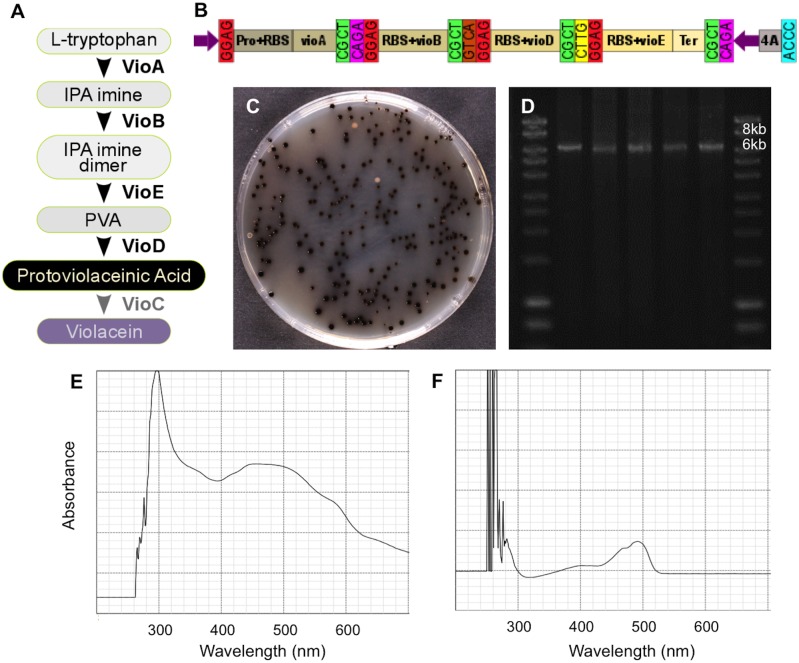
Fig 4. Reconstruction of the violacein biosynthesis operon.
(A) Schematic of the violacein biosynthetic pathway showing enzymes mediating the conversion of the intermediates. (B) Diagram showing the assembly of vioA, vioB, vioD and vioE in a Level 2 Acceptor Vector A. (C) Cells transformed with the vioABDE operon form dark green to black colonies due to the production of protoviolaceinic acid. (D) Agarose gel electrophoresis of PCR products from five dark green/black colonies verified the correct size of the construct (6.5kb). (E) UV-Visible range spectrophotometry of the ethanol extract from a dark green colony showed a wide spectrum of absorbance indicative of protoviolaceinic acid. (F) Spectrophotometry of sfGFP extract from a colony without the recombinant plasmid. IPA: Indole-3-pyruvic acid; PVA: Protodeoxyviolaceinic acid.
Fig 5
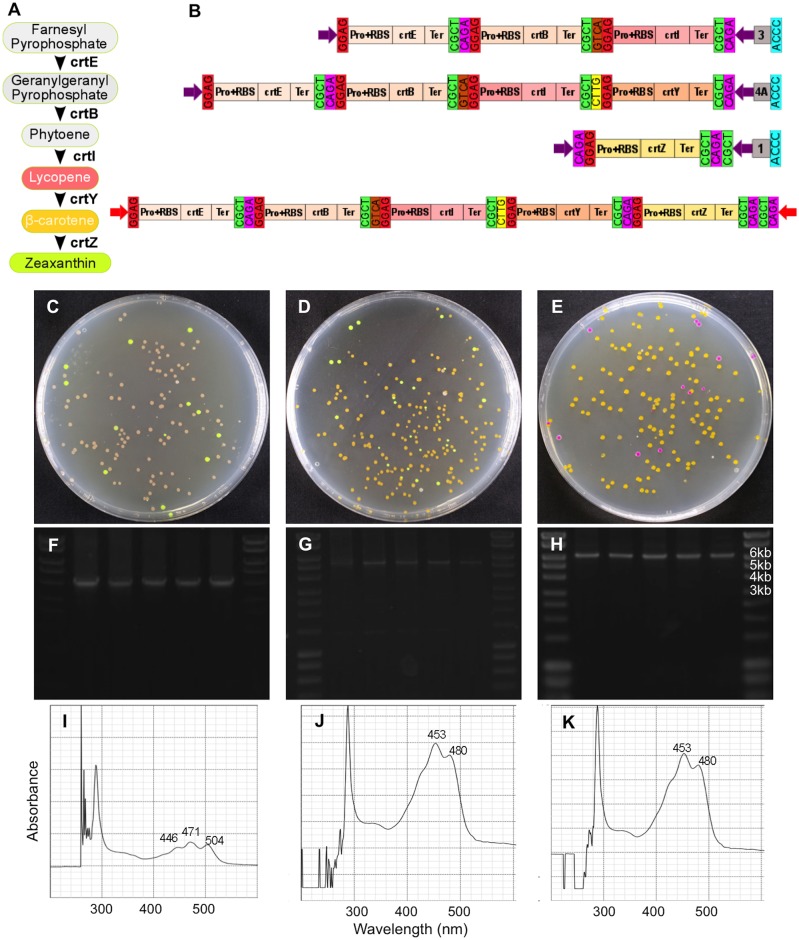
Fig 5. Reconstruction of the carotenoid biosynthesis transcriptional units.
(A) A schematic of carotenoid biosynthetic pathway showing the enzymes mediating the production of zeaxanthin as the final product. (B) The multi-TU constructs made by Mobius Assembly to produce lycopene (crtEBI) and β-carotene (crtEBIY) (in Level 2 Acceptor Vectors) and for zeaxanthin (crtEBIYZ) by assembling crtEBIY and crtZ back in a Level 1 A Vector. Colonies producing lycopene are pink (C), β-carotene orange (D), and zeaxanthin yellow (E). Cells carrying intact Level 2 Vectors produced bright yellow colonies, and Level 1 Vectors pink colonies. Gel electrophoresis of the PCR from five colonies (pink, orange and yellow from each cloning, respectively) verified the correct size of the constructs; 4.3kb for lycopene (F), 5.7kb for β-carotene (G), and 6.7kb zeaxanthin (H). UV-Visible spectrophotometry showed expected peaks for lycopene (446nm, 472nm, and 503nm, I), β-carotene (450nm and 478nm, J) and zeaxanthin (450nm and 478nm, K).
Fig 6
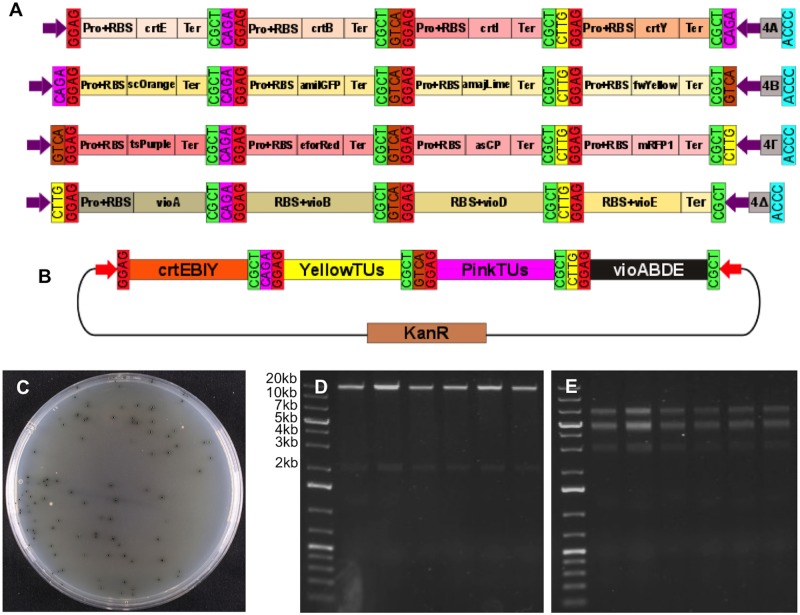
Fig 6. Proof-of-concept assembly of 16TU construct.
(A) A schematic showing the four intermediate Level 2 constructs for the assembly of the 16-TU construct. The carotenoid biosynthesis genes crtE, crtB, crtI, and crtY assembled in the Vector A, the yellow chromoprotein genes scOrange, amilGFP, amajLime, and fwYellow in the Vector B, the pink chromoprotein genes tsPurple, eforRed, spisPink, and mRFP1 in the Vector Γ, and the violacein biosynthesis genes vioA, vioB, vioD and vioE in the Vector Δ. (B) A schematic of the 16TU construct derived from the assembly of the four Level 2 cassettes, each containing 4-TUs, in the Level 1 Acceptor Vector A. (C) Cells transformed with the successfully assembled 16TU construct grew into black colonies due to predominant colouring by protoviolaceinic acid. (D) Gel electrophoresis of six plasmids (isolated from the black colonies) digested with PstI and EcoRI resulting in bands of expected sizes—18.2kb for the insert and 2.2kb for the vector. (E) The same plasmids were digested with PstI and AleI resulting in the bands of expected sizes—7.1kb, 5.1 and 4.9kb (appear merged on the gel), and 3.2kb.

References

    1. Andrianantoandro E, Basu S, Karig DK, Weiss R. Synthetic biology: new engineering rules for an emerging discipline. Mol Syst Biol. 2006;2 Available: http://msb.embopress.org/content/2/1/2006.0028.abstract - PMC - PubMed
    1. Arkin A. Setting the standard in synthetic biology. Nat Biotechnol. 2008;26: 771–4. doi: 10.1038/nbt0708-771 - DOI - PubMed
    1. Ellis T, Adie T, Baldwin GS. DNA assembly for synthetic biology: from parts to pathways and beyond. Integr Biol (Camb). 2011;3: 109–118. doi: 10.1039/c0ib00070a - DOI - PubMed
    1. Hughes RA, Ellington AD. Synthetic DNA Synthesis and Assembly : Putting the Synthetic in Synthetic Biology. 2017; doi: 10.1101/CSHPERSPECT.A023812 - DOI - PMC - PubMed
    1. Casini A, Storch M, Baldwin GS, Ellis T. Bricks and blueprints: methods and standards for DNA assembly. Nat Rev Mol Cell Biol. Nature Publishing Group; 2015;16: 568–576. doi: 10.1038/nrm4014 - DOI - PubMed

Publication types