


In the Eye of the Beholder? Parent-Observer Discrepancies in Parenting and Child Disruptive Behavior Assessments
- PMID: 29294209
- PMCID: PMC6061015
- DOI: 10.1007/s10802-017-0381-7
In the Eye of the Beholder? Parent-Observer Discrepancies in Parenting and Child Disruptive Behavior Assessments
Abstract
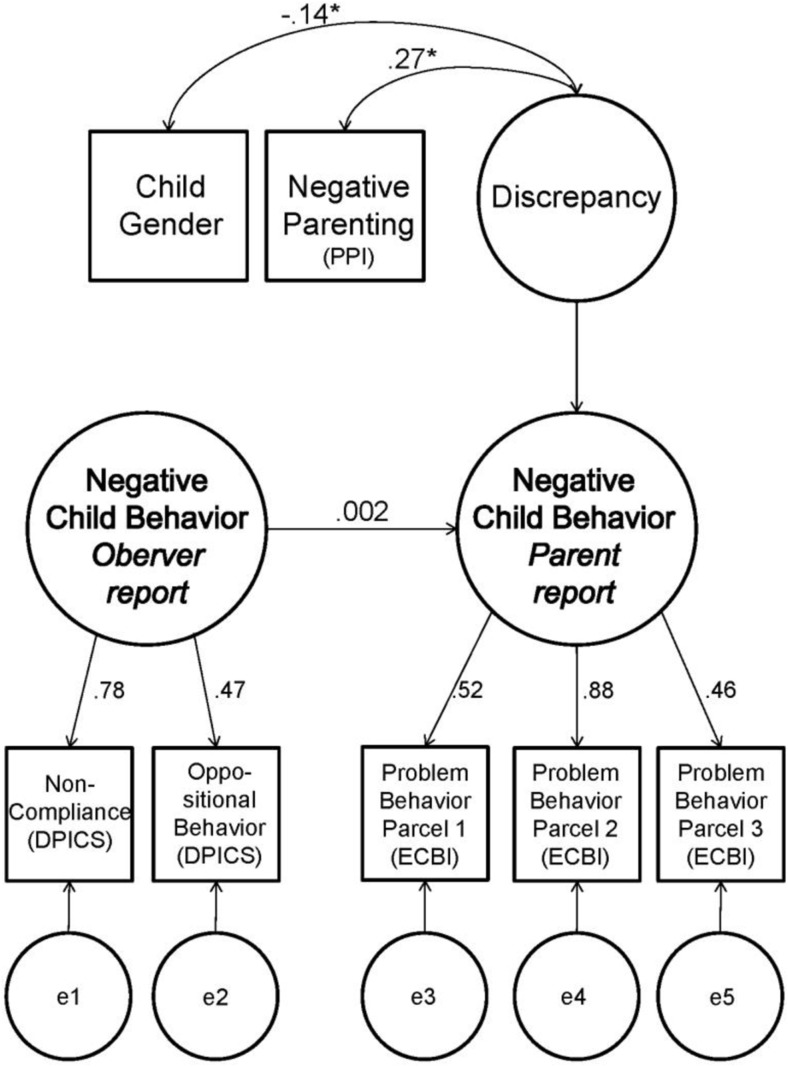
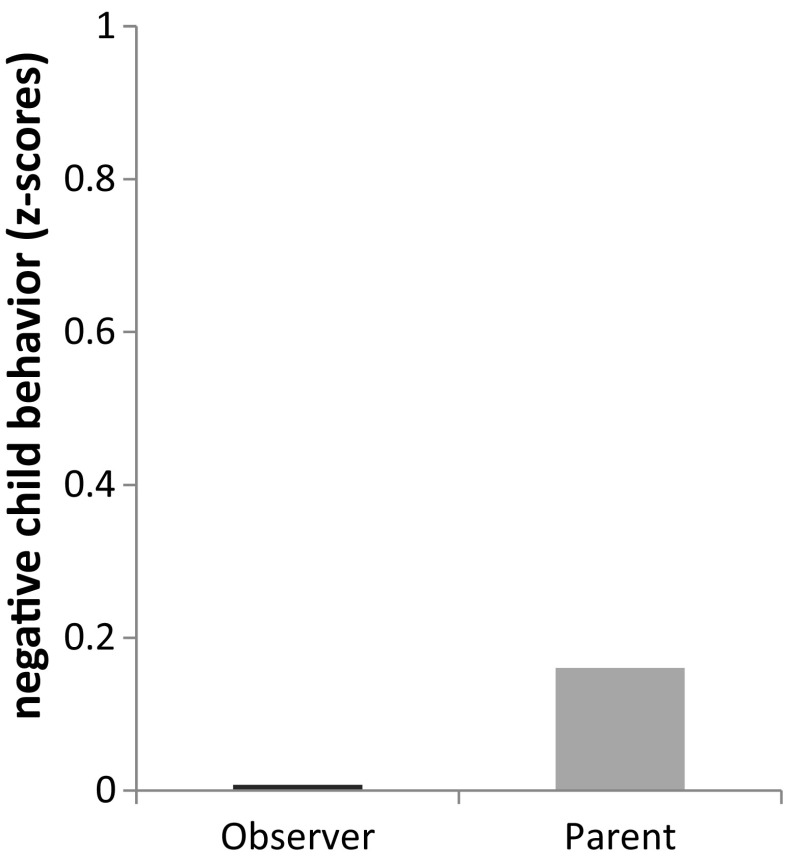
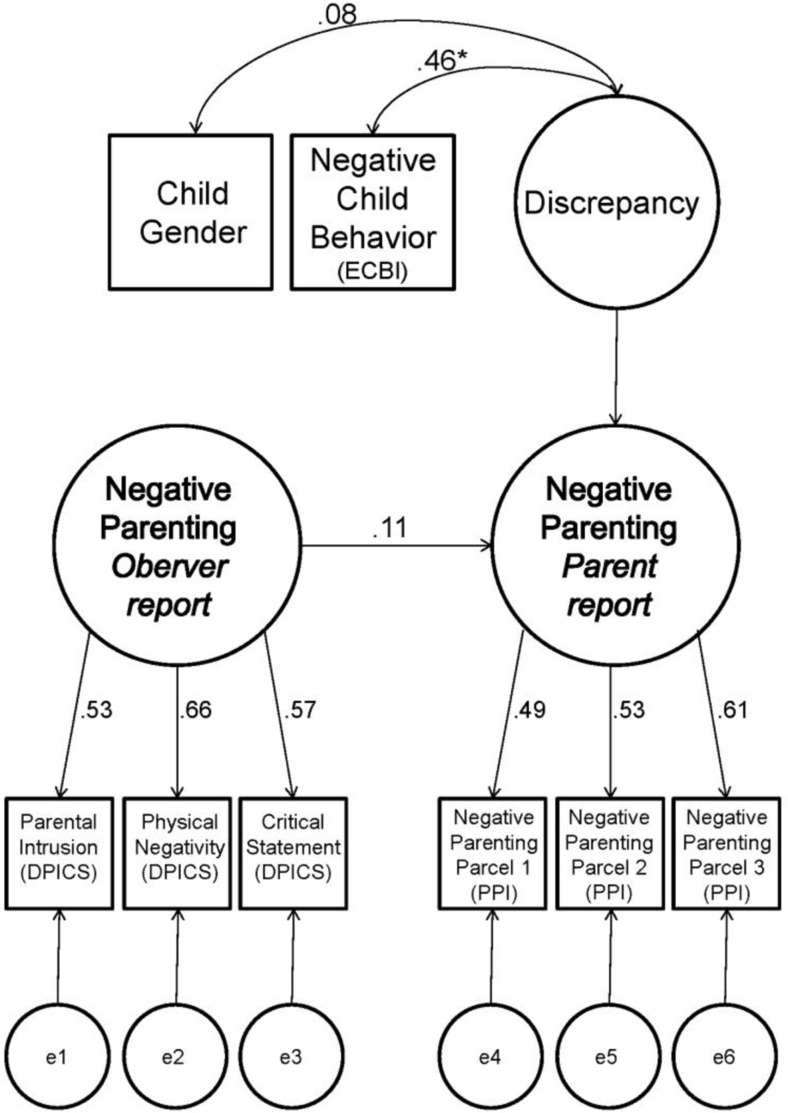
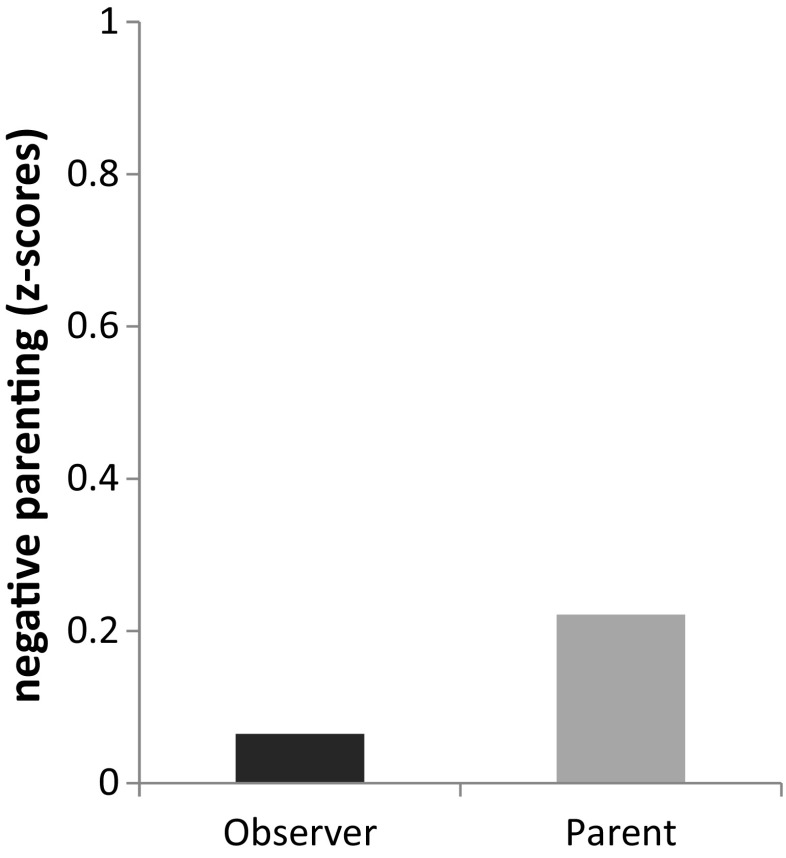
This study examined parent-observer discrepancies in assessments of negative child behavior and negative parenting behavior to shed more light on correlates with these discrepancies. Specifically, we hypothesized that informant discrepancy between observers and parents on child behavior would be larger when parents reported high levels of negative parenting (and vice versa) because high levels of these behaviors might be indicators of negative perceiver bias or patterns of family dysfunctioning. Using restricted correlated trait-models, we analyzed cross-sectional observation (coded with the Dyadic Parent-Child Interaction Coding System) and survey data (Eyberg Child Behavior Inventory and Parenting Practices Interview) of 386 Dutch parent-child dyads with children aged 4-8 years (Mage = 6.21, SD = 1.33; 55.30% boys). Small associations between parent-reported and observed child and parenting behavior were found, indicating high discrepancy. In line with our hypothesis, this discrepancy was higher when parents self-reported more negative parenting or more negative child behavior. Parent-observer discrepancy on negative child behavior was also predicted by child gender. For boys parents reported higher levels of negative child behavior than were observed, but for girls parents reported lower levels of negative child behavior than were observed. These findings suggest that informant discrepancies between observers and parents might provide important information on underlying, problematic family functioning and may help to identify those families most in need of help.
Keywords: Childhood; Externalizing problems; Multi-informant discrepancies; Parenting.
Conflict of interest statement
Conflict of Interest
Martine Moens, Joyce Weeland, Danielle Van der Giessen, Rabia Chhangur and Geertjan Overbeek declare that they have no conflict of interest.
Ethical Approval
All procedures performed in studies involving human participants were in accordance with the ethical standards of the institutional and/or national research committee and with the 1964 Helsinki declaration and its later amendments or comparable ethical standards.
Informed Consent
Informed consent was obtained from all individual participants included in the study.
Figures
References
-
- Abidin RR. The determinants of parenting behavior. Journal of Clinical Child Psychology. 1992;21(4):407–412. doi: 10.1207/s15374424jccp2104_12. - DOI
-
- Abrahamse, M. E., Junger, M., Leijten, P. H., Lindeboom, R., Boer, F., Lindauer, R. J. (2015). Psychometric properties of the Dutch Eyberg Child Behavior Inventory (ECBI) in a community sample and a multi-ethnic clinical sample. Journal of Psychopathology and Behavioral Assessment, 37(4), 679–691. 10.1007/s10862-015-9482-1. - PMC - PubMed
-
- Abrahamse ME, Junger M, Van Wouwe MA, Boer F, Lindauer RJ. Treating child disruptive behavior in high-risk families: A comparative effectiveness trial from a community-based implementation. Journal of Child and Family Studies. 2016;25(5):1605–1622. doi: 10.1007/s10826-015-0322-4. - DOI - PMC - PubMed
-
- Achenbach TM. As others see us: Clinical and research implications of cross-informant correlations for psychopathology. Current Directions in Psychological Science. 2006;15:94–98. doi: 10.1111/j.0963-7214.2006.00414.x. - DOI
Publication types
MeSH terms
LinkOut - more resources
Full Text Sources
Other Literature Sources
Medical
