


Medical infrared imaging and orthostatic analysis to determine lameness in the pelvic limbs of dogs
- PMID: 29296594
- PMCID: PMC5738888
- DOI: 10.4314/ovj.v7i4.10
Medical infrared imaging and orthostatic analysis to determine lameness in the pelvic limbs of dogs
Abstract
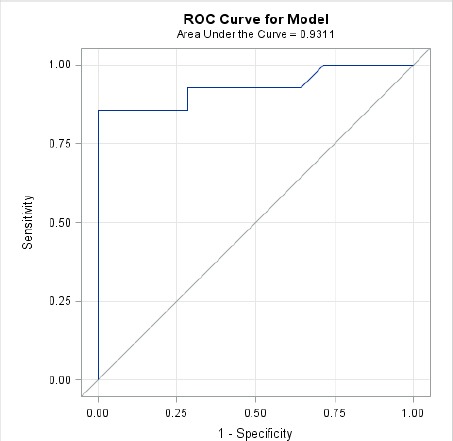
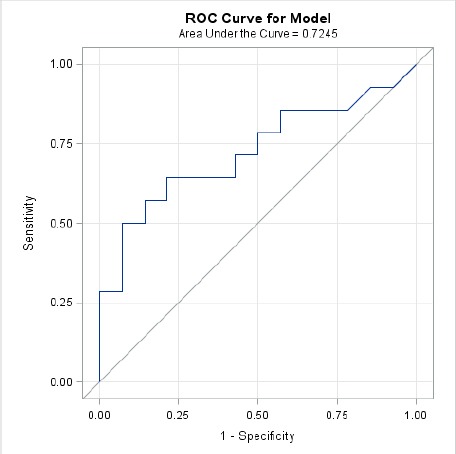
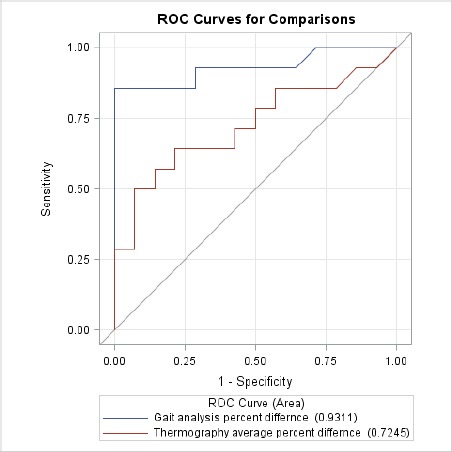
Subtle lameness makes it difficult to ascertain which is the affected limb. A study was conducted to investigate a change in the thermal pattern and temperature of the thermal image of the paw print in a lame pelvic limb compared to a non-lame pelvic limb of dogs confirmed by orthostatic analysis. Fourteen client owned dogs with a unilateral pelvic limb lameness and 14 healthy employee dogs were examined and the pelvic limbs radiographed. Thermal images of the paw print were taken after each dog was kept in a static position on a foam mat for 30 seconds. Average temperatures and thermographic patterns were analyzed. Analysis was performed in a static position. The asymmetry index for each stance variable and optimal cutoff point for the peak vertical force and thermal image temperatures were calculated. Image pattern analysis revealed 88% success in differentiating the lame group, and 100% in identifying the same thermal pattern in the healthy group. The mean of the peak vertical force revealed a 10.0% difference between the left and right pelvic limb in healthy dogs and a 72.4% between the lame and non-lame limb in the lame dog group. Asymmetry index analysis revealed 5% in the healthy group and 36.2% in the lame group. The optimal cutoff point for the peak vertical force to determine lameness was 41.77% (AUC = 0.93) and for MII 0.943% (AUC = 0.72). The results of this study highlight the change in the thermal pattern of the paw print in the lame pelvic limb compared to a non-lame pelvic limb in the lame group and the healthy group. Medical infrared imaging of the paw prints can be utilized to screen for the lame limb in dogs.
Keywords: Cruciate; Infrared imaging; Lameness; Orthostatic analysis.
Figures
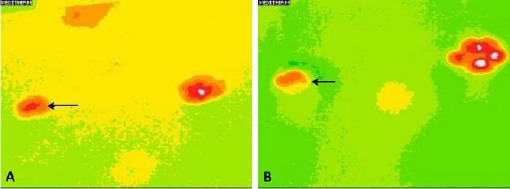
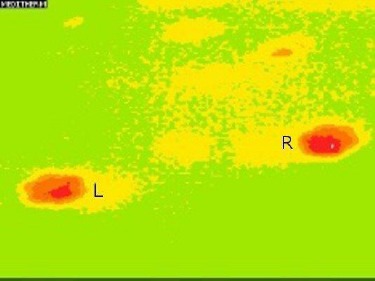
References
-
- Anderson M.A. Force plate analysis: a non-invasive tool for gait evaluation. Comp. Cont. Ed. Pract. Vet. 1994;16:857–867.
-
- Barbosa A.L.T, Schossler J.E.W, Bolli C.M, Lemos L.F.C, Medeiros C. Test and standardize of force plate in orthostatic pattern in dogs. Arq. Bras. Med. Vet. Zootec. 2011;63:559–566.
-
- Budsberg S.C, Jevens D.J, Brown J, Foutz T.L, DeCamp C.E, Reece L. Evaluation of limb symmetry indices, using ground reaction forces in healthy dogs. Am. J. Vet. Res. 1993;54:1569–1574. - PubMed
-
- Colak A, Polat B, Okumus Z, Kaya M, Yanmaz L.E, Hayirli A. Short communication: early detection of mastitis using infrared thermography in dairy cows. J Dairy Sci. 2008;91:4244–4248. - PubMed
-
- DeLong E.R, DeLong D.M, Clarke-Pearson D.L. Comparing the areas under two or more correlated receiver operating characteristic curves: a nonparametric approach. Biometrics. 1988;44:837–845. - PubMed
LinkOut - more resources
Full Text Sources
Other Literature Sources