


A Single Amino Acid Change in the Marburg Virus Glycoprotein Arises during Serial Cell Culture Passages and Attenuates the Virus in a Macaque Model of Disease
- PMID: 29299527
- PMCID: PMC5750385
- DOI: 10.1128/mSphere.00401-17
A Single Amino Acid Change in the Marburg Virus Glycoprotein Arises during Serial Cell Culture Passages and Attenuates the Virus in a Macaque Model of Disease
Abstract
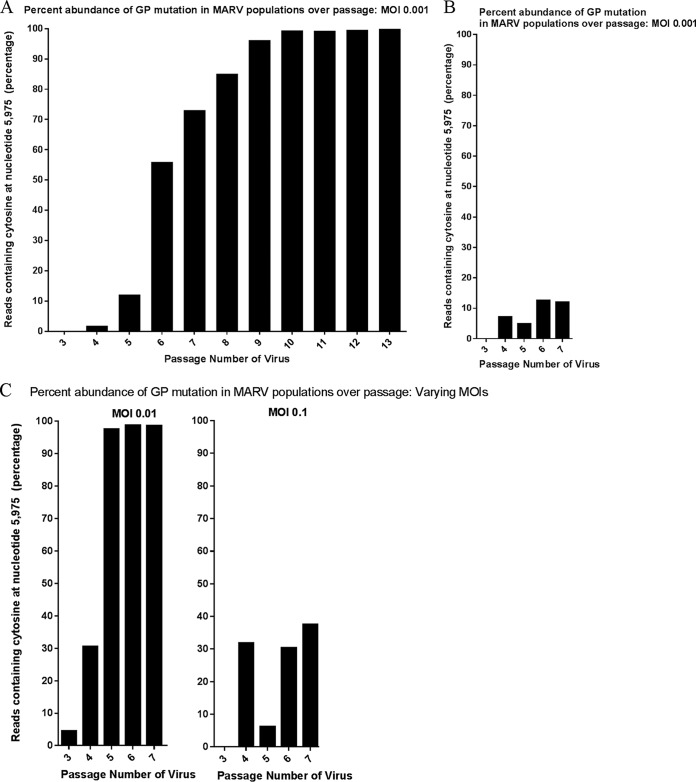
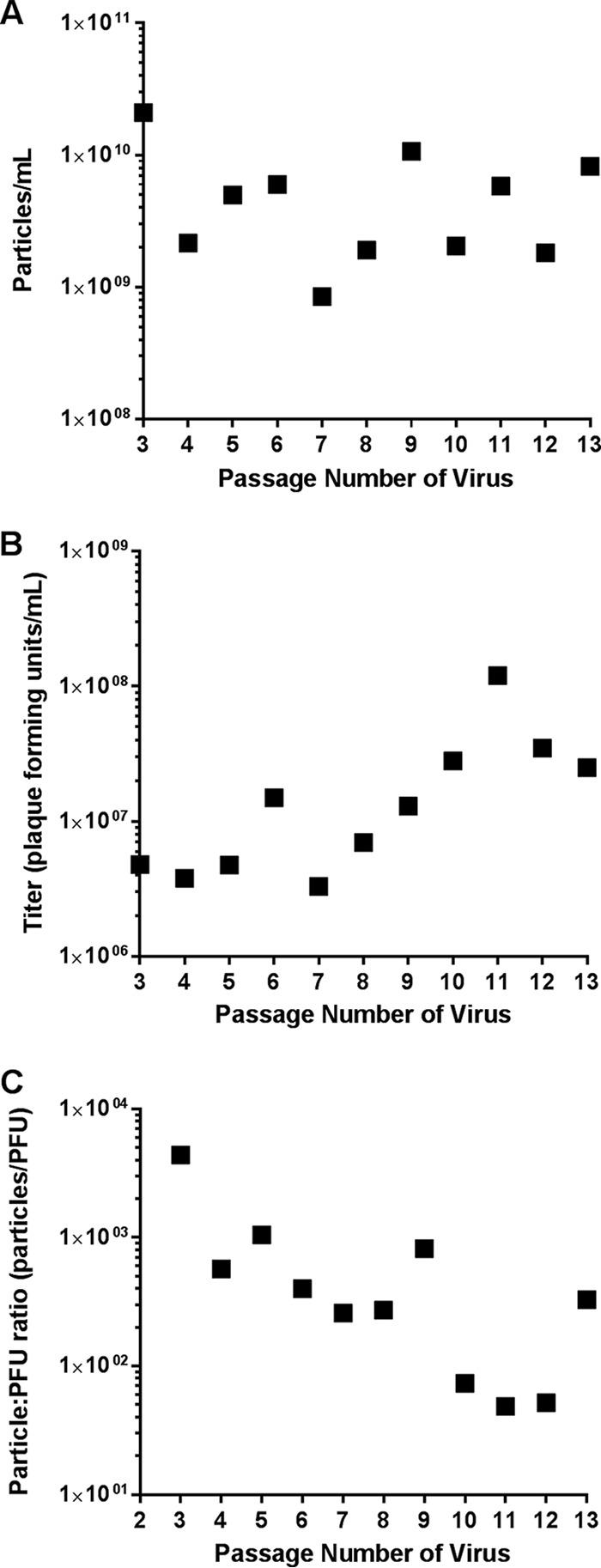
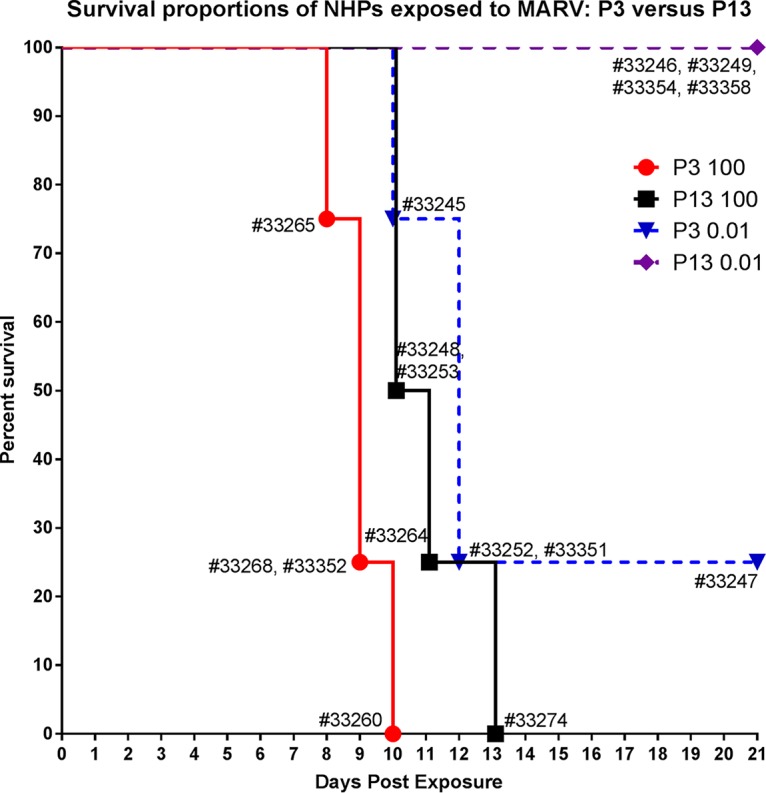
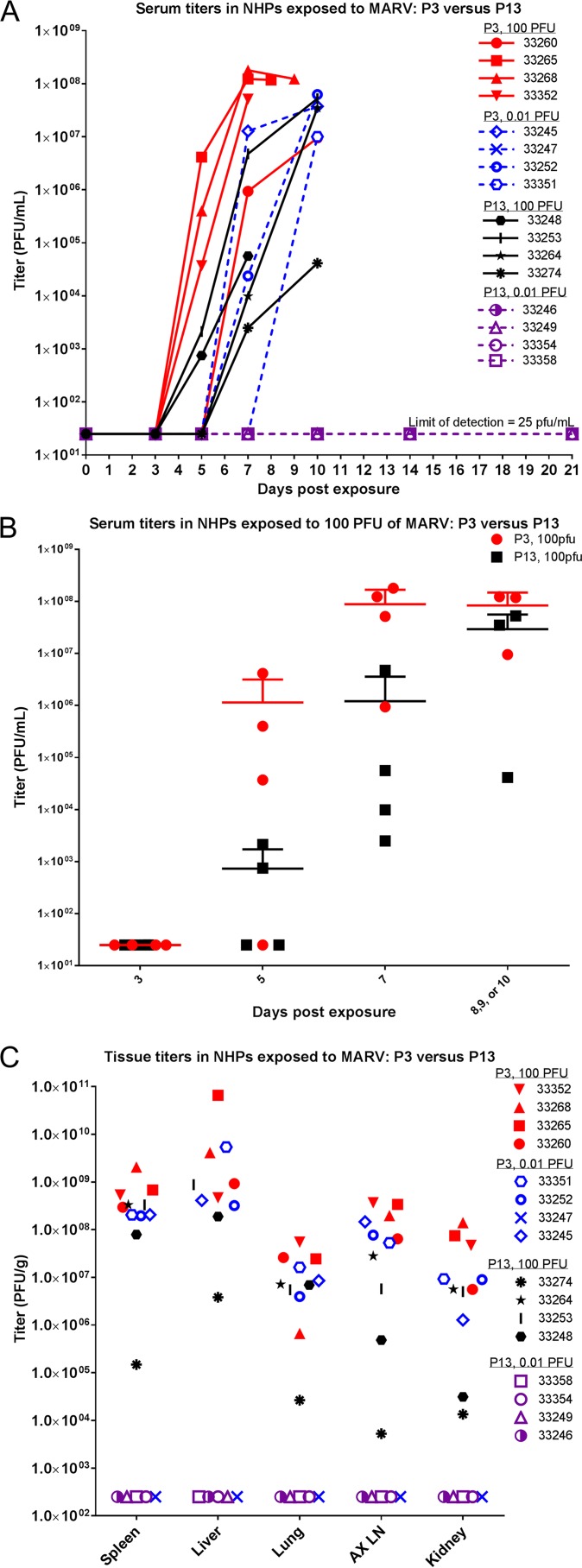
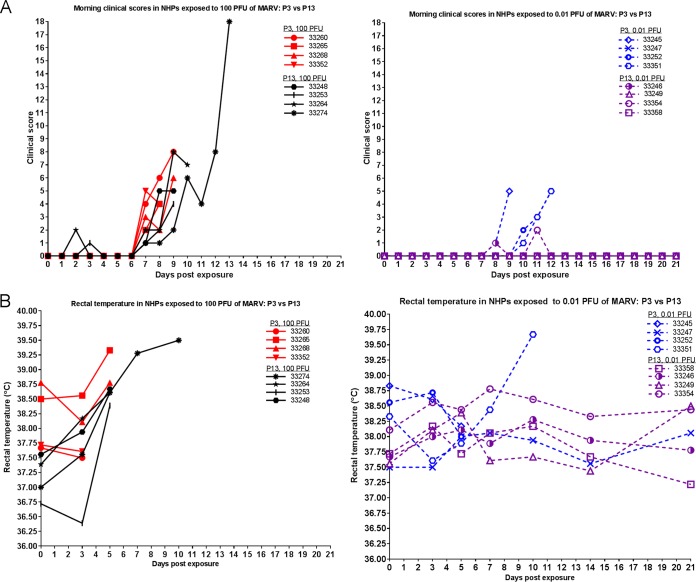
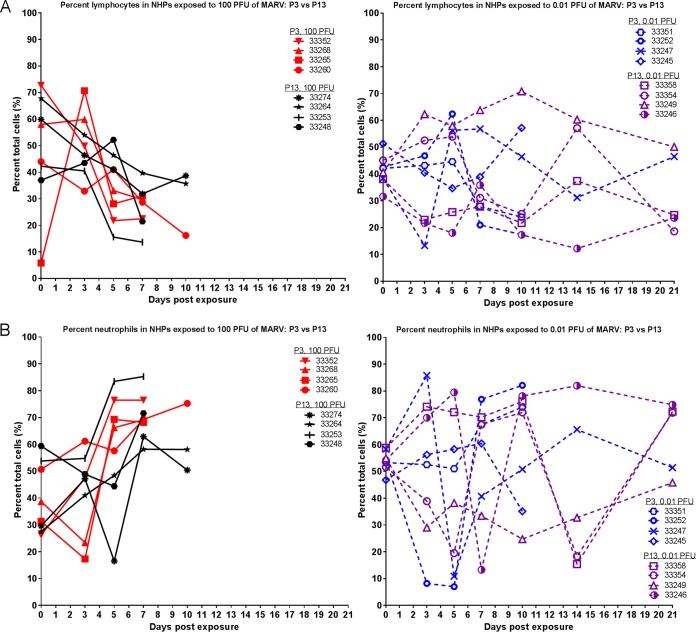
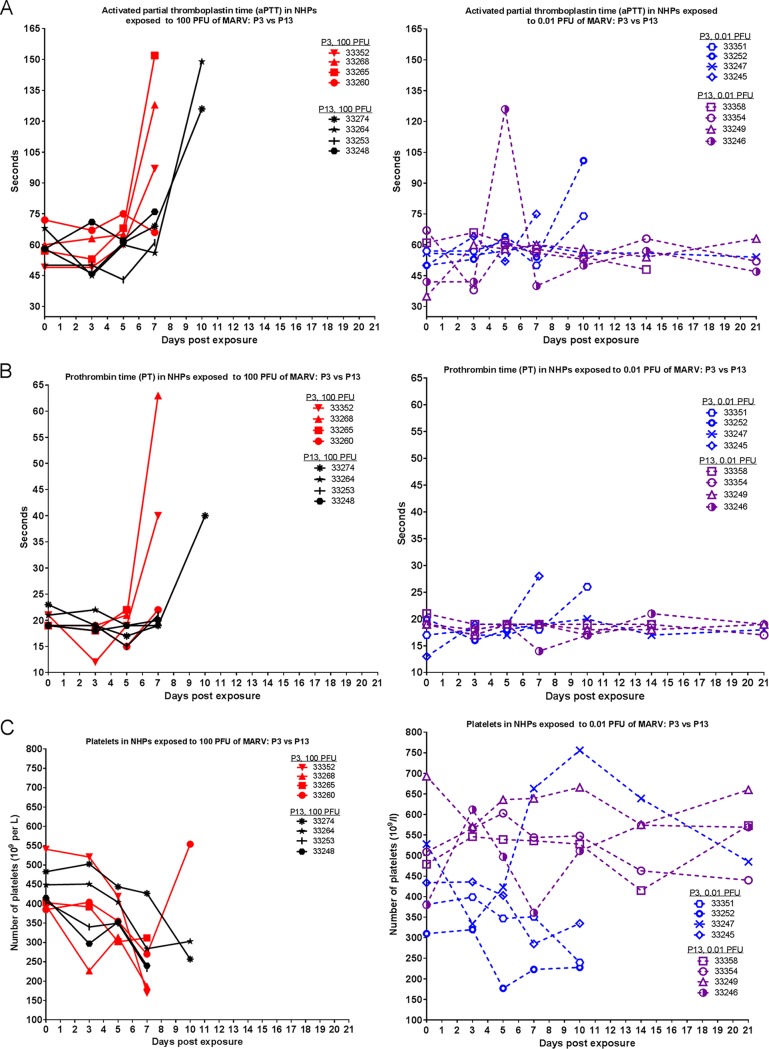
Marburg virus (MARV) causes disease with high case fatality rates, and there are no approved vaccines or therapies. Licensing of MARV countermeasures will likely require approval via the FDA's Animal Efficacy Rule, which requires well-characterized animal models that recapitulate human disease. This includes selection of the virus used for exposure and ensuring that it retains the properties of the original isolate. The consequences of amplification of MARV for challenge studies are unknown. Here, we serially passaged and characterized MARV through 13 passes from the original isolate. Surprisingly, the viral genome was very stable, except for a single nucleotide change that resulted in an amino acid substitution in the hydrophobic region of the signal peptide of the glycoprotein (GP). The particle/PFU ratio also decreased following passages, suggesting a role for the amino acid in viral infectivity. To determine if amplification introduces a phenotype in an animal model, cynomolgus macaques were exposed to either 100 or 0.01 PFU of low- and high-passage-number MARV. All animals succumbed when exposed to 100 PFU of either passage 3 or 13 viruses, although animals exposed to the high-passage-number virus survived longer. However, none of the passage 13 MARV-exposed animals succumbed to 0.01-PFU exposure compared to 75% of passage 3-exposed animals. This is consistent with other filovirus studies that show some particles that are unable to yield a plaque in cell culture can cause lethal disease in vivo. These results have important consequences for the design of experiments that investigate MARV pathogenesis and that test the efficacy of MARV countermeasures. IMPORTANCE Marburg virus (MARV) causes disease with a high case fatality rate, and there are no approved vaccines or therapies. Serial amplification of viruses in cell culture often results in accumulation of mutations, but the effect of such cell culture passage on MARV is unclear. Serial passages of MARV resulted in a single mutation in the region encoding the glycoprotein (GP). This is a region where mutations can have important consequences on outbreaks and human disease [S. Mahanty and M. Bray, Lancet Infect Dis 4:487-498, 2004, https://doi.org/10.1016/S1473-3099(04)01103-X]. We thus investigated whether this mutation impacted disease by using a cynomolgus macaque model of MARV infection. Monkeys exposed to virus containing the mutation had better clinical outcomes than monkeys exposed to virus without the mutation. We also observed that a remarkably low number of MARV particles was sufficient to cause death. Our results could have a significant impact on how future studies are designed to model MARV disease and test vaccines and therapeutics.
Keywords: Marburg virus; adaptation; attenuation; glycoprotein; monkey model; pathogenesis; signal peptide.
Figures

References
-
- Towner JS, Sealy TK, Khristova ML, Albariño CG, Conlan S, Reeder SA, Quan PL, Lipkin WI, Downing R, Tappero JW, Okware S, Lutwama J, Bakamutumaho B, Kayiwa J, Comer JA, Rollin PE, Ksiazek TG, Nichol ST. 2008. Newly discovered Ebola virus associated with hemorrhagic fever outbreak in Uganda. PLoS Pathog 4:e1000212. doi: 10.1371/journal.ppat.1000212. - DOI - PMC - PubMed
-
- Towner JS, Amman BR, Sealy TK, Carroll SAR, Comer JA, Kemp A, Swanepoel R, Paddock CD, Balinandi S, Khristova ML, Formenty PBH, Albarino CG, Miller DM, Reed ZD, Kayiwa JT, Mills JN, Cannon DL, Greer PW, Byaruhanga E, Farnon EC, Atimnedi P, Okware S, Katongole-Mbidde E, Downing R, Tappero JW, Zaki SR, Ksiazek TG, Nichol ST, Rollin PE. 2009. Isolation of genetically diverse Marburg viruses from Egyptian fruit bats. PLoS Pathog 5:e1000536. doi: 10.1371/journal.ppat.1000536. - DOI - PMC - PubMed
Grants and funding
LinkOut - more resources
Full Text Sources
Other Literature Sources
