


Genomics of Cardiovascular Measures of Autonomic Tone
- PMID: 29300220
- PMCID: PMC5839974
- DOI: 10.1097/FJC.0000000000000559
Genomics of Cardiovascular Measures of Autonomic Tone
Abstract
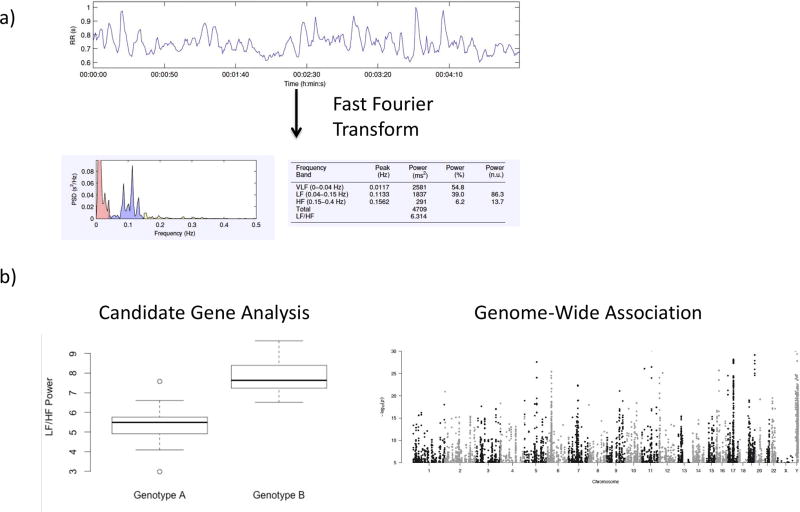
The autonomic nervous system exerts broad control over the involuntary functions of the human body through complex equilibrium between sympathetic and parasympathetic tone. Imbalance in this equilibrium is associated with a multitude of cardiovascular outcomes, including mortality. The cardiovascular static state of this equilibrium can be quantified using physiological parameters such as heart rate (HR), blood pressure, and by spectral analysis of HR variability. Here, we review the current state of knowledge of the genetic background of cardiovascular measurements of autonomic tone. For most parameters of autonomic tone, a large portion of variability is explained by genetic heritability. Many of the static parameters of autonomic tone have also been studied through candidate-gene approach, yielding some insight into how genotypes of adrenergic receptors affect variables such as HR. Genome-wide approaches in large cohorts similarly exist for static variables such as HR and blood pressure but less is known about the genetic background of the dynamic and more specific measurements, such as HR variability. Furthermore, because most autonomic measures are likely polygenic, pathway analyses and modeling of polygenic effects are critical. Future work will hopefully explain the control of autonomic tone and guide individualized therapeutic interventions.
Figures
References
-
- Tracey KJ. The inflammatory reflex. Nature. 2002 Dec 19–26;420(6917):853–9. - PubMed
-
- Neuroscience. 2. Sinauer Associates, Inc.; 2001.
-
- Grassi G, Ram VS. Evidence for a critical role of the sympathetic nervous system in hypertension. Journal of the American Society of Hypertension : JASH. 2016 May;10(5):457–66. - PubMed
Publication types
MeSH terms
Grants and funding
LinkOut - more resources
Full Text Sources
Other Literature Sources
