


The role of rhizosphere pH in regulating the rhizosphere priming effect and implications for the availability of soil-derived nitrogen to plants
- PMID: 29300813
- PMCID: PMC5786243
- DOI: 10.1093/aob/mcx138
The role of rhizosphere pH in regulating the rhizosphere priming effect and implications for the availability of soil-derived nitrogen to plants
Abstract
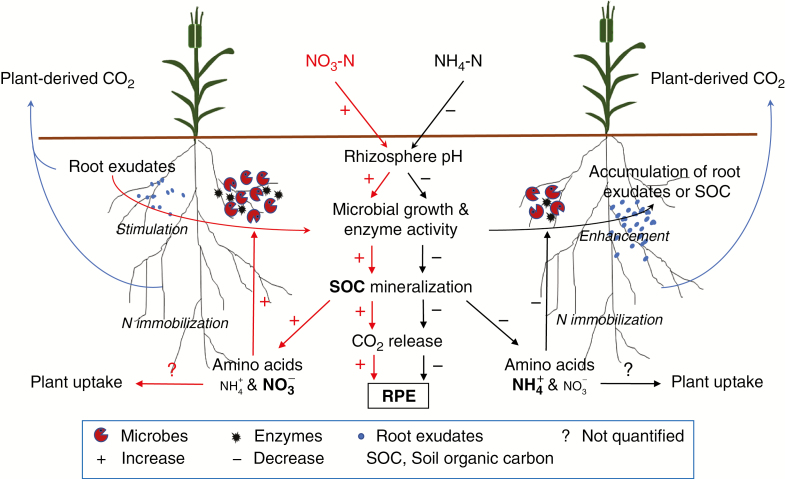
Background and aims: A comprehensive understanding of the rhizosphere priming effect (RPE) on the decomposition of soil organic carbon (SOC) requires an integration of many factors. It is unclear how N form-induced change in soil pH affects the RPE and SOC sequestration.
Methods: This study compared the change in the RPE under supply of NO3-N and NH4-N. The effect of the RPE on the mineralization of soil N and hence its availability to plant and microbes was also examined using a 15N-labelled N source.
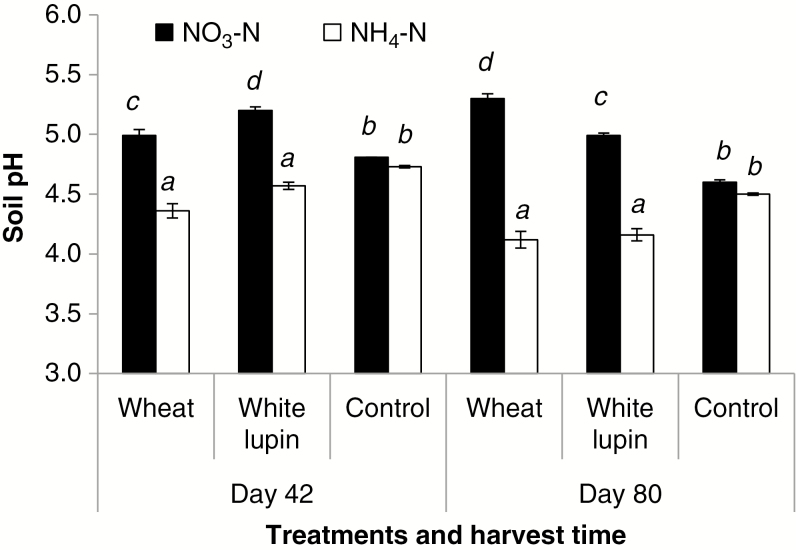
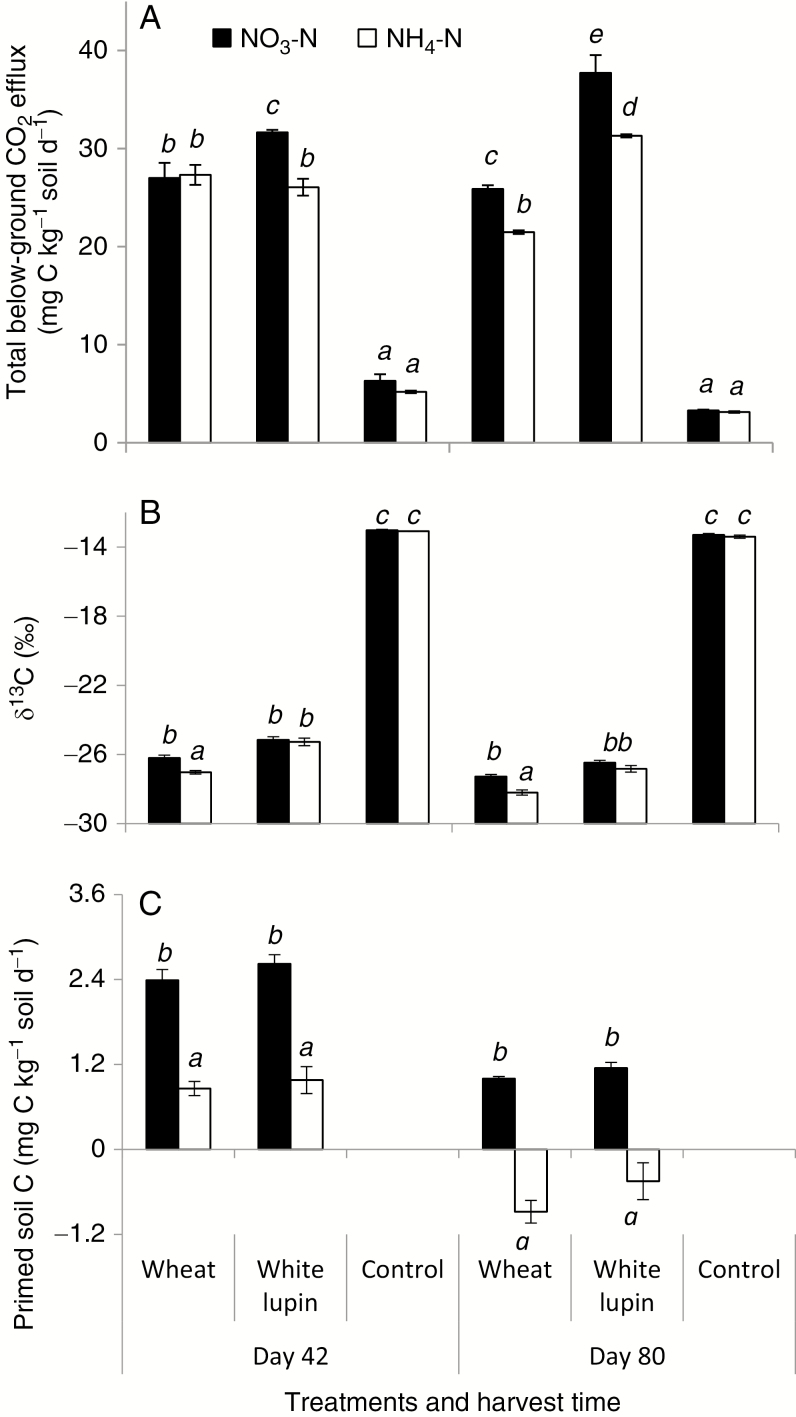
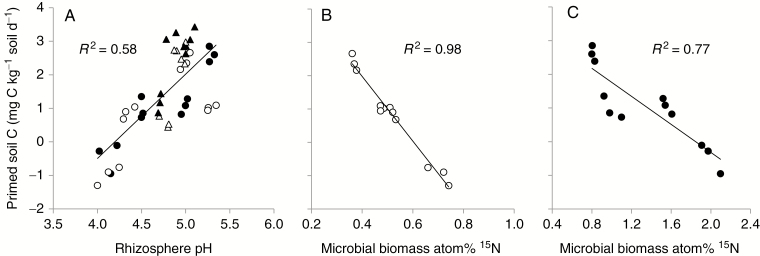
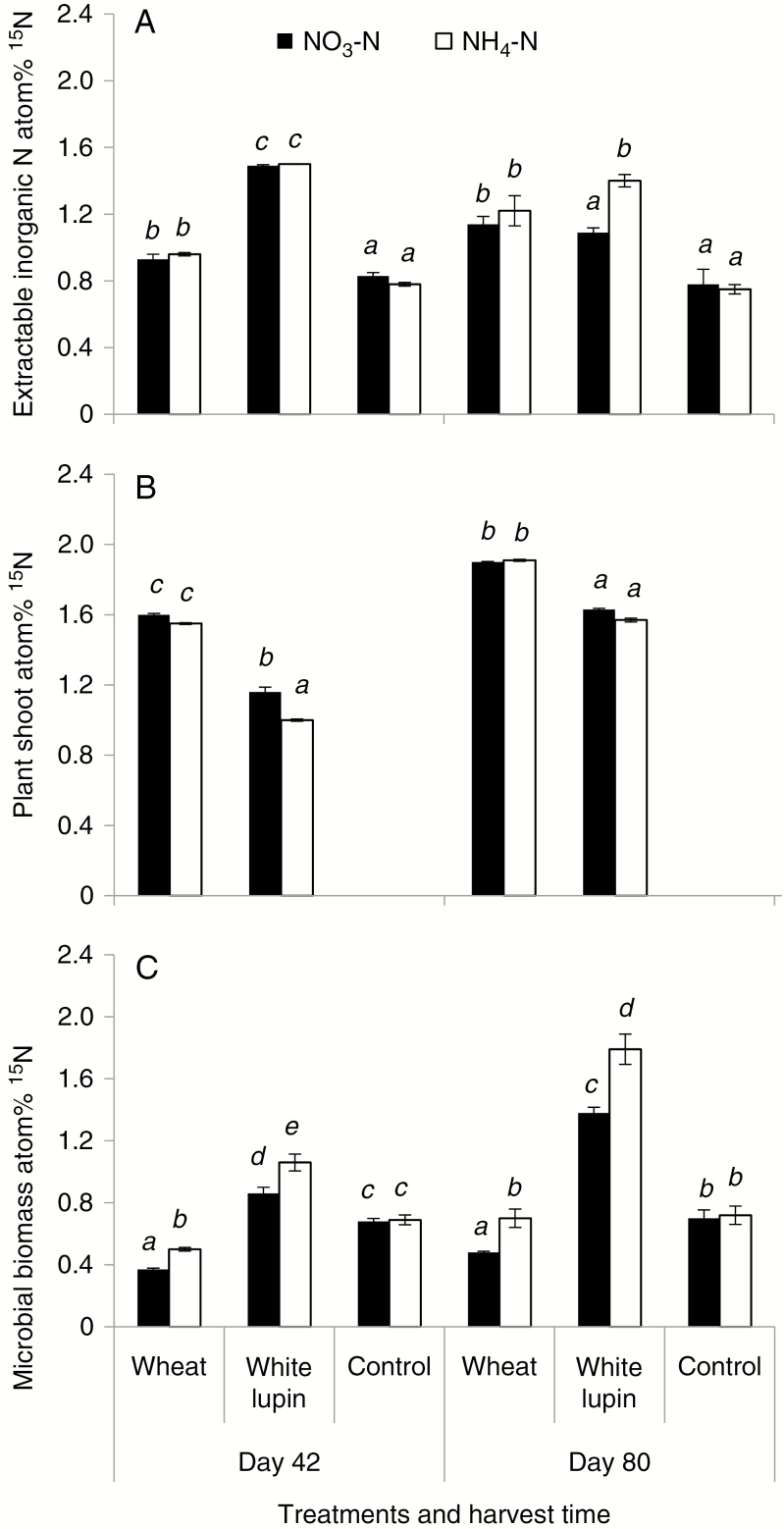
Key results: The supply of NH4-N decreased rhizosphere pH by 0.16-0.38 units, and resulted in a decreased or negative RPE. In contrast, NO3-N nutrition increased rhizosphere pH by 0.19-0.78 units, and led to a persistently positive RPE. The amounts of rhizosphere-primed C were positively correlated with rhizosphere pH. Rhizosphere pH affected the RPE mainly through influencing microbial biomass, activity and utilization of root exudates, and the availability of SOC to microbes. Furthermore, the amount of rhizosphere primed C correlated negatively with microbial biomass atom% 15N (R2 0.77-0.98, n = 12), suggesting that microbes in the rhizosphere acted as the immediate sink for N released from enhanced SOC decomposition via the RPE.
Conclusion: N form was an important factor affecting the magnitude and direction of the RPE via its effect on rhizosphere pH. Rhizosphere pH needs to be considered in SOC and RPE modelling.
Keywords: 13C natural abundance; 15N; N form; microbial N immobilization; rhizosphere acidification.
© The Author 2017. Published by Oxford University Press on behalf of the Annals of Botany Company. All rights reserved. For Permissions, please e-mail: journals.permissions@oup.com.
Figures
References
-
- Andersson S, Nilsson SI, Saetre P. 2000. Leaching of dissolved organic carbon (DOC) and dissolved organic nitrogen (DON) in mor humus as affected by temperature and pH. Soil Biology and Biochemistry 32: 1–10.
-
- Blagodatskaya E, Kuzyakov Y. 2008. Mechanisms of real and apparent priming effects and their dependence on soil microbial biomass and community structure: critical review. Biology and Fertility of Soils 45: 115–131.
-
- Briedis C, de Moraes Sá JC, Caires EF et al. . 2012. Soil organic matter pools and carbon-protection mechanisms in aggregate classes influenced by surface liming in a no-till system. Geoderma 170: 80–88.
-
- Britto DT, Kronzucker HJ. 2002. NH4+ toxicity in higher plants: a critical review. Journal of Plant Physiology 159: 567–584.
Publication types
MeSH terms
Substances
LinkOut - more resources
Full Text Sources
Other Literature Sources
