


Immune Evasion in Pancreatic Cancer: From Mechanisms to Therapy
- PMID: 29301364
- PMCID: PMC5789356
- DOI: 10.3390/cancers10010006
Immune Evasion in Pancreatic Cancer: From Mechanisms to Therapy
Abstract
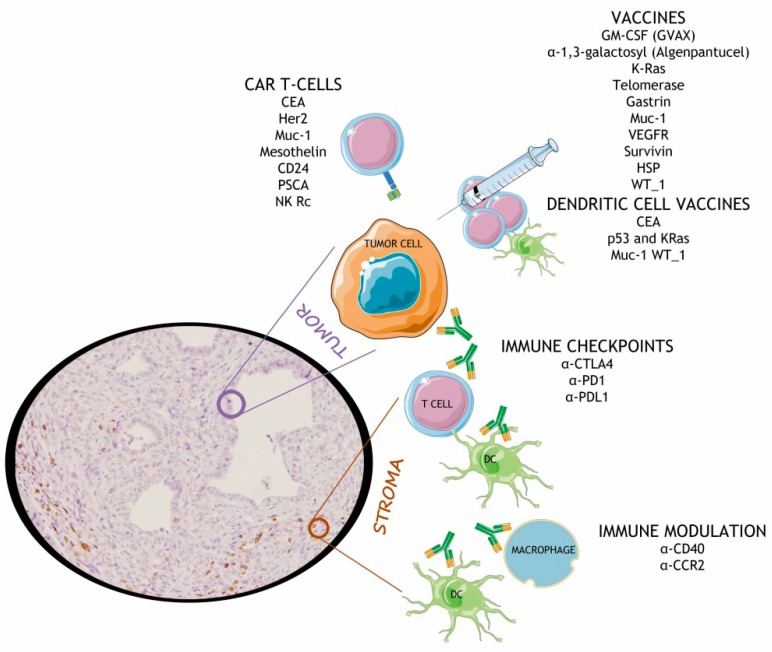
Pancreatic ductal adenocarcinoma (PDA), the most frequent type of pancreatic cancer, remains one of the most challenging problems for the biomedical and clinical fields, with abysmal survival rates and poor therapy efficiency. Desmoplasia, which is abundant in PDA, can be blamed for much of the mechanisms behind poor drug performance, as it is the main source of the cytokines and chemokines that orchestrate rapid and silent tumor progression to allow tumor cells to be isolated into an extensive fibrotic reaction, which results in inefficient drug delivery. However, since immunotherapy was proclaimed as the breakthrough of the year in 2013, the focus on the stroma of pancreatic cancer has interestingly moved from activated fibroblasts to the immune compartment, trying to understand the immunosuppressive factors that play a part in the strong immune evasion that characterizes PDA. The PDA microenvironment is highly immunosuppressive and is basically composed of T regulatory cells (Tregs), tumor-associated macrophages (TAMs), and myeloid-derived suppressive cells (MDSCs), which block CD8⁺ T-cell duties in tumor recognition and clearance. Interestingly, preclinical data have highlighted the importance of this immune evasion as the source of resistance to single checkpoint immunotherapies and cancer vaccines and point at pathways that inhibit the immune attack as a key to solve the therapy puzzle. Here, we will discuss the molecular mechanisms involved in PDA immune escape as well as the state of the art of the PDA immunotherapy.
Keywords: galectins; immune checkpoints; immune surveillance; immunotherapy; pancreatic cancer; stroma.
Conflict of interest statement
The authors declare no conflict of interest.
Figures
References
Publication types
LinkOut - more resources
Full Text Sources
Other Literature Sources
Research Materials
