


Sleeping Habits among School Children and their Effects on Sleep Pattern
- PMID: 29302571
- PMCID: PMC5747590
- DOI: 10.15171/jcs.2017.030
Sleeping Habits among School Children and their Effects on Sleep Pattern
Abstract
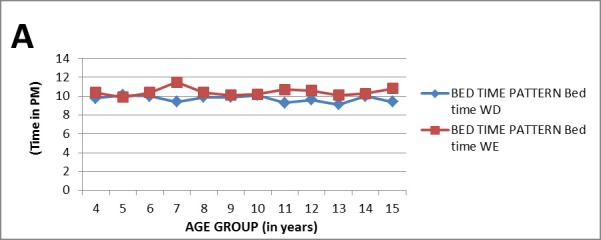
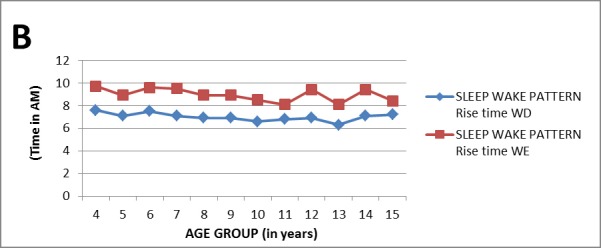
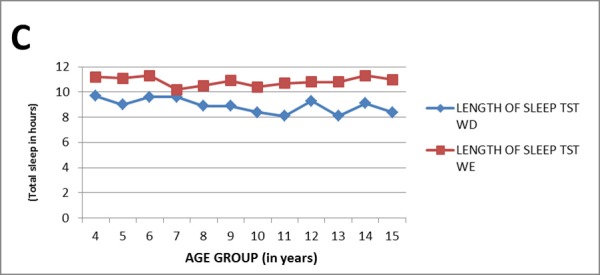
Introduction: Sleep problems can occur at any age. Inadequate sleep affects the physiological as well as psychological well-being of an individual. Thus, the objective of the present study is, to determine the pre sleep habits, duration and pattern of sleep among school children and to determine association between their sleep schedules and sleep habits. Methods: This cross-sectional study comprised of 1050 children attending the government school. Based on inclusion and exclusion criteria children were from three age groups: 4-5 years, 6-10 years and 11-15 years of age. A questionnaire about demographical data, sleep problems and habits, was duly filled by the parents. The parents of children were questioned for bed time, wakeup time, sleep time and sleep duration during both weekdays and weekends. Results: Total sleep time during weekdays was 8.9 (1.2) hours and 10.7 (1.1) hours during weekends. The wakeup time was significantly delayed during weekends in all age groups. Moreover, total sleep time increased significantly during weekends in all age groups. Children using media after 8 pm and sleeping alone are also in significant sleep debt. Screen activities such as TV, internet and cellular phones in a child's bedroom had a negative effect on children's sleep/wake patterns and duration of sleep. Children in higher grades are sleep debt compared to younger ones. Practices such as co sleeping and sharing bed with parents significantly improve the duration and quality of sleep. Conclusion: The sleep durations reported in the present study were lower than recommended sleep duration for children.
Keywords: Children; Sleep habits; Sleep pattern.
References
-
- Wolfson AR, Carskadon MA. Sleep schedules and daytime functioning in adolescents. Child Dev. 1998; 69(4):875–887. - PubMed
-
- Steenari MR, Vuontela V, Paavonen EJ, Carlson S, Fjällberg M, Aronen E. Working memory and sleep in 6- to 13-year-old schoolchildren. J Am Acad Child Adolesc Psychiatry. 2003;42(1):85–92. - PubMed
LinkOut - more resources
Full Text Sources
Other Literature Sources