


Global Polio Eradication - Way Ahead
- PMID: 29302865
- PMCID: PMC5775388
- DOI: 10.1007/s12098-017-2586-8
Global Polio Eradication - Way Ahead
Abstract
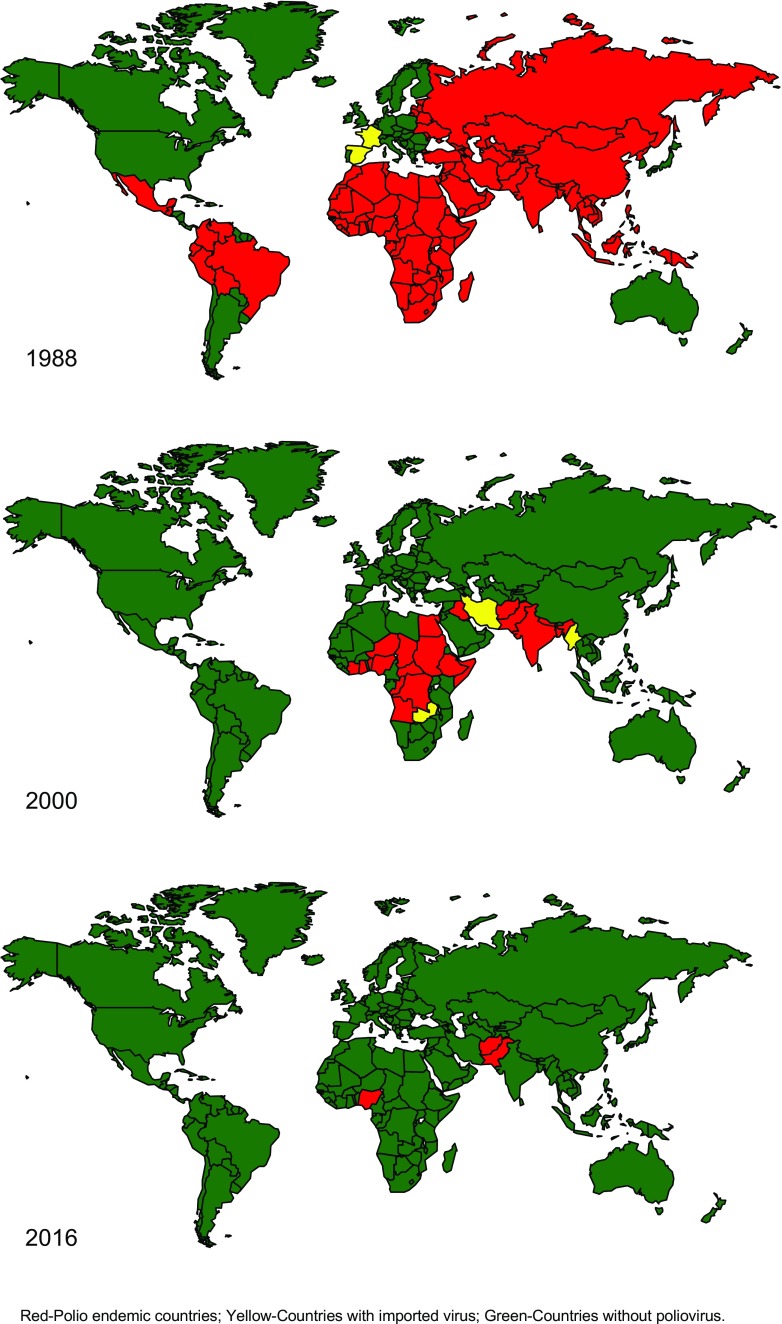
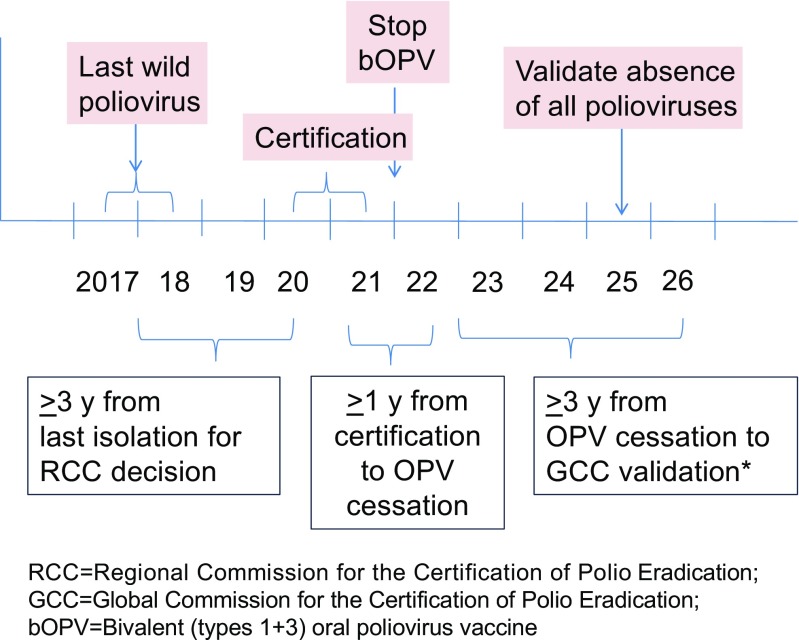
In 1988, the World Health Assembly resolved to eradicate poliomyelitis by the year 2000. Although substantial progress was achieved by 2000, global polio eradication proved elusive. In India, the goal was accomplished in 2011, and the entire South-East Asia Region was certified as polio-free in 2014. The year 2016 marks the lowest wild poliovirus type 1 case count ever, the lowest number of polio-endemic countries (Afghanistan, Nigeria and Pakistan), the maintenance of wild poliovirus type 2 eradication, and the continued absence of wild poliovirus type 3 detection since 2012. The year also marks the Global Polio Eradication Initiative (GPEI) moving into the post-cessation of Sabin type 2, after the effort of globally synchronized withdrawal of Sabin type 2 poliovirus in April 2016. Sustained efforts will be needed to ensure polio eradication is accomplished, to overcome the access and security issues, and continue to improve the quality and reach of field operations. After that, surveillance (the "eyes and ears") will move further to the center stage. Sensitive surveillance will monitor the withdrawal of all Sabin polioviruses, and with facility containment, constitute the cornerstones for eventual global certification of wild poliovirus eradication. An emergency response capacity is essential to institute timely control measures should polio still re-emerge. Simultaneously, the public health community needs to determine whether and how to apply the polio-funded infrastructure to other priorities (after the GPEI funding has stopped). Eradication is the primary goal, but securing eradication will require continued efforts, dedicated resources, and a firm commitment by the global public health community.
Keywords: Certification; Eradication; Oral poliovirus vaccine; Poliomyelitis; Surveillance.
Conflict of interest statement
Conflict of Interest
None.
Source of Funding
None.
Figures
References
-
- World Health Assembly. Global eradication of poliomyelitis by the year 2000: resolution 41.28. Geneva. Switzerland: World Health Organization; 1988.
-
- Centers for Disease Control and Prevention (CDC). Progress toward global poliomyelitis eradication. MMWR Morb Mortal Wkly Rep. 2001;50:320-2, 331. - PubMed
-
- Centers for Disease Control and Prevention (CDC) Progress toward poliomyelitis eradication---India, January 2010--September 2011. MMWR Morb Mortal Wkly Rep. 2011;60:1482–1486. - PubMed
Publication types
MeSH terms
Grants and funding
LinkOut - more resources
Full Text Sources
Other Literature Sources
Medical
Miscellaneous
