


What works in falls prevention in Asia: a systematic review and meta-analysis of randomized controlled trials
- PMID: 29304749
- PMCID: PMC5756346
- DOI: 10.1186/s12877-017-0683-1
What works in falls prevention in Asia: a systematic review and meta-analysis of randomized controlled trials
Abstract
Background: There is strong research evidence for falls prevention among older people in the community setting, although most is from Western countries. Differences between countries (eg sunlight exposure, diet, environment, exercise preferences) may influence the success of implementing falls prevention approaches in Asian countries that have been shown to be effective elsewhere in the world. The aim of this review is to evaluate the scope and effectiveness of falls prevention randomized controlled trials (RCTs) from the Asian region.
Method: RCTs investigating falls prevention interventions conducted in Asian countries from (i) the most recent (2012) Cochrane community setting falls prevention review, and (ii) subsequent published RCTs meeting the same criteria were identified, classified and grouped according to the ProFANE intervention classification. Characteristics of included trials were extracted from both the Cochrane review and original publications. Where ≥2 studies investigated an intervention type in the Asian region, a meta-analysis was performed.
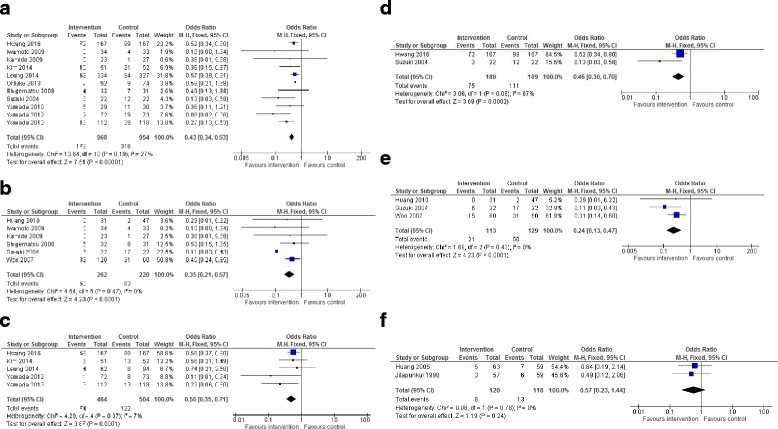
Results: Fifteen of 159 RCTs in the Cochrane review were conducted in the Asian region (9%), and a further 11 recent RCTs conducted in Asia were identified (total 26 Asian studies: median 160 participants, mean age:75.1, female:71.9%). Exercise (15 RCTs) and home assessment/modification (n = 2) were the only single interventions with ≥2 RCTs. Intervention types with ≥1 effective RCT in reducing fall outcomes were exercise (6 effective), home modification (1 effective), and medication (vitamin D) (1 effective). One multiple and one multifactorial intervention also had positive falls outcomes. Meta-analysis of exercise interventions identified significant benefit (number of fallers: Odds Ratio 0.43 [0.34,0.53]; number of falls: 0.35 [0.21,0.57]; and number of fallers injured: 0.50 [0.35,0.71]); but multifactorial interventions did not reach significance (number of fallers OR = 0.57 [0.23,1.44]).
Conclusion: There is a small but growing research base of falls prevention RCTs from Asian countries, with exercise approaches being most researched and effective. For other interventions shown to be effective elsewhere, consideration of local issues is required to ensure that research and programs implemented in these countries are effective, and relevant to the local context, people, and health system. There is also a need for further high quality, appropriately powered falls prevention trials in Asian countries.
Keywords: Asia; Community; Effectiveness; Elderly; Falls prevention.
Conflict of interest statement
Ethics approval and consent to participate
Not applicable - This publication is a systematic review of already published papers. No ethics approvals or consent to participate were required for this work.
Consent for publication
Not applicable - No details, images, or videos relating to an individual person have been included in this manuscript, therefore no consent to publish is required.
Competing interests
The authors declare that they have no competing interests.
Publisher’s Note
Springer Nature remains neutral with regard to jurisdictional claims in published maps and institutional affiliations.
Figures

References
-
- Global Burden of Disease Study 2013 Collaborators: Global, regional, and national incidence, prevalence, and years lived with disability for 301 acute and chronic diseases and injuries in 188 countries, 1990-2013: a systematic analysis for the global burden of disease study 2013. Lancet.2015, 386(9995):743–800. - PMC - PubMed
-
- World Health Organisation: WHO Global report on falls prevention in older age. In.: World Health Organisation, ISBN 978 92 4 156353 6; 2007.
-
- Pointer S: Trends in hospitalised injury, Australia: 1999–00 to 2012–13. In. Canberra: Australian Institute of Health and Welfare (AIHW) 2015.
Publication types
MeSH terms
Substances
LinkOut - more resources
Full Text Sources
Other Literature Sources
Medical
