


Molecular Epidemiology of Dairy Cattle-Associated Escherichia coli Carrying blaCTX-M Genes in Washington State
- PMID: 29305512
- PMCID: PMC5835732
- DOI: 10.1128/AEM.02430-17
Molecular Epidemiology of Dairy Cattle-Associated Escherichia coli Carrying blaCTX-M Genes in Washington State
Abstract
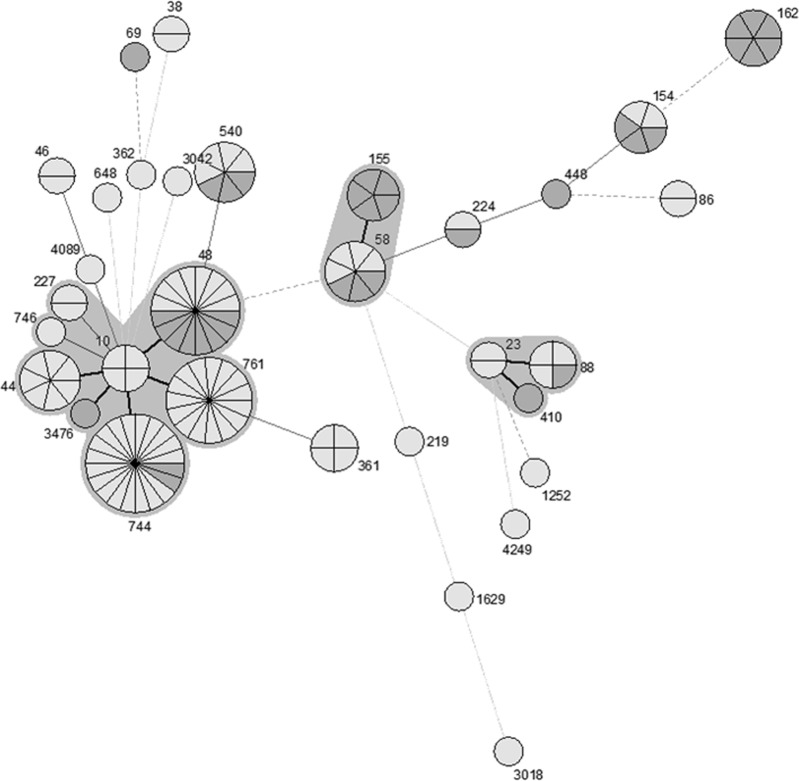
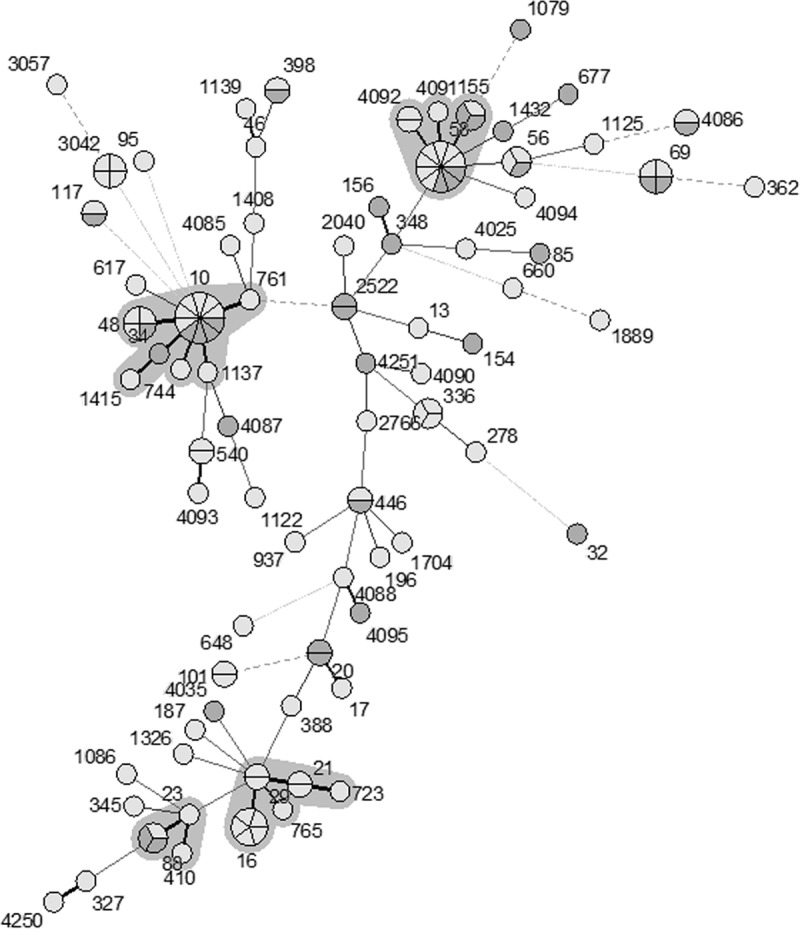
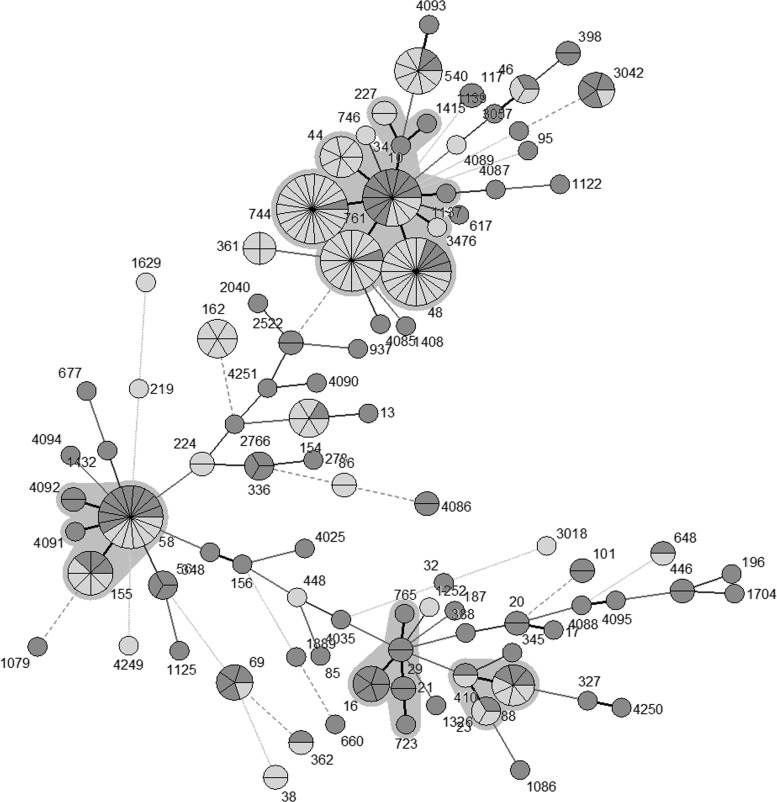
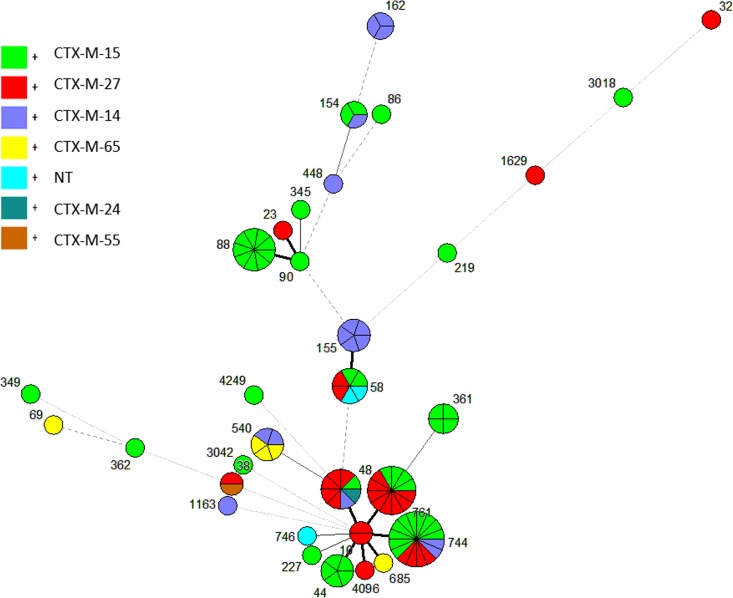
An increase in the prevalence of commensal Escherichia coli carrying blaCTX-M genes among dairy cattle was observed between 2008 and 2012 in Washington State. To study the molecular epidemiology of this change, we selected 126 blaCTX-M-positive and 126 blaCTX-M-negative isolates for determinations of the multilocus sequence types (MLSTs) and antibiotic resistance phenotypes from E. coli obtained during a previous study. For 99 isolates, we also determined the blaCTX-M alleles using PCR and sequencing and identified the replicon types of blaCTX-M-carrying plasmids. The blaCTX-M-negative E. coli isolates comprised 76 sequence types (STs) compared with 32 STs in blaCTX-M-positive E. coli isolates. The blaCTX-M-positive E. coli isolates formed three MLST clonal complexes, accounting for 83% of these isolates; 52% of blaCTX-M-negative E. coli isolates clustered into 10 clonal complexes, and the remainder were singletons. Overall, blaCTX-M-negative E. coli isolates had more diverse genotypes that were distinct to farms, whereas blaCTX-M-positive E. coli isolates had a clonal population structure and were widely disseminated on farms in both regions included in the study. Plasmid replicon types included IncI1 which predominated, followed by IncFIB and IncFIA/FIB. blaCTX-M-15 was the predominant CTX-M gene allele, followed by blaCTX-M-27 and blaCTX-M-14 There was no significant association between plasmid replicon types and bacterial STs, and neither clonal complexes nor major plasmid groups were associated with two discrete dairy-farming regions of Washington State.IMPORTANCE Infections caused by extended-spectrum β-lactamase (ESBL)-producing Escherichia coli occur globally and present treatment challenges because of their resistance to multiple antimicrobial drugs. Cattle are potential reservoirs of ESBL-producing Enterobacteriaceae, and so understanding the causes of successful dissemination of blaCTX-M genes in commensal bacteria will inform future approaches for the prevention of antibiotic-resistant pathogen emergence.
Keywords: Escherichia coli; dairy cattle; extended-spectrum β-lactamases; molecular epidemiology; plasmids; sequence types.
Copyright © 2018 American Society for Microbiology.
Figures
References
-
- McDanel J, Schweizer M, Crabb V, Nelson R, Samore M, Khader K, Blevins AE, Diekema D, Chiang HY, Nair R, Perencevich E. 2017. Incidence of extended-spectrum β-lactamase (ESBL)-producing Escherichia coli and Klebsiella infections in the United States: a systematic literature review. Infect Control Hosp Epidemiol 38:1209–1215. doi: 10.1017/ice.2017.156. - DOI - PubMed
-
- Weissman SJ, Adler A, Qin X, Zerr DM. 2013. Emergence of extended-spectrum β-lactam resistance among Escherichia coli at a U.S. academic children's hospital is clonal at the sequence type level for CTX-M-15, but not for CMY-2. Int J Antimicrob Agents 41:414–420. doi: 10.1016/j.ijantimicag.2013.01.006. - DOI - PMC - PubMed
Publication types
MeSH terms
Substances
LinkOut - more resources
Full Text Sources
Other Literature Sources
Medical
