


Epigenetic modifications in brain and immune cells of multiple sclerosis patients
- PMID: 29307300
- PMCID: PMC5761344
- DOI: 10.1177/1352458517737389
Epigenetic modifications in brain and immune cells of multiple sclerosis patients
Abstract
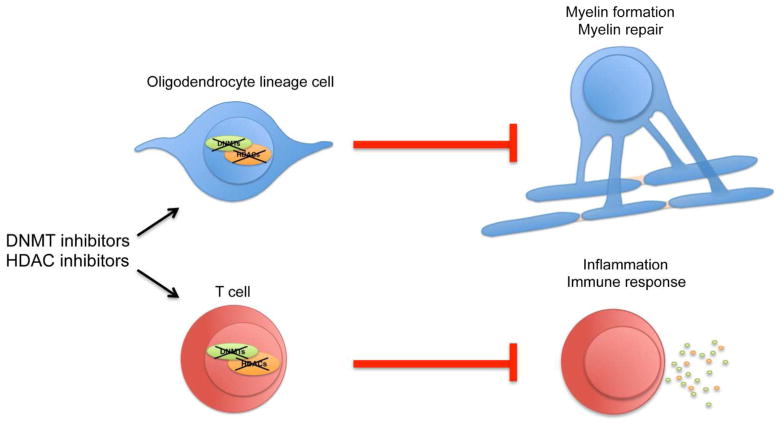
Multiple sclerosis (MS) is a debilitating neurological disease whose onset and progression are influenced by the interplay of genetic and environmental factors. Epigenetic modifications, which include post-translational modification of the histones and DNA, are considered mediators of gene-environment interactions and a growing body of evidence suggests that they play an important role in MS pathology and could be potential therapeutic targets. Since epigenetic events regulate transcription of different genes in a cell type-specific fashion, we caution on the distinct functional consequences that targeting the same epigenetic modifications might have in distinct cell types. In this review, we primarily focus on the role of histone acetylation and DNA methylation on oligodendrocyte and T-cell function and its potential implications for MS. We find that decreased histone acetylation and increased DNA methylation in oligodendrocyte lineage (OL) cells enhance myelin repair, which is beneficial for MS, while the same epigenetic processes in T cells augment their pro-inflammatory phenotype, which can exacerbate disease severity. In conclusion, epigenetic-based therapies for MS may have great value but only when cellular specificity is taken into consideration.
Keywords: Animal model; DNA methylation; demyelination; histone; myelin; remyelination.
Figures
References
-
- Ebers GC. Environmental factors and multiple sclerosis. Lancet Neurol. 2008;7(3):268–277. - PubMed
-
- Frohman EM, Racke MK, Raine CS. Multiple Sclerosis — The Plaque and Its Pathogenesis. N Engl J Med. 2006;354(9):942–955. - PubMed
-
- Berger SL. The complex language of chromatin regulation during transcription. Nature. 2007;447(7143):407–412. - PubMed
-
- Jenuwein T, Allis CD. Translating the Histone Code. Science. 2001;293(5532):1074–1080. - PubMed
Publication types
MeSH terms
Substances
Grants and funding
LinkOut - more resources
Full Text Sources
Other Literature Sources
Medical
