


Autophagy is activated and involved in cell death with participation of cathepsins during stress-induced microspore embryogenesis in barley
- PMID: 29309624
- PMCID: PMC6019037
- DOI: 10.1093/jxb/erx455
Autophagy is activated and involved in cell death with participation of cathepsins during stress-induced microspore embryogenesis in barley
Abstract
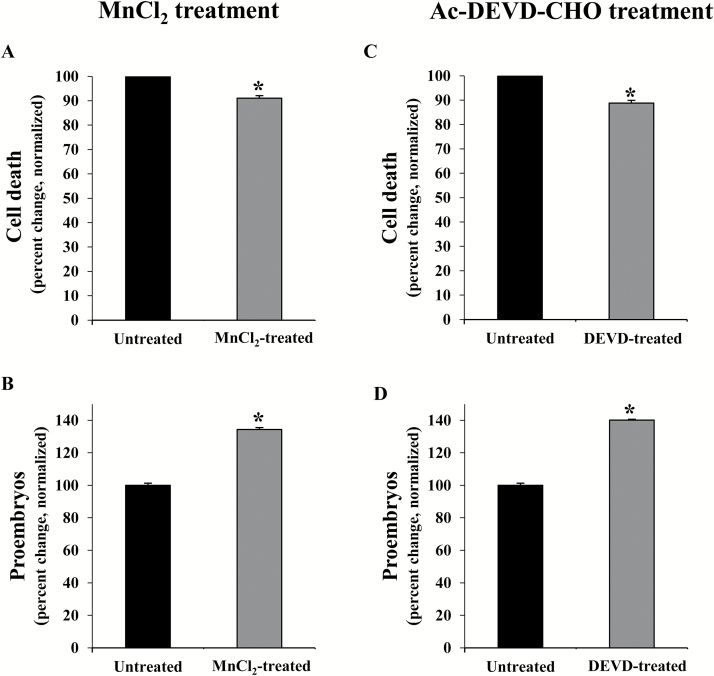
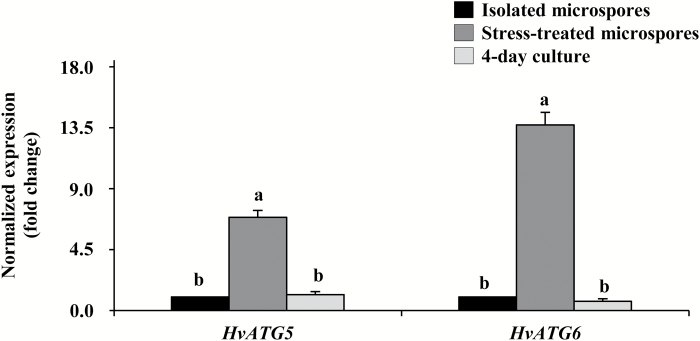
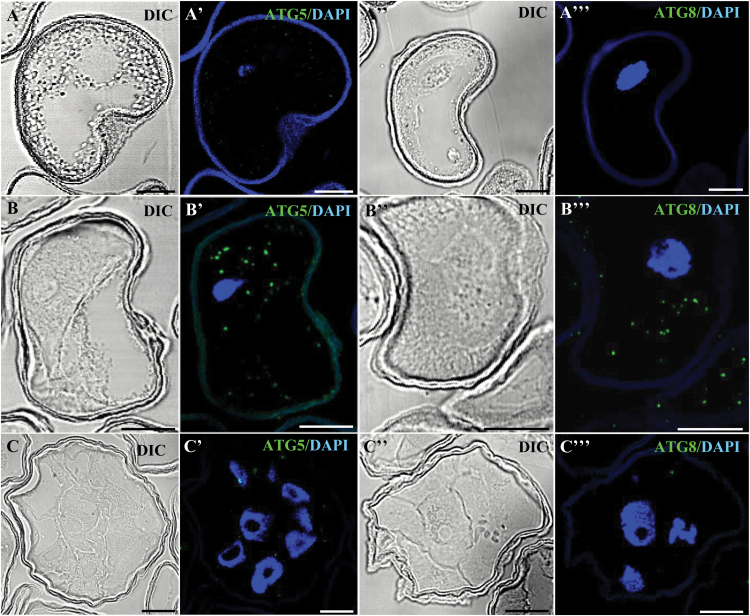
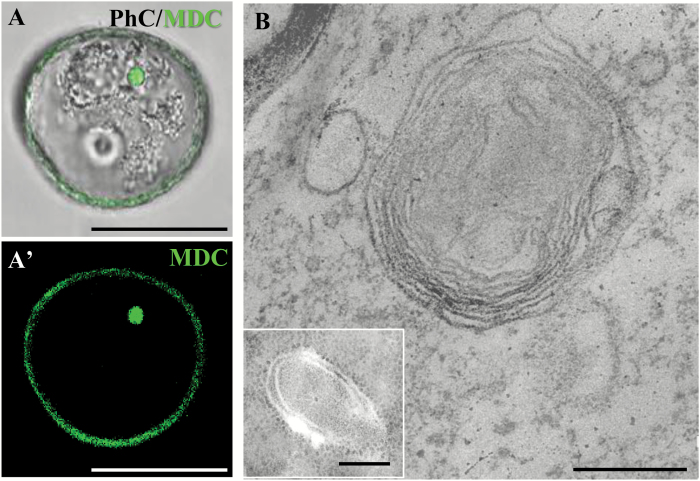
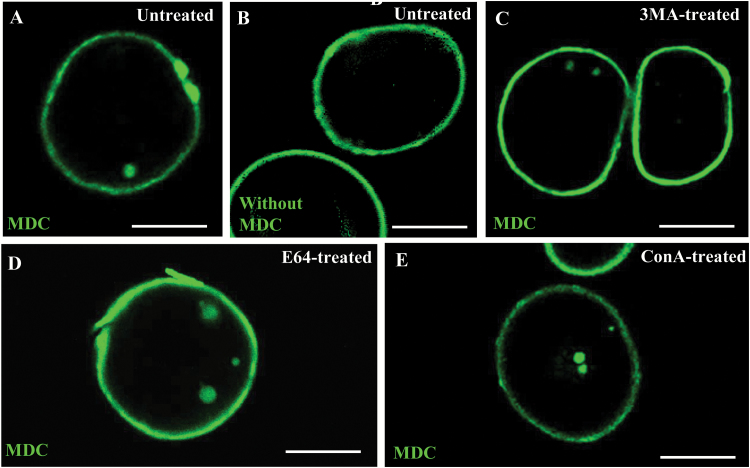
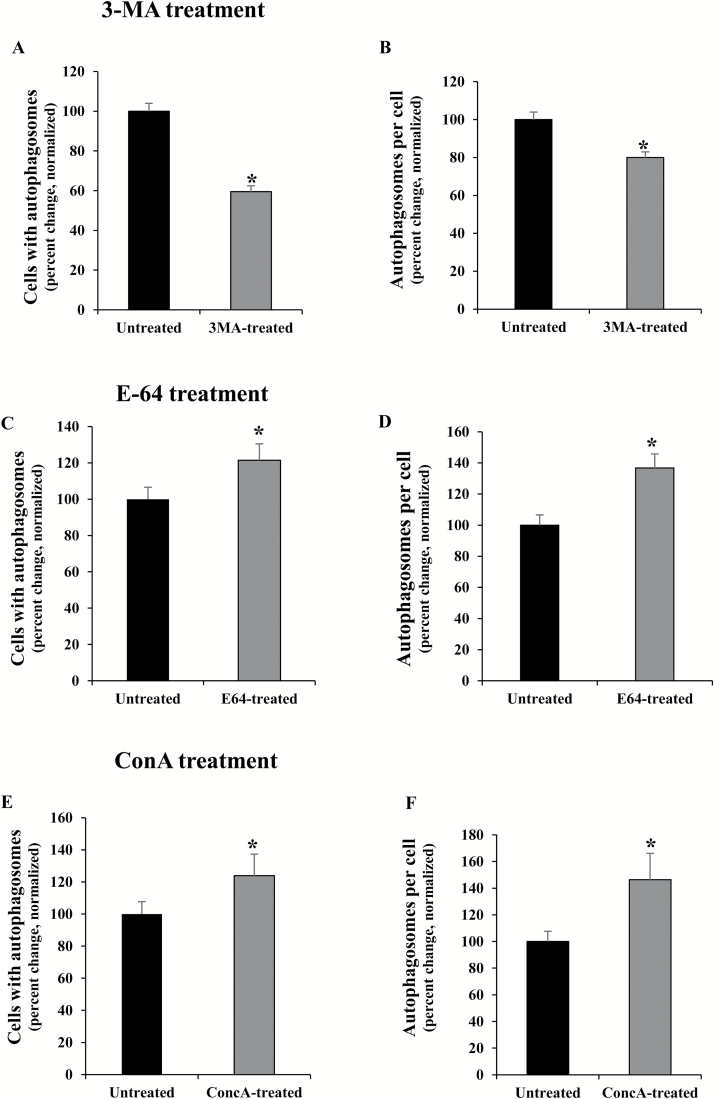
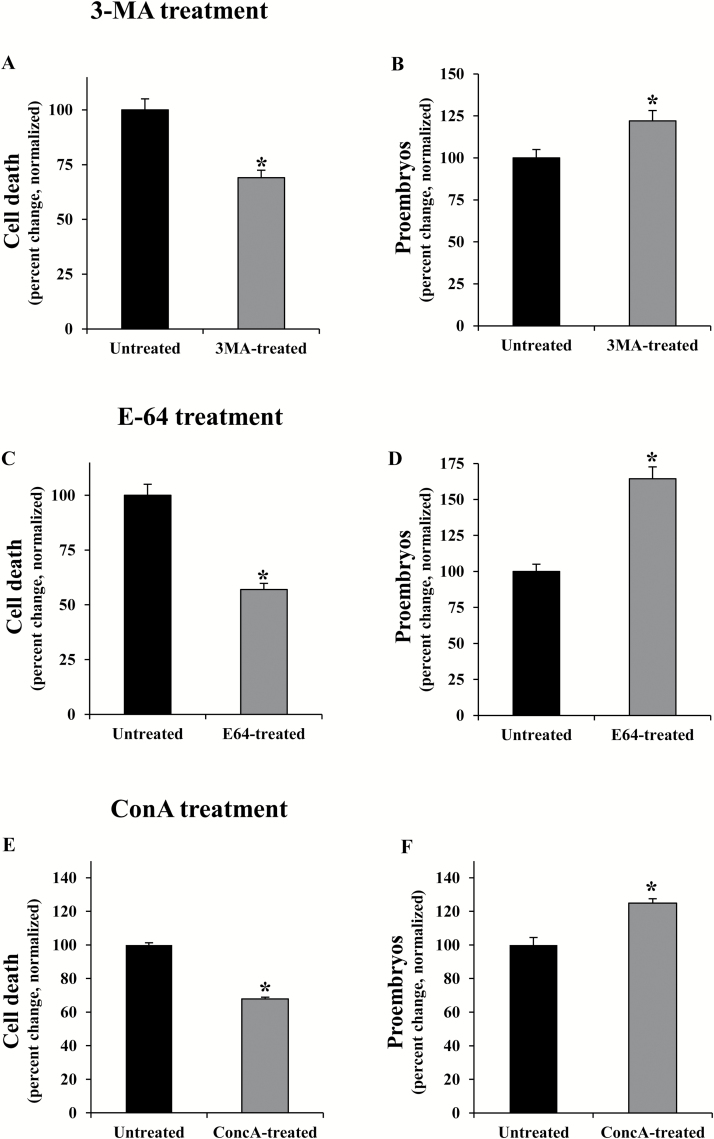
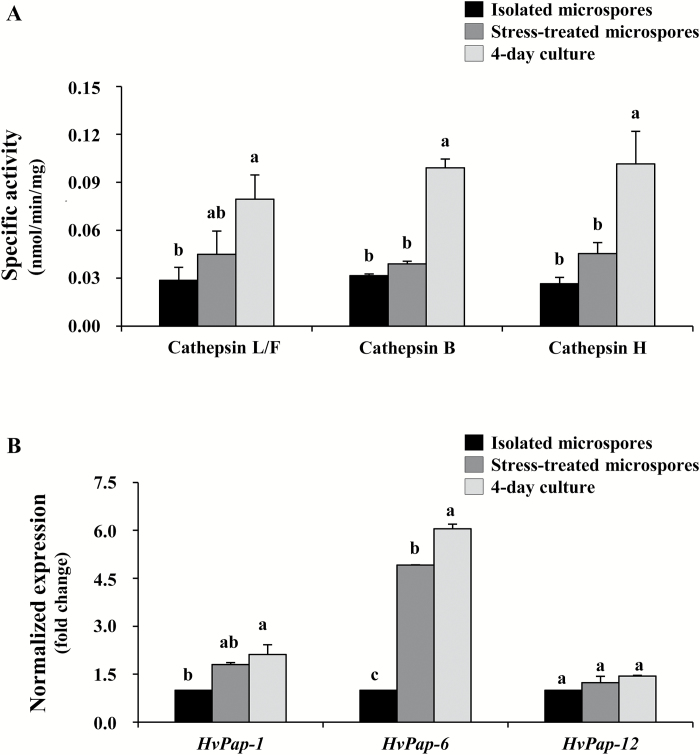
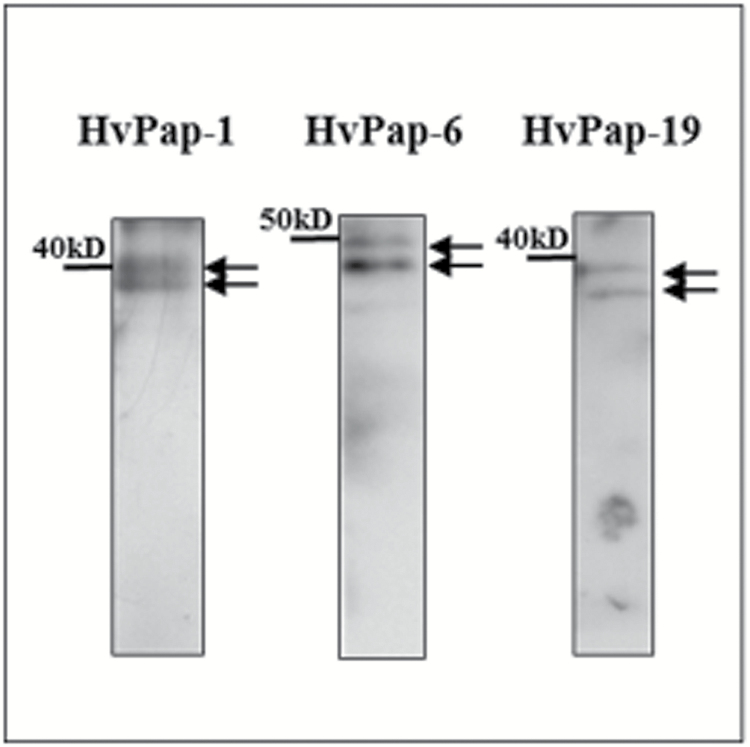
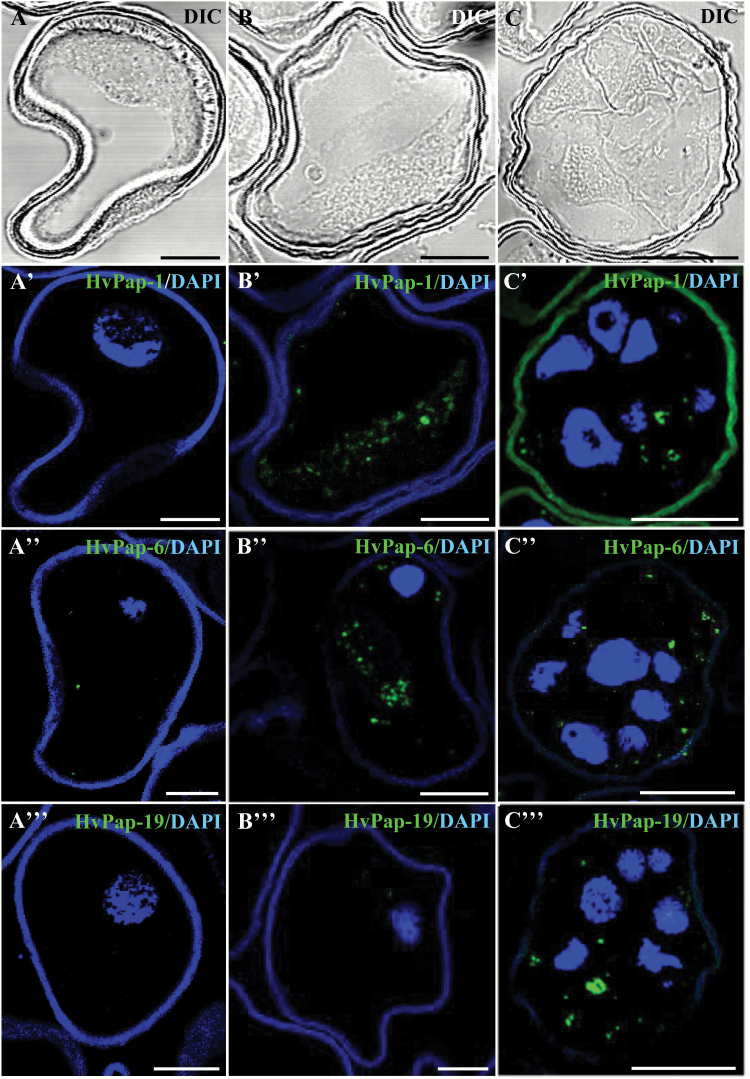
Microspores are reprogrammed towards embryogenesis by stress. Many microspores die after this stress, limiting the efficiency of microspore embryogenesis. Autophagy is a degradation pathway that plays critical roles in stress response and cell death. In animals, cathepsins have an integral role in autophagy by degrading autophagic material; less is known in plants. Plant cathepsins are papain-like C1A cysteine proteases involved in many physiological processes, including programmed cell death. We have analysed the involvement of autophagy in cell death, in relation to cathepsin activation, during stress-induced microspore embryogenesis in Hordeum vulgare. After stress, reactive oxygen species (ROS) and cell death increased and autophagy was activated, including HvATG5 and HvATG6 up-regulation and increase of ATG5, ATG8, and autophagosomes. Concomitantly, cathepsin L/F-, B-, and H-like activities were induced, cathepsin-like genes HvPap-1 and HvPap-6 were up-regulated, and HvPap-1, HvPap-6, and HvPap-19 proteins increased and localized in the cytoplasm, resembling autophagy structures. Inhibitors of autophagy and cysteine proteases reduced cell death and promoted embryogenesis. The findings reveal a role for autophagy in stress-induced cell death during microspore embryogenesis, and the participation of cathepsins. Similar patterns of activation, expression, and localization suggest a possible connection between cathepsins and autophagy. The results open up new possibilities to enhance microspore embryogenesis efficiency with autophagy and/or cysteine protease modulators.
Figures
References
-
- Apel K, Hirt H. 2004. Reactive oxygen species: metabolism, oxidative stress, and signal transduction. Annual Review of Plant Biology 55, 373–399. - PubMed
-
- Avila-Ospina L, Marmagne A, Soulay F, Masclaux-Daubresse C. 2016. Identification of barley (Hordeum vulgare L.) autophagy genes and their expression levels during leaf senescence, chronic nitrogen limitation and in response to dark exposure. Agronomy 6, 15.
-
- Bárány I, González-Melendi P, Fadón B, Mitykó J, Risueño MC, Testillano PS. 2005. Microspore-derived embryogenesis in pepper (Capsicum annuum L.): subcellular rearrangements through development. Biology of the Cell 97, 709–722. - PubMed
-
- Bassham DC. 2007. Plant autophagy—more than a starvation response. Current Opinion in Plant Biology 10, 587–593. - PubMed
Publication types
MeSH terms
Substances
LinkOut - more resources
Full Text Sources
Other Literature Sources
