


Assessing cardiovascular risk in chronic kidney disease patients prior to kidney transplantation: clinical usefulness of a standardised cardiovascular assessment protocol
- PMID: 29310598
- PMCID: PMC5759801
- DOI: 10.1186/s12882-017-0795-z
Assessing cardiovascular risk in chronic kidney disease patients prior to kidney transplantation: clinical usefulness of a standardised cardiovascular assessment protocol
Abstract
Background: Despite pre-kidney-transplant cardiovascular (CV) assessment being routine care to minimise perioperative risk, the utility of such assessment is not well established. The study reviewed the evaluation and outcome of a standardised CV assessment protocol.
Methods: Data were analysed for 231 patients (age 53.4 ± 12.9 years, diabetes 34.6%) referred for kidney transplantation between 1/2/2012-31/12/2014. One hundred forty-three patients were high-risk (age > 60 years, diabetes, CV disease, heart failure, peripheral vascular disease) and offered dobutamine stress echocardiography (DSE); 88 patients were low-risk and offered ECG and echocardiography with/without exercise treadmill test.
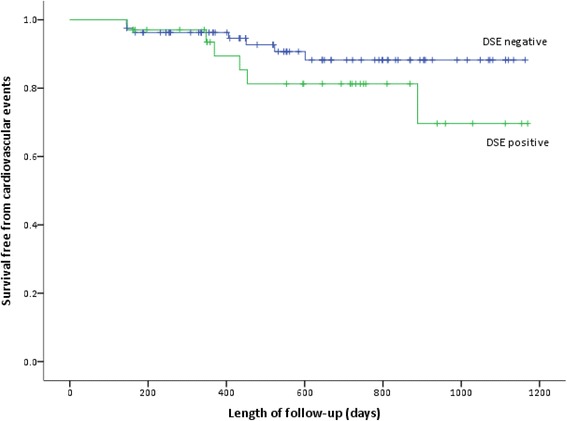
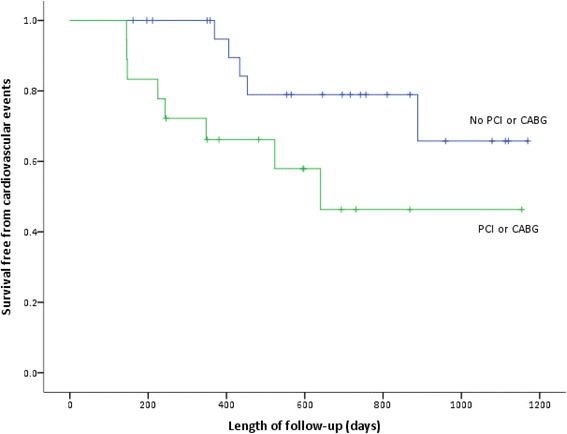
Results: At the end of follow-up (579 ± 289 days), 35 patients underwent kidney transplantation and 50 were active on the waitlist. There were 24 events (CV or death), none were perioperative. One hundred fifteen patients had DSE with proportionally more events in DSE-positive compared to DSE-negative patients (6/34 vs. 7/81, p = 0.164). In 42 patients who underwent coronary angiography due to a positive DSE or ischaemic heart disease symptoms, 13 (31%) had events, 6 were suspended, 11 removed from waitlist, 3 wait-listed, 1 transplanted and 17 still undergoing assessment. Patients with significant coronary artery disease requiring intervention had poorer event-free survival compared to those without intervention (56% vs. 83% at 2 years, p = 0.044). However, the association became non-significant after correction for CV risk factors (HR = 3.17, 95% CI 0.51-19.59, p = 0.215).
Conclusions: The stratified CV risk assessment protocol using DSE in all high-risk patients was effective in identifying patients with coronary artery disease. The coronary angiograms identified the event-prone patients effectively but coronary interventions were not associated with improved survival.
Keywords: Cardiovascular disease; Cardiovascular events; Chronic kidney disease; Coronary angiography; Dobutamine stress echocardiography; Kidney transplantation.
Conflict of interest statement
Ethics approval and consent to participate
The study was approved as an audit by the St George’s Clinical Audit department (No. 170 2013/2014) and hence exempted from formal ethics approval process.
Consent for publication
Not applicable
Competing interests
The authors declare that they have no competing interests.
Publisher’s Note
Springer Nature remains neutral with regard to jurisdictional claims in published maps and institutional affiliations.
Figures


References
Publication types
MeSH terms
Grants and funding
LinkOut - more resources
Full Text Sources
Other Literature Sources
Medical
