


The Role of Inflammation in Age-Related Sarcopenia
- PMID: 29311975
- PMCID: PMC5733049
- DOI: 10.3389/fphys.2017.01045
The Role of Inflammation in Age-Related Sarcopenia
Abstract
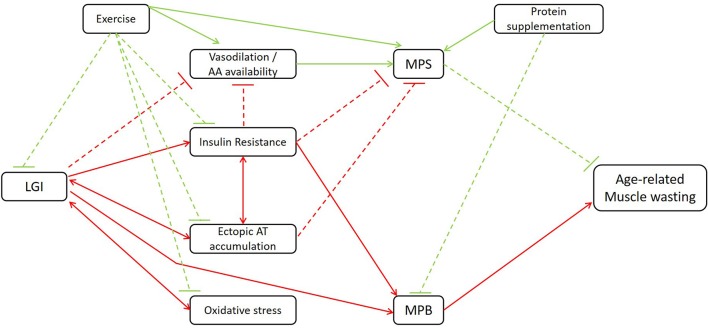
Many physiological changes occur with aging. These changes often, directly or indirectly, result in a deterioration of the quality of life and even in a shortening of life expectancy. Besides increased levels of reactive oxygen species, DNA damage and cell apoptosis, another important factor affecting the aging process involves a systemic chronic low-grade inflammation. This condition has already been shown to be interrelated with several (sub)clinical conditions, such as insulin resistance, atherosclerosis and Alzheimer's disease. Recent evidence, however, shows that chronic low-grade inflammation also contributes to the loss of muscle mass, strength and functionality, referred to as sarcopenia, as it affects both muscle protein breakdown and synthesis through several signaling pathways. Classic interventions to counteract age-related muscle wasting mainly focus on resistance training and/or protein supplementation to overcome the anabolic inflexibility from which elderly suffer. Although the elderly benefit from these classic interventions, the therapeutic potential of anti-inflammatory strategies is of great interest, as these might add up to/support the anabolic effect of resistance exercise and/or protein supplementation. In this review, the molecular interaction between inflammation, anabolic sensitivity and muscle protein metabolism in sarcopenic elderly will be addressed.
Keywords: NSAID; inflammation; muscle protein metabolism; muscle wasting; protein supplementation; resistance training; sarcopenia.
Figures
References
-
- Allaire J., Couture P., Leclerc M., Charest A., Marin J., Marie-claude L., et al. . (2016). A randomized, crossover, head-to-head comparison of eicosapentaenoic acid and docosahexaenoic acid supplementation to reduce inflammation markers in men and women : the comparing EPA to DHA (ComparED) study. Am. J. Clin. Nutr. 104, 280–287. 10.3945/ajcn.116.131896 - DOI - PubMed
Publication types
LinkOut - more resources
Full Text Sources
Other Literature Sources
