


Chimeric Antigen Receptors T Cell Therapy in Solid Tumor: Challenges and Clinical Applications
- PMID: 29312333
- PMCID: PMC5744011
- DOI: 10.3389/fimmu.2017.01850
Chimeric Antigen Receptors T Cell Therapy in Solid Tumor: Challenges and Clinical Applications
Erratum in
-
Corrigendum: Chimeric Antigen Receptors T Cell Therapy in Solid Tumor: Challenges and Clinical Applications.Front Immunol. 2019 Apr 17;10:780. doi: 10.3389/fimmu.2019.00780. eCollection 2019. Front Immunol. 2019. PMID: 31049049 Free PMC article.
Abstract
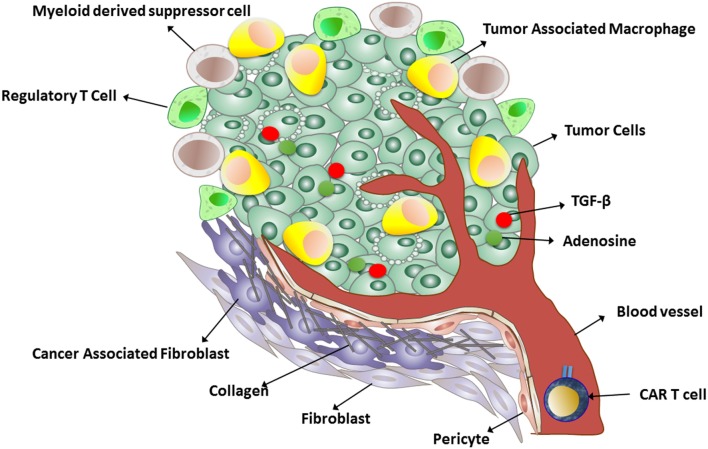
Adoptive cellular immunotherapy (ACT) employing engineered T lymphocytes expressing chimeric antigen receptors (CARs) has demonstrated promising antitumor effects in advanced hematologic cancers, such as relapsed or refractory acute lymphoblastic leukemia, chronic lymphocytic leukemia, and non-Hodgkin lymphoma, supporting the translation of ACT to non-hematological malignancies. Although CAR T cell therapy has made remarkable strides in the treatment of patients with certain hematological cancers, in solid tumors success has been limited likely due to heterogeneous antigen expression, immunosuppressive networks in the tumor microenvironment limiting CAR T cell function and persistence, and suboptimal trafficking to solid tumors. Here, we outline specific approaches to overcome barriers to CAR T cell effectiveness in the context of the tumor microenvironment and offer our perspective on how expanding the use of CAR T cells in solid tumors may require modifications in CAR T cell design. We anticipate these modifications will further expand CAR T cell therapy in clinical practice.
Keywords: CAR; T cell therapy; chimeric antigen receptor; immunotherapy; solid tumors.
Figures
References
-
- Sadelain M, Brentjens R, Rivière I. The basic principles of chimeric antigen receptor design. Cancer Discov (2013) 3(4):388–98.10.1158/2159-8290.CD-12-0548 - DOI - PMC - PubMed
Publication types
Grants and funding
LinkOut - more resources
Full Text Sources
Other Literature Sources
Medical
